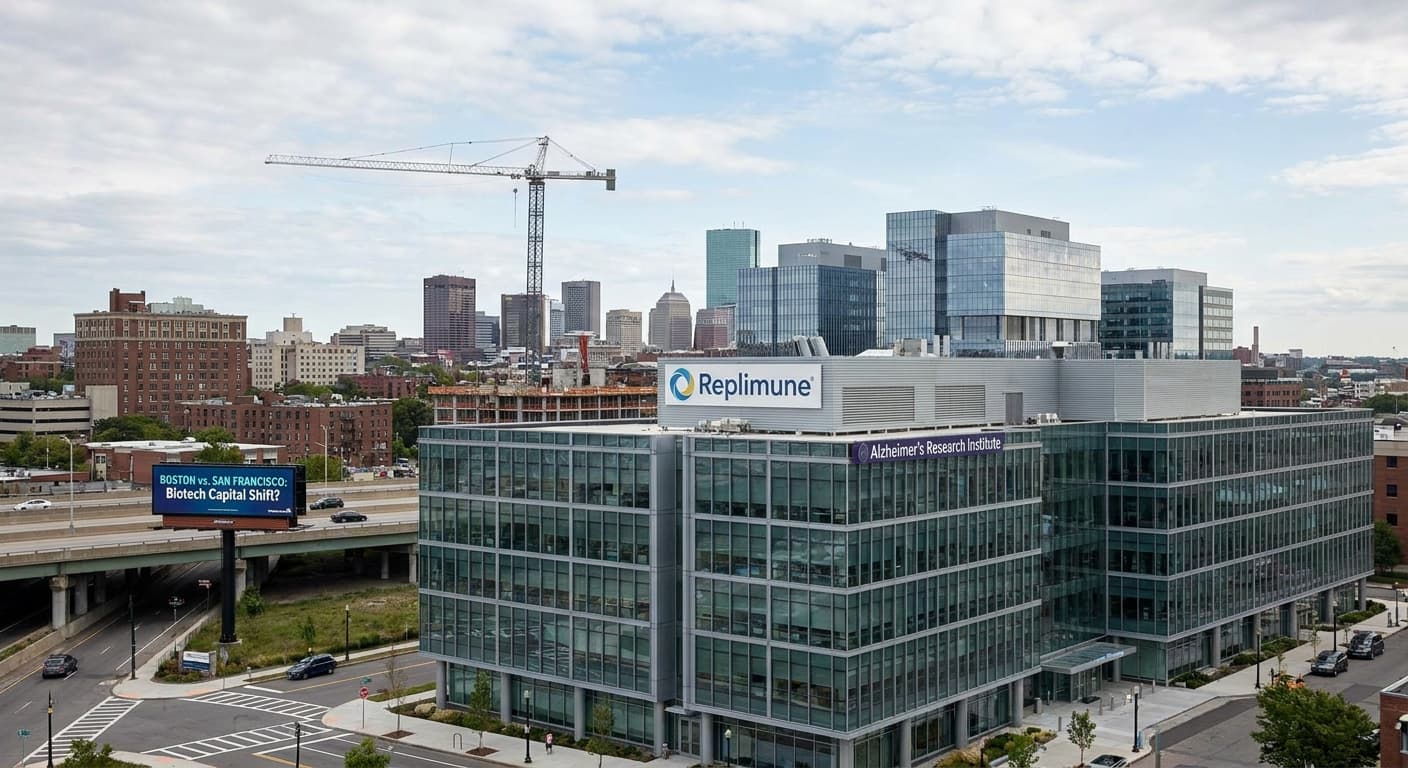
Is the Biotech Capital of the World Shifting Westward?

Boston’s biotech landscape, particularly Kendall Square, has long been a symbol of research and commercial leadership. Recent developments—including significant FDA approvals and discussions around the role of scientific discovery in Alzheimer’s disease—are fueling debate over whether the biotech capital may be moving to other hubs like San Francisco. This post delves into the forces shaping the changing face of the biotech sector and the ongoing competition among leading innovation clusters.
Introduction
For decades, Boston—specifically the vibrant ecosystem found in and around Kendall Square—has been the undisputed heart of biotech innovation in the United States. It's a region where research universities, startup accelerators, pharma giants, and venture capital converge to produce a unique environment focused on translating scientific discovery into new therapies, diagnostics, and commercial opportunities. Recent news, however, has spurred fresh debate. Is Boston still the biotech capital of the world, or do signs point to other regions, like San Francisco, beginning to eclipse its historical dominance? This analysis explores the multiple factors influencing this ongoing power shift, including newly approved drugs, advances in Alzheimer's research, and structural changes in the industry landscape.
Boston’s Biotech Ecosystem: The Traditional Leader
Kendall Square in Cambridge, Massachusetts, has for years been celebrated as the very center of the world for biopharmaceutical innovation. With MIT next door, Harvard up the street, and an enviable concentration of talent and infrastructure, it has been the epicenter where scientific, clinical, and financial communities meet. This is an ecosystem that has birthed category-defining companies and sustained a remarkable pace of drug discovery and commercialization.
Developments such as the FDA's recent approval of Replimune—a company with deep ties to the Boston area—and breakthrough research into the role of tau in Alzheimer's serve to reinforce the ongoing vitality of the cluster. Nonetheless, these headlines arrive amidst intensifying questions about Boston’s future dominance.
Dampening Forces: Cost, Competition, and Structural Shifts
Despite Boston’s many strengths, rising costs—of both real estate and labor—have become an increasing concern for companies large and small. The business climate, sometimes described as high-tax and heavily regulated, may be driving a gradual migration to more cost-effective and business-friendly hubs across the country.
Entrepreneurs and established biopharma companies alike are openly exploring alternative locations. San Francisco, with its rich history of tech innovation, access to capital, and robust talent pipeline, is frequently cited as the most credible contender to Boston’s throne. Texas, North Carolina’s Research Triangle, and other regions are also seen as beneficiaries of the decentralization of biotech activity.
Recent Biotech News: Evidence of Change or Continued Dominance?
The week's headlines offer a microcosm of the sector’s shifting dynamics. As noted in The Readout, Replimune finally won FDA approval for its long-anticipated melanoma therapy after a tumultuous regulatory journey, a significant validation for a Boston-area player. Parallel to this, researchers uncovered new insights into the protein tau, a top target for Alzheimer's drug development, cementing the region’s ongoing commitment to cutting-edge science.
Despite these Boston-centric victories, the broader backdrop remains complex. Some companies, faced with prohibitive rent and operational costs, are doubling down on expansion in the Bay Area or other emerging biotech clusters. The potential migration is driven not only by economic factors but also by the pursuit of novel collaborations, access to diverse talent pools, and more flexible regulatory landscapes.
The San Francisco Challenge and the Bay Area’s Ascendance
San Francisco and the greater Bay Area are not only home to legacy giants—such as Genentech and Gilead—but have become an increasingly fertile ground for startups at the intersection of biology, data science, and engineering. Venture capital flows remain strong, and the region’s proximity to Silicon Valley fuels a unique synergy between biotech and information technology.
Some analysts argue that San Francisco offers a more nimble environment for companies that are trying to balance high-risk discovery work with the scale-up demands of late-stage drug development. The local government’s efforts to streamline permitting, combined with aggressive real estate development, are eroding some of Boston’s traditional competitive advantages.
Regional Competition: More Than Just Two Cities
While much of the narrative frames the contest as Boston versus San Francisco, the reality is far more nuanced. Regions such as San Diego, Seattle, Houston, and North Carolina’s Research Triangle Park have all made significant investments in infrastructure, workforce development, and public-private partnerships aimed at carving out their own space in the innovation economy.
These regions have begun to attract both early-stage startups and mature companies that value proximity to new markets, lower operational costs, and a growing base of highly trained scientists.
The Role of Regulatory Milestones
The FDA’s recent approval of Replimune’s treatment for advanced melanoma, as highlighted in The Readout, illustrates that strong science and perseverance can prevail, regardless of location. For many years, such pivotal moments were strongly associated with Boston-based enterprises, but the locus of these breakthroughs is becoming increasingly diverse. Approvals are now routinely emerging from companies with roots in multiple geographies, reflecting a broader maturation of the U.S. biotech ecosystem.
Trend: Brain Science and Alzheimer’s Breakthroughs
Another important area for biopharma is neurodegenerative disease research, particularly Alzheimer’s. The latest findings regarding tau, discussed in the same news cycle, underscore the importance of Boston-based research efforts. But it is crucial to note that collaborations—including large consortia extending across state lines—have become the norm, further blurring the boundaries between local and national innovation networks.
Looking Ahead: A Decade of Transformation
Industry analysts suggest that the next decade will bring continued decentralization. While Boston and the Bay Area remain preeminent, expect further growth in regions with universities capable of producing scientific talent at scale, hospitals engaged in advanced clinical research, and local governments eager to partner with industry for job creation and economic growth.
Additionally, the proliferation of remote work, digital collaboration tools, and distributed research models accelerated by the COVID-19 pandemic have further leveled the playing field.
Stakeholder Perspectives
Investors:
Venture capital has long favored Boston and San Francisco, but new funds are now increasingly open to other locations, attracted by the promise of lower burn rates and untapped talent.
Entrepreneurs:
While some founders still see Boston as the gold standard, others are prioritizing flexibility, local incentives, and quality of life over traditional prestige.
Employees:
Biotech professionals are increasingly willing to relocate for more affordable living, hybrid work models, and access to innovative research environments that may not have been on their radar a decade ago.
Policymakers:
Local and state initiatives to enhance infrastructure, simplify regulatory pathways, and invest in workforce training are key levers in this shifting landscape.
Conclusion
Boston’s preeminence in the biotech sector is rooted in decades of achievement, but it is no longer unchallenged. FDA approvals, Alzheimer’s breakthroughs, and other high-profile wins remain a testament to the region’s enduring strengths. However, the broader context—marked by rising costs, shifting investor preferences, and an increasingly national talent market—suggests that leadership may gradually diversify across America’s innovation hubs.
The question is no longer simply whether Boston will cede its title to San Francisco or any other single location, but rather how a more distributed, nationally networked biotech ecosystem will shape the next era of scientific discovery and therapeutic development.
As we continue to monitor regulatory milestones, advances in disease research, and patterns of investment, BioIntel will provide ongoing analysis of this dynamic and globally impactful sector.
This article is based on information and reporting from STAT News.
Join the BioIntel newsletter
Get curated biotech intelligence across AI, industry, innovation, investment, medtech, and policy delivered to your inbox.