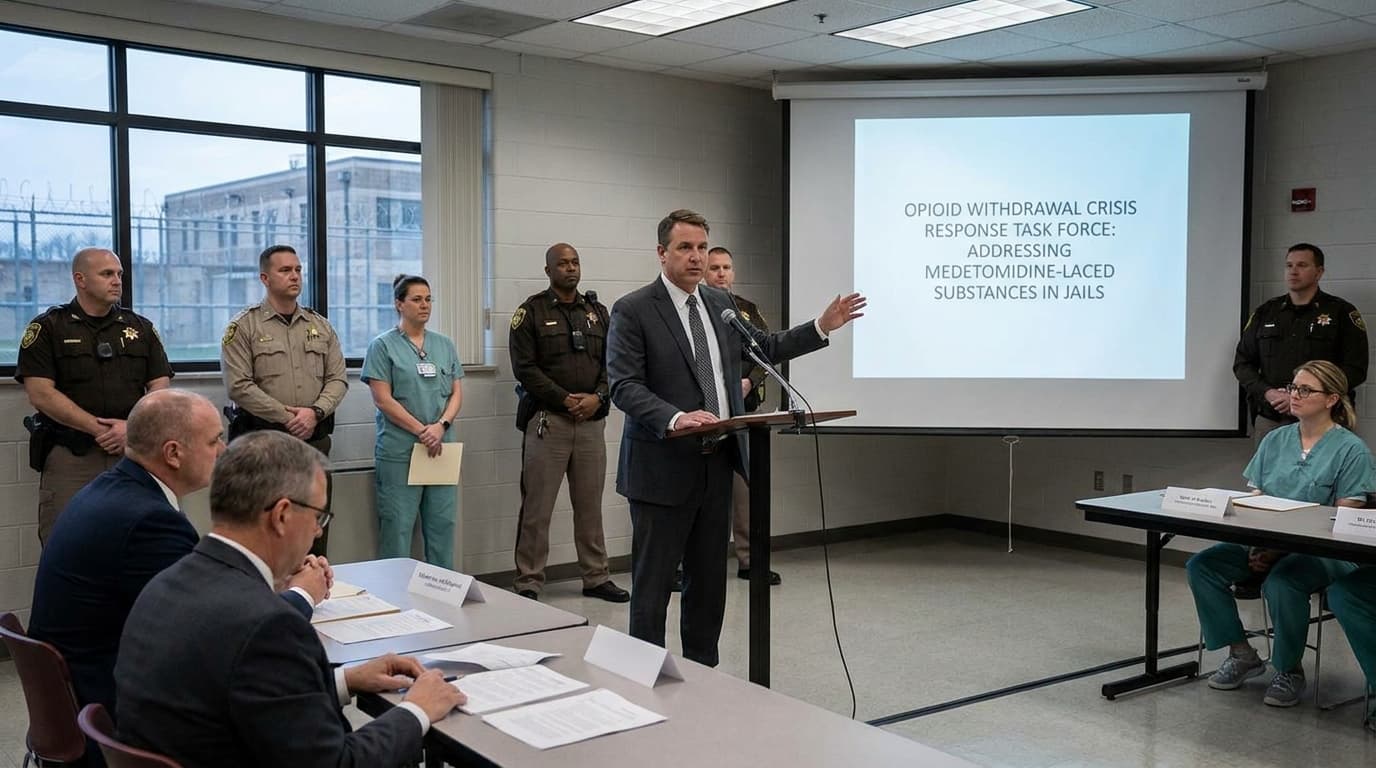
Jails on the Frontline: Addressing the Crisis of Medetomidine-Laced Opioid Withdrawal

As medetomidine-laced opioids circulate among incarcerated populations, correctional facilities are being forced into a new role as first responders for a uniquely severe withdrawal syndrome. The complexity of the issue—from the pharmacology of medetomidine to resource gaps in prisons—poses new challenges for public health, addiction medicine, and criminal justice policy. We analyze the evolving situation, the gaps in care, and where systemic responses may fall short or present hope.
Introduction
Across the United States, the opioid crisis continues to evolve in unpredictable and dangerous ways. As law enforcement and public health officials struggle to keep pace with new formulations entering the illicit drug market, a particularly alarming trend has caught the attention of both medical and correctional professionals: the growing prevalence of opioids laced with medetomidine. This veterinary tranquilizer, when mixed with conventional opioids like fentanyl or heroin, is contributing to a pattern of drug withdrawal that jails and prisons are ill-equipped to treat.
With dangerous withdrawal syndromes manifesting behind bars, correctional facilities are finding themselves on the frontline of a deepening healthcare crisis. Many jail systems, which already face chronic understaffing, budgetary constraints, and limited access to specialist addiction medicine support, are not prepared for the medical complexity and risks posed by this new epidemic.
This in-depth report contextualizes the crisis of medetomidine-laced opioid withdrawal in jails—examining the pharmacological underpinnings, clinical manifestations, operational implications, and the wider policy debates it is generating across correctional health and public health fields.
Medetomidine: Its Origins and the Path to Illicit Drug Markets
Medetomidine was originally developed as a veterinary tranquilizer and sedative, primarily used to sedate large animals during medical procedures. Its use in human medicine is highly restricted. However, in a landscape where illicit drug manufacturers constantly experiment with new combinations to outpace regulation and create stronger effects, medetomidine has found its way into street opioid supplies.
Typically, medetomidine is added to enhance or prolong the sedative effects of opioids, creating a cocktail that can be significantly more dangerous than opioids alone. The precise reasons for the growing prevalence of medetomidine in street drugs remain uncertain, but it is likely tied to efforts to produce more potent “highs,” stretch supplies, and evade law enforcement scrutiny regarding banned substances.
The Mechanism and Clinical Features of Withdrawal
Unlike more 'traditional' opioid withdrawal, which—though miserable—is rarely life-threatening with appropriate medical oversight, withdrawal from medetomidine-laced opioids introduces elevated risks and an unfamiliar clinical course. Symptoms may include extreme agitation, cardiovascular instability, severe anxiety, confusion, hallucinations, and profound autonomic dysregulation.
The underlying pharmacology is complex: medetomidine acts on central alpha-2 adrenergic receptors, causing deep CNS depression when used in conjunction with opioids. Upon abrupt cessation, the nervous system rebounds unpredictably, and standard opioid withdrawal protocols (such as methadone, buprenorphine, or symptom-targeted supportive care) may not be sufficient.
There is currently limited research on the best approaches to manage this emerging withdrawal syndrome. Incarcerated individuals—many of whom may not know they were exposed to medetomidine—can deteriorate rapidly, with some experiencing seizures, arrhythmias, or even risk of death if not promptly stabilized in a medical setting.
Jails as De Facto Medical Facilities: Systemic Challenges
Most local jails in the United States are not designed or resourced to function as detoxification or high-level medical facilities. Typical challenges include:
- Staffing Gaps: Many jails struggle to hire and retain medical professionals with expertise in addiction medicine, especially in rural or low-resource settings.
- Protocol Limitations: Existing opioid withdrawal protocols may not recognize or address the unique dangers posed by medetomidine. Staff may be slow to escalate care due to unfamiliarity.
- Infrastructure Deficits: Facilities may lack dedicated infirmaries, on-site ICU-level care, or the ability to transfer rapidly to hospitals.
- Stigma and Risk Assessment: Withdrawal symptoms can be mistaken for behavioral issues, leading to delayed medical intervention.
As the crisis grows, medical teams are forced to improvise—sometimes seeking expert consultation off-site or transporting patients to local emergency departments. This can place significant strain on jail budgets and, in some cases, spark liability or civil rights concerns related to inadequate medical care.
The Broader Policy Picture: Addiction, Public Health, and Justice
The medetomidine crisis is not entirely new in raising questions about the intersection of substance use disorder and incarceration. Historically, jails and prisons have been inundated with individuals with opioid use disorder, yet have lagged behind hospitals and clinics in implementing evidence-based addiction treatment or withdrawal management.
However, the unique risk profile of medetomidine-laced opioid withdrawals adds new urgency to longstanding debates:
- Should jails act as frontline detox centers for drug trends they cannot anticipate or control?
- What resources and training are needed to improve medical response in correctional settings?
- How can communities better coordinate care transitions—from jail to hospital, from incarceration to reentry—for populations at high risk of overdose or withdrawal complications?
- What role should surveillance and early-warning systems play in identifying dangerous new substances in circulation?
Innovations and Gaps: What’s Working and What’s Not
A handful of jurisdictions are piloting new strategies to address these emerging challenges:
- Enhanced Screening: Some jails are bolstering intake protocols to identify individuals at risk of complicated withdrawal, using point-of-care toxicology or expanded questionnaires.
- Telemedicine Consults: Partnerships with regional academic medical centers allow remote specialists to advise on difficult cases in real time.
- Staff Training: Correctional medical teams are seeking continuing education about novel psychoactive substances and the evolving withdrawal patterns associated with them.
- Policy Coordination: Public health departments are partnering with law enforcement and corrections to develop real-time alerts about dangerous street drug batches.
Yet, critical gaps remain. Many rural jails simply lack resources for basic medical care, much less an escalating crisis involving a veterinary tranquilizer. Regulatory or payer gaps may leave medical bills for hospitalizations in limbo. Questions of legal liability—particularly under the Eighth Amendment’s prohibition of “cruel and unusual punishment”—arise when withdrawal is untreated or mismanaged.
The Personal Toll: Stories from the Frontlines
Behind the statistical and policy-level discussions are real people—incarcerated individuals, correctional nurses, physicians, and counselors—facing precarious situations every day. Anecdotes captured by STAT News underscore the anxiety, confusion, and sense of crisis many experience:
- A jail nurse describes the fear of missing early warning signs: “If someone goes from agitated to unresponsive, we have minutes to act, and we can’t always tell what they took or how much.”
- An individual, recently released, recounts a harrowing experience cycling between severe agitation and collapse, feeling “like my body was fighting itself.”
- Administrators recount scrambling for hospital beds in counties where emergency rooms are already overloaded.
These lived realities drive home the need for a coordinated, system-wide response—and for a deeper commitment to evidence-based addiction medicine in correctional health.
Looking Forward: Solutions and Systemic Change
While there are no easy fixes for the medetomidine crisis, experts argue for several actionable steps:
- Research: Accelerate clinical study of withdrawal syndromes associated with new psychoactive substances, and disseminate findings to frontline providers.
- Funding and Policy Support: Increase investment in correctional healthcare, emphasizing addiction medicine capacity and rapid escalation pathways for acute cases.
- Legal and Ethical Safeguards: Ensuring that all incarcerated individuals are guaranteed access to appropriate withdrawal management, regardless of their county or state of incarceration.
- Integrated Public Health Surveillance: Build closer collaboration among public health, law enforcement, and clinical partners to identify and address new waves of dangerous synthetic drugs as they appear.
Conclusion
Jails are increasingly acting as the first line of medical response to a rapidly changing and dangerous drug landscape. The medetomidine-laced opioid crisis exemplifies the urgent need for greater investment in correctional health, improved data sharing and surveillance, and a reimagined approach to substance use disorder across justice-involved populations. Without systemic change, both health outcomes and justice system integrity may suffer serious setbacks.
Source: STAT News
Join the BioIntel newsletter
Get curated biotech intelligence across AI, industry, innovation, investment, medtech, and policy delivered to your inbox.