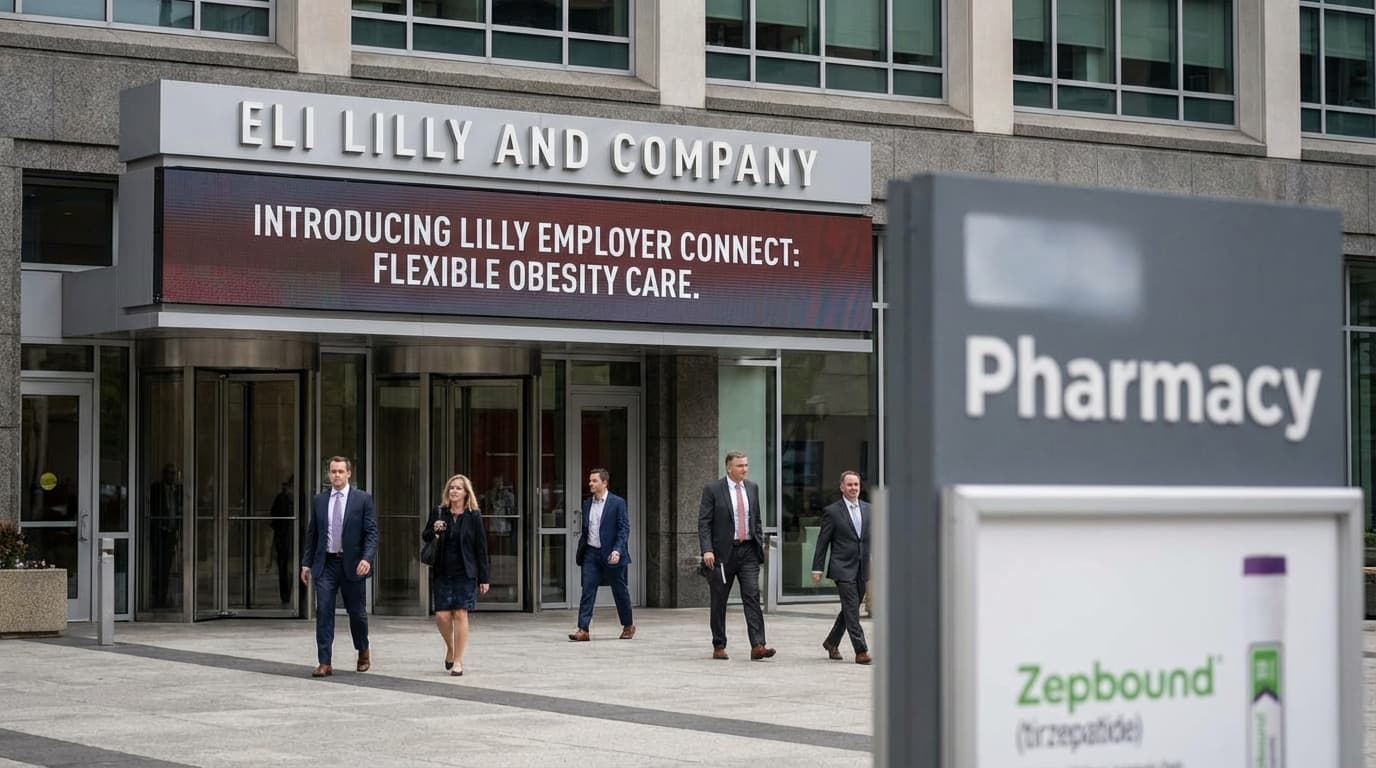
Lilly Employer Connect: An Incremental Step Toward Flexible Access to Obesity Drugs for Employers

Eli Lilly has launched Lilly Employer Connect, a platform aimed at providing employers with more flexible access to treating obesity through drugs such as Zepbound. While the platform introduces practical options for employers, industry experts note that the progress is largely incremental rather than transformative. This post explores the platform, its features, and the implications for employers and the obesity treatment landscape.
Eli Lilly's initiative to introduce the Lilly Employer Connect platform represents a strategic effort to broaden access to obesity treatments for employers seeking to support their workforce's health. The program specifically targets access to medications like Zepbound, an obesity drug developed and marketed by Lilly. Obesity remains a significant public health challenge, with widespread implications for morbidity, mortality, and healthcare costs. Employer-sponsored health programs that address obesity can hence play a vital role.
Lilly Employer Connect distinguishes itself by offering employers more choice and flexibility in how they provide access to obesity drugs for their employees. This can include options outside of traditional insurance frameworks, potentially enabling more streamlined access and subsidy programs. The move addresses a common concern among employers of optimizing health benefits in a cost-effective and accessible manner.
Experts, however, caution that while the platform allows for flexibility, it does not represent a revolutionary shift in how obesity drugs reach patients via employer programs. Rather, the platform is seen as an incremental enhancement, aligning with ongoing industry trends to facilitate employer involvement in specialty drug access but without fundamentally altering the healthcare delivery or payment models.
From an operational standpoint, Lilly Employer Connect simplifies administrative pathways for employers to fund or subsidize obesity drug access. Yet challenges remain in terms of ensuring broad affordability, overcoming stigma associated with obesity treatment, and embedding drug therapies into comprehensive obesity management plans including lifestyle interventions.
The introduction of this platform reflects Eli Lilly’s sustained commitment to innovation within the obesity drug market, which has seen recent advances with GLP-1 receptor agonists and other therapies gaining popularity. It also underscores the evolving role of employers as stakeholders in managing chronic health conditions through novel benefit designs.
Employers evaluating the Lilly Employer Connect platform will likely weigh its ability to provide cost predictability, patient engagement facilitation, and integration with existing health benefit structures. Additionally, the broader impact on employee health outcomes and cost savings linked to reduced obesity-related complications will be important metrics.
In summary, while Lilly Employer Connect introduces a valuable option that enhances how employers can support obesity drug access, it is predominantly an incremental contribution rather than a game-changing innovation in the biopharmaceutical and healthcare benefits landscape. Continued evaluation over time will reveal how adoption trends develop and whether further evolution in employer-based drug access models emerges.
This article is based on reporting from MedCity News (https://medcitynews.com/2026/03/lilly-employers-glp1s/).
Join the BioIntel newsletter
Get curated biotech intelligence across AI, industry, innovation, investment, medtech, and policy delivered to your inbox.