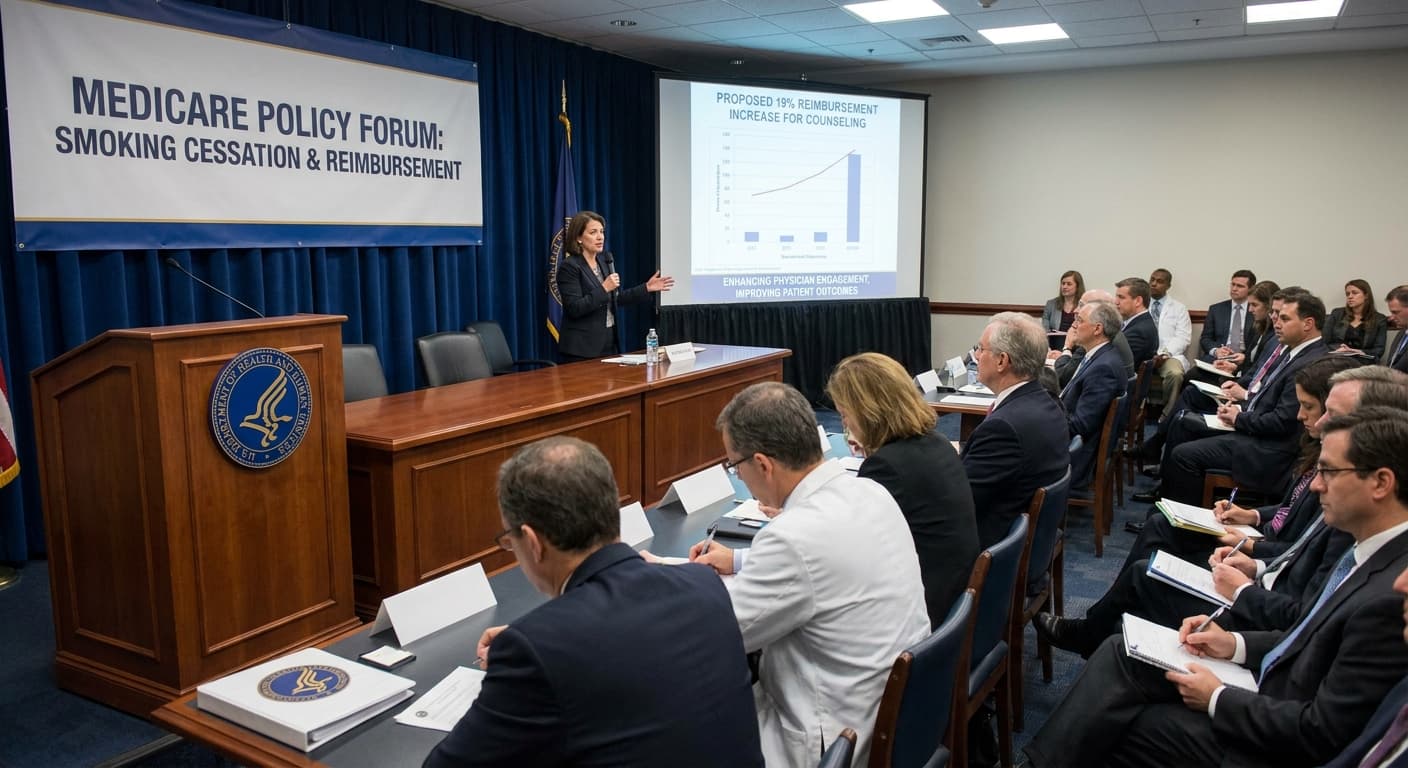
Medicare’s Proposed Reimbursement Increase May Reshape Smoking Cessation Counseling

Medicare is considering a notable policy shift that could incentivize clinicians to integrate more intensive counseling for smoking and alcohol cessation into routine patient care. With a 19% increase in reimbursement for those offering counseling, the change has the potential to address persistent challenges in preventing tobacco and alcohol-related illnesses.
Introduction
Smoking cessation remains an enduring challenge for public health in the United States. For decades, policymakers, clinicians, and patient advocates have worked to reduce tobacco use rates through a variety of strategies—ranging from public education campaigns to increased tobacco taxes, warning labels, advocacy, and smoking bans in public places. Yet, despite widespread acknowledgment of the dangers of smoking, a significant proportion of Americans still smoke, and tobacco-related illness is a persistent, expensive burden on the U.S. healthcare system. In 2026, Medicare has proposed an important change: physicians who provide counseling on smoking and alcohol cessation during patient visits could see a 19% increase in reimbursement. In this article, we take a comprehensive look at this new policy proposal, examining its background, rationale, potential impacts, and the broader implications for the healthcare system.
Background: The Ongoing Challenge of Smoking Cessation
While American smoking rates have dropped precipitously since the mid-20th century, tobacco use is far from eradicated. According to the latest government data available, nearly 13% of the U.S. adult population still smokes. That translates to more than 30 million Americans, with a disproportionate concentration in rural communities, lower-income groups, and individuals with mental health or substance use disorders. Public health experts agree that no single strategy is sufficient, and a combination of behavioral counseling, pharmacotherapy, community support, and structural interventions is needed.
Yet, healthcare delivery has often lagged behind best practices when it comes to tobacco cessation counseling. Too often, brief interventions are provided, or the subject is skipped entirely in busy primary care settings. This is not surprising, given that reimbursement rates for such counseling have traditionally lagged behind those for more technical medical procedures. Many clinicians cite time pressures, inadequate compensation, and competing priorities for why intensive behavioral counseling often falls by the wayside.
Medicare’s Role in Preventive Health
Medicare, the federal health insurance system for roughly 60 million Americans, has increasingly attempted to position itself at the forefront of preventive care. With staggering long-term costs associated with chronic disease—much of it tobacco- or alcohol-related—the program’s leadership has searched for levers that can shift healthcare from reactive to proactive, from treatment to prevention. Smoking cessation, and more broadly, substance use treatment, have remained prime targets for federal intervention.
The current proposal would raise reimbursement rates for physicians who provide counseling to patients about quitting cigarettes and reducing risky alcohol consumption. Specifically, the proposal contemplates a 19% increase compared to the previous rates. This move signals a recognition of the time, expertise, and relationship management required to effectively counsel patients—particularly those whose addiction may be accompanied by ambivalence or resistance.
The Evidence Base for Clinician Counseling
Studies over the years have demonstrated the value of physician counseling in tobacco and alcohol cessation. According to the U.S. Preventive Services Task Force, brief interventions by clinicians consistently lead to higher quit rates, especially when combined with medication. The so-called “5 A’s” of tobacco cessation (Ask, Advise, Assess, Assist, Arrange) are a well-established framework, but implementation depends on workflow, training, and incentive structures.
With reimbursement increasing, stakeholders hope that more clinicians will integrate cessation support into routine care, perhaps using longer visit times or follow-up appointments to deeply engage with ambivalent or high-risk patients. The real-world effectiveness of such a change, however, depends on how widely the new incentives are known, accepted, and operationalized within over-burdened healthcare delivery systems.
Economic and System-Level Implications
The financial aspect of this proposal is clear: with a higher reimbursement rate, more providers may feel justified in devoting time and resources to preventive counseling. For hospitals, clinics, and private practices facing declining reimbursement in many other service lines, the prospect of additional revenue for counseling could encourage adoption.
It’s important, however, to situate this new policy within the context of Medicare’s broader payment reforms. In recent years, Medicare has increasingly linked payment to outcomes—via Accountable Care Organizations (ACOs), the Medicare Shared Savings Program, and other value-based care initiatives. In an era where the focus is shifting from volume to value, incentivizing preventive care is very much in line with Medicare’s long-term strategy. Providers who take on financial risk for the total cost of care will now have even more motivation to prevent the downstream costs of tobacco- and alcohol-related illnesses.
Provider Perspective: Enthusiasm with Caution
The reaction among clinicians is likely to be positive, though tempered by operational concerns. While an increased reimbursement rate is welcome, the overall administrative burden associated with Medicare is well documented. Physicians and staff must carefully code and document each patient encounter, respond to audits, and keep up with a shifting regulatory landscape. For the smallest practices, or those serving high-risk populations, operationalizing more comprehensive counseling depends on available resources—including personnel, training, and IT infrastructure.
Additionally, some providers may question whether the increased rate is sufficient, given the complexity and persistence of substance use disorders. Counseling can require not just a brief intervention, but a whole-person approach, ongoing engagement, and coordination with behavioral health and social services. However, as a step in the right direction, the increase is likely to be broadly welcomed, especially if accompanied by guidance on best practices and streamlined documentation processes.
Patient Impact: Hope for Improved Outcomes
For patients, more intensive counseling can translate to better health outcomes. Studies consistently demonstrate that direct advice from a trusted healthcare provider, reinforced over time, increases the likelihood of quitting and maintaining abstinence. Moreover, the inclusion of alcohol counseling recognizes the intertwined nature of these addictions; patients who smoke are statistically more likely to experience problematic alcohol use, and vice versa.
While the proposal is a policy lever rather than a guarantee of change, its existence shines a spotlight on the importance of the physician-patient relationship and ongoing behavioral support. For individuals who have struggled to quit smoking—sometimes through multiple failed attempts—more consistent, supportive, and expert counseling could provide the extra nudge needed to achieve success.
Implementation Challenges and Limitations
Notwithstanding its promise, the new policy proposal faces several hurdles:
- Awareness: Physicians and practice managers must be made aware of the new rates, and trained in documentation and billing procedures.
- Consistency: Variation in how counseling is delivered—from a few minutes of advice to in-depth motivational interviewing—may complicate quality measurement and oversight.
- Resource Allocation: Clinics and health systems must balance multiple competing priorities, and even a substantial reimbursement hike may not fully offset the time and staff required for counseling.
- Inequities: Marginalized populations may have less consistent access to providers prepared and able to offer high-quality counseling, perpetuating disparities in tobacco use and cessation.
Addressing these challenges requires more than just financial incentives; systemic supports, workflow redesign, and communication campaigns are all likely necessary.
Stakeholder Reactions: Early Responses from the Field
While formal comments and responses are still coming in from professional societies, patient advocacy groups, and payers, early indicators suggest cautious optimism. Tobacco control groups have long pushed for greater provider engagement, and medical societies recognize counseling as an integral part of preventive medicine. However, organizations will be carefully scrutinizing policy details to ensure that the increase is not offset by additional administrative or compliance complexity.
Broader Context: A Continuum of Care Approach
Ultimately, the proposed Medicare policy change should be viewed within the context of a continuum of care for addiction and chronic disease prevention. While the fiscal lever is important, so too are public health campaigns, access to affordable cessation medications (e.g., nicotine replacement therapy, varenicline, bupropion), and robust support for behavioral health services. Integrating these approaches—so that medication, counseling, and social support are routinely offered—will be critical to achieving sustained reductions in tobacco and alcohol use across all demographic groups.
Conclusion
Medicare’s proposal to boost reimbursement for smoking and alcohol cessation counseling represents an important lever in the broader prevention and public health landscape. By increasing the financial incentive for providers, the hope is to strengthen the emphasis on patient counseling and ultimately reduce the burden of chronic disease. But delivering on this promise requires careful implementation, stakeholder engagement, and ongoing evaluation. The ultimate impact of the policy will depend on the extent to which it is integrated into routine care, supported by systems and resources, and aligned with patient needs. As regulators and stakeholders scrutinize the fine print, they must keep a sharp focus on the evidence base and the practical realities clinicians and patients face every day.
Join the BioIntel newsletter
Get curated biotech intelligence across AI, industry, innovation, investment, medtech, and policy delivered to your inbox.