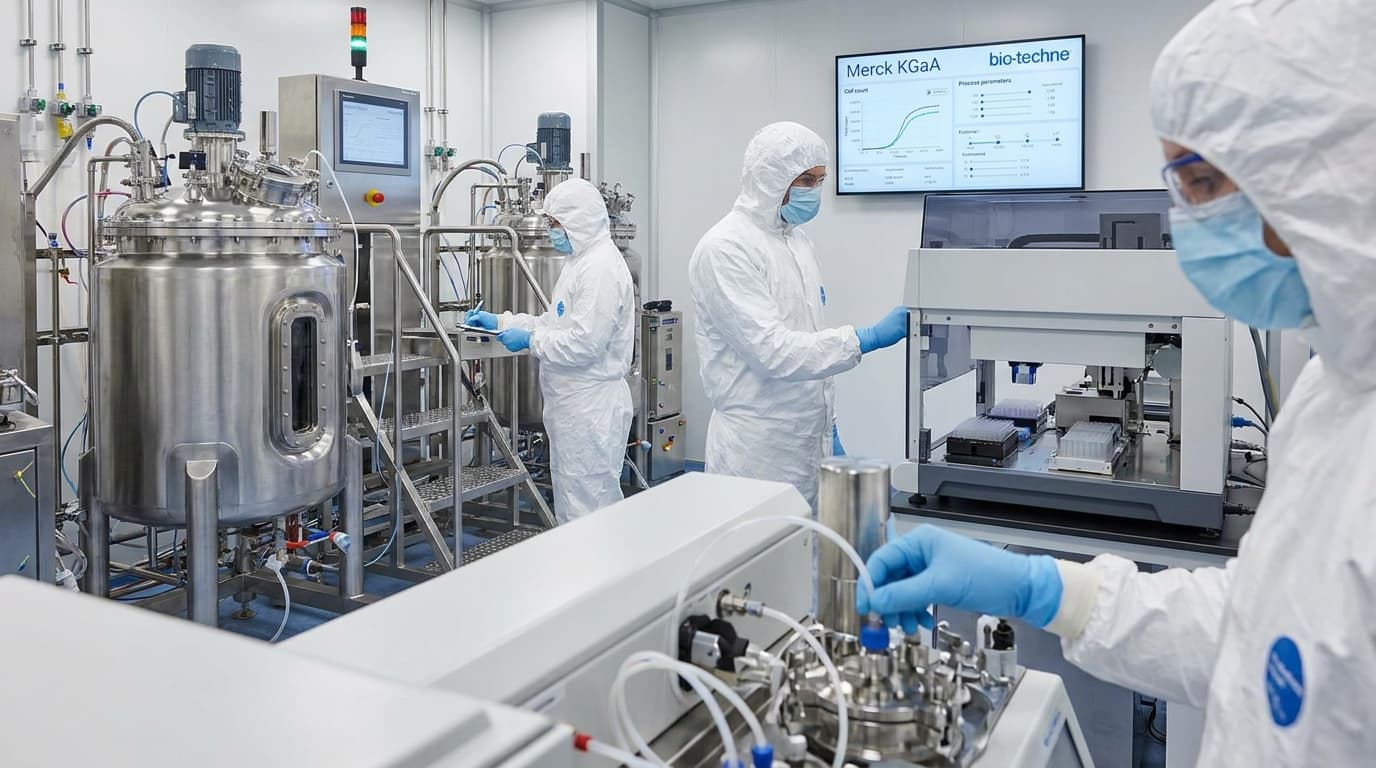
Merck KGaA’s $11B Bio-Techne Acquisition Signals Ambitious Expansion Into Cell Therapy Manufacturing

The acquisition of Bio-Techne by Merck KGaA for $11 billion represents one of 2026’s most significant biopharma moves, positioning Merck squarely at the forefront of cell therapy innovation. This deal highlights a shifting landscape as companies seek to secure advanced manufacturing technologies and fortify their pipeline.
In a year marked by rapidly shifting alliances and blockbuster deals across the biotechnology sector, Merck KGaA’s decision to acquire Bio-Techne for $11 billion stands out not only for its financial scale but also for its potential to reshape the competitive landscape in cell therapy manufacturing. This acquisition includes highly prized immune cell therapy manufacturing technologies that Merck executives have described as 'especially exciting,' reflecting the strategic value being placed on advanced production capabilities as the industry looks to the future of personalized medicine.
The Strategic Importance of the Deal
Merck KGaA’s acquisition of Bio-Techne is emblematic of broader consolidation trends sweeping through the biopharma industry. With cell and gene therapies rapidly shifting from experimental treatments to clinically validated therapeutic modalities, companies are investing heavily in biomanufacturing platforms capable of delivering advanced therapies at commercial scale. This transaction signals Merck’s conviction that the future of biomedicine will be built not just on discovery, but on the capacity to produce complex therapies efficiently, reliably, and at high quality.
The Role of Cell Therapy Manufacturing Technologies
Cell therapies—including CAR-T, TCR, and other immune cell-modified products—require highly specialized manufacturing environments. Traditional biologics factories are not optimized for the live-cell manipulations, aseptic processing, and individualized batch nature of many cell therapies. Bio-Techne’s technologies reportedly streamline these workflows, offering automated, modular solutions with heightened consistency and reduced contamination risk. Integrating such systems into Merck KGaA’s production infrastructure may enable the company to accelerate time-to-market for client cell therapy products and expand its reach as a contract manufacturing partner for the burgeoning field of regenerative medicine.
Understanding Today’s Competitive Cell Therapy Landscape
Even a decade ago, cell therapies were considered niche, high-risk investments. Today, they command significant market share in hematological malignancies, and pipelines targeting solid tumors, autoimmune conditions, and rare diseases are rapidly filling up. Merck’s investment is a direct response to both this scientific progress and tightening competition among pharmaceutical manufacturers. The acquisition also positions Merck to support commercial launches in the next wave of cell therapies, many of which are anticipated by the end of the decade.
What Makes This Deal Unique?
Many recent biomanufacturing deals have focused on capacity expansion or regional diversification. In contrast, Merck’s Bio-Techne buyout appears technically motivated, targeting a portfolio of key cell therapy production tools and intellectual property. The $11 billion price tag underscores the value attached to breakthrough bioprocess innovation—not just brute-force production scale, but also the know-how and platforms required to assure quality and regulatory compliance in a highly complex manufacturing domain.
Early Industry Reactions: Perspectives and Implications
Analysts have largely applauded the transaction for its forward-looking rationale. By integrating Bio-Techne’s suite of proprietary tools, Merck could become the preeminent partner for pharma and biotech companies seeking to move cell-based therapies from the lab bench to the patient bedside. The vast influx of capital into the contract development and manufacturing organization (CDMO) space has made access to such technologies a critical differentiator.
However, the move is not without risks. Successfully integrating Bio-Techne’s technologies into Merck’s global network will require not only capital, but also a sustained focus on talent development, regulatory affairs, and a commitment to innovation culture. Industry observers will be closely watching how Merck navigates these integration challenges and leverages synergies without disrupting existing operations or stretching resources thin.
Potential Impact on Patients and Markets
As cell therapies transition toward mainstream clinical care, ensuring robust and scalable manufacturing solutions could be the difference between commercial success and market exit. For providers and patients, expanded manufacturing capacity could translate into greater access, reduced costs, and potentially quicker adoption of new therapies. For investors, Merck’s move may validate continued confidence in the cell and gene therapy sector’s long-term growth prospects, potentially spurring further consolidation and capital commitment across the ecosystem.
Broader M&A Trends in Biotech Manufacturing
The Merck KGaA–Bio-Techne deal is part of a growing pattern of M&A activity in the manufacturing side of biotechnology. Global companies are racing to secure access to next-generation production infrastructure, betting that supply chain security, process innovation, and digital operational excellence will determine industry winners in the post-blockbuster era. As regulatory standards evolve and therapies become more individualized, seamless manufacturing partnerships are becoming a strategic imperative—one that Merck aims to meet head-on.
Critical Next Steps for Stakeholders
With the ink barely dry on this acquisition, both internal and external stakeholders will seek clarity on Merck’s integration roadmap. Employees of both companies will look for signals about R&D priorities, facility upgrades, and the possible blending of organizational cultures. Customers and competitors will monitor how quickly new manufacturing tools and processes come online and whether Merck’s expanded capabilities translate into faster, safer, and more reliable supply of advanced therapies.
Conclusion: A Defining Moment for Cell Therapy Manufacturing
The Bio-Techne acquisition may prove to be a pivotal moment for Merck KGaA and for biomanufacturing at large. By focusing on the advanced technology required for cutting-edge cell therapies, Merck is betting that the next decade in healthcare will be defined less by what drugs are discovered and more by how they are manufactured and delivered. As biopharma continues its multi-billion dollar shift from small molecules to complex biologicals, deals like this one will likely accelerate, shaping both the scientific and commercial future of the life sciences industry.
Join the BioIntel newsletter
Get curated biotech intelligence across AI, industry, innovation, investment, medtech, and policy delivered to your inbox.