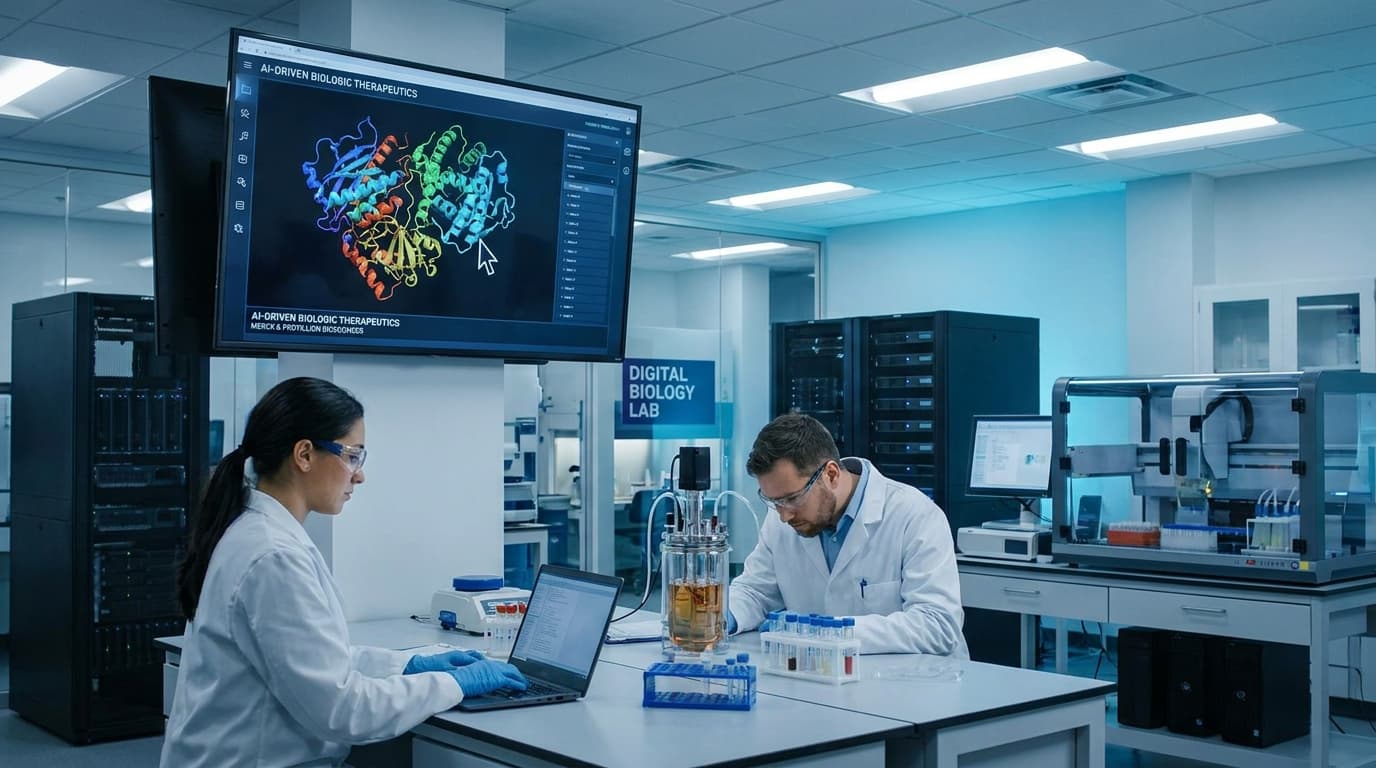
Merck and Protillion: Pushing the Boundaries of AI-Driven Biologic Therapeutics

The partnership between Merck and Protillion represents a substantial investment in artificial intelligence for drug discovery, specifically targeting the development of biologic therapies for unknown indications. As AI continues to revolutionize the way new medicines are designed and optimized, this high-value collaboration may mark a significant turning point in how big pharma approaches early-stage research and portfolio development.
Introduction
In a move emblematic of the increasing integration of artificial intelligence across biopharmaceutical research and development, Merck has announced a strategic partnership with Protillion Biosciences. The agreement, valued at up to $510 million—or potentially even more according to preliminary estimates—focuses on leveraging Protillion's proprietary technology platform to design next-generation biologic therapies across indications that, as of yet, remain undisclosed. This collaboration represents not only a sizable commitment by one of the world's leading pharmaceutical companies to digital transformation, but also a broader signal to the market about the indispensable role AI is now playing in the genesis and refinement of modern drug candidates.
The Rationale for AI in Biologic Drug Development
Biologic therapies, which include monoclonal antibodies, engineered proteins, and related modalities, have revolutionized treatment for a vast range of diseases—from cancers and autoimmune disorders to rare genetic conditions. Historically, however, their development has been resource-intensive, time-consuming, and marked by a high rate of attrition as molecules progress toward the clinic. AI-driven platforms are now upending many of these paradigms, providing tools to predict protein structures, optimize binding affinities, reduce immunogenicity, and accelerate candidate selection.
Merck’s alliance with Protillion is illustrative of the pharmaceutical industry’s bet that digital modeling and machine learning can substantially increase the odds of technical success, lower research costs, and reduce cycle times from discovery to first-in-human studies. By digitizing and automating processes that were previously reliant on brute-force experimentation or trial-and-error, AI offers the potential to democratize and scale biologics design, making the selection of complex, biochemically optimized molecules faster and more systematic than ever before.
Merck’s Strategic Motives
For Merck, this partnership stands as a clear statement about its ambition to dominate the emerging intersection of artificial intelligence and biologic drug development. The pharmaceutical sector, confronted by looming patent cliffs and rising R&D costs, is increasingly looking to AI-driven platforms to extract greater value from early R&D investments and protect long-term portfolio competitiveness.
The deal’s magnitude—reported to top $510 million—suggests that Merck sees in Protillion’s technology the potential for platform reproducibility across multiple disease states, rather than a one-off effort confined to a narrow therapeutic area. By keeping the initial indications undisclosed, both companies preserve strategic flexibility and signal to both internal and external stakeholders their readiness to pivot resources in response to real-time advances in both research and market demand.
Inside Protillion’s Technology
Protillion Biosciences specializes in the application of deep learning and high-throughput experimentation to the structural biology of proteins. While the exact contours of their technology stack remain proprietary, it is understood to encompass advanced modeling to predict protein folding, antibody-variable region optimization, and the prioritization of candidates most likely to translate to preclinical and clinical success.
This technology fits well within a growing niche of platforms capable of generating and assessing millions of protein variants in silico, rapidly narrowing the field to those most likely to succeed in binding affinity, manufacturability, and safety. As biopharma companies move beyond one-size-fits-all blockbusters towards more targeted or even individualized biologic medicines, such technologies are becoming critical infrastructure for discovery organizations.
Broader Market Context and Competitive Dynamics
The Merck-Protillion pact occurs against a backdrop of intense competition in the AI drug discovery space. Other major pharmaceutical companies—and a host of well-funded startups—are racing to deploy AI-driven modalities to address longstanding bottlenecks in drug creation. While the majority of early deals in this space have focused on small molecules, there is a clear trend toward expanding AI’s reach into biologics—reflecting the scientific community's growing mastery of protein science as well as a commercial imperative driven by biologics’ outsized share of the world’s highest-revenue medicines.
With mounting evidence that AI-enhanced platforms can at least match, and in many cases outperform, traditional discovery methods, expect deals like Merck’s with Protillion to escalate in frequency and value. The ultimate success metrics will include not only development speed and cost reduction, but also improved clinical outcomes, lower rates of attrition, and higher return on investment for R&D portfolios.
Implications for the Future of Drug Discovery
This collaboration further underscores a crucial shift in how pharmaceutical R&D is conceptualized and executed. While wet-lab biology will always remain indispensable, a new generation of drug hunters is emerging—fluent in both molecular science and machine learning, equally at ease with a pipette or a code repository.
For researchers and investors, the message is clear: AI-driven platforms are not simply an efficiency play, but may also unlock entirely novel modalities, targets, and therapeutic mechanisms, previously invisible to conventional wisdom or inaccessible using legacy techniques. This creates new opportunities but also poses real challenges for regulatory science, data privacy, and ensuring that emerging therapies address unmet patient needs with both rigor and humility.
Conclusion
The partnership between Merck and Protillion Biosciences stands as a prominent milestone in the ongoing evolution of pharmaceutical R&D. Valued at over half a billion dollars and targeting as-yet-undisclosed indications, the deal is a signal to the biopharmaceutical industry that mastery of AI-driven discovery will shape not just the therapies of tomorrow, but the competitive fortunes of the companies bold enough to lead today. For clinicians, patients, and market observers, such deals warrant close attention, representing both the promise and complexity inherent to next-generation drug development in the age of artificial intelligence.
Join the BioIntel newsletter
Get curated biotech intelligence across AI, industry, innovation, investment, medtech, and policy delivered to your inbox.