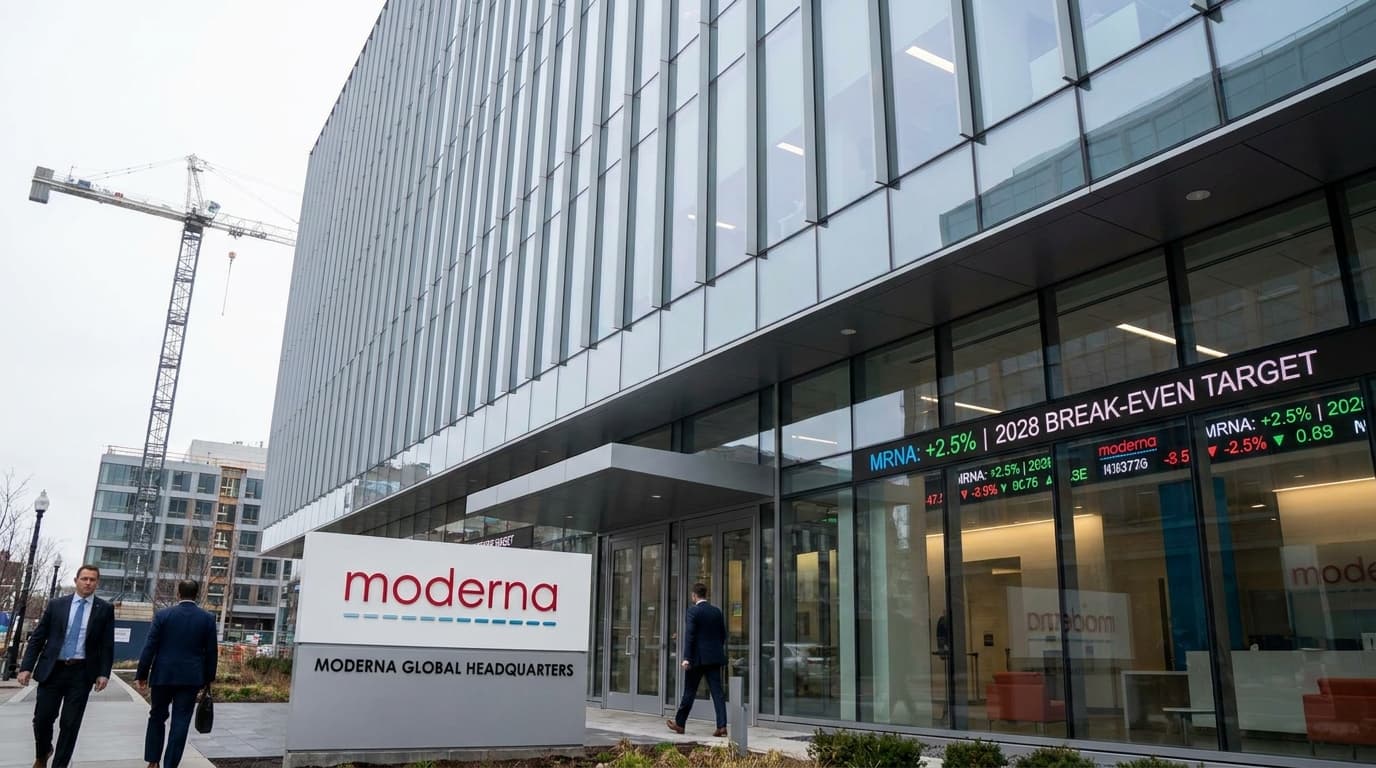
Moderna Charts Path to 2028 Break-Even as R&D Portfolio Expands

With an eye on long-term viability, Moderna is navigating a complex landscape as it transitions from pandemic-era revenues to a diversified portfolio of commercial products. Anticipation is high as Jefferies projects the company will achieve break-even by 2028, pending the success of its R&D initiatives and steady revenue growth.
Moderna Looks Ahead: Balancing R&D Innovation With Financial Targets Through 2028
Moderna, a biotechnology company that rose to prominence during the global COVID-19 pandemic, is now at a crossroads as it seeks to build upon its vaccine expertise and chart a sustainable path to profitability. The company’s pandemic-driven revenues, while substantial, were always likely to be time-limited. Now, as the biopharmaceutical sector refocuses on innovation and long-term commercial portfolios, Moderna’s prospects will be measured on its ability to move new products from pipeline to market and achieve projected financial milestones—including a closely watched break-even target in 2028.
Understanding Moderna’s Commercial Landscape: From Pandemic Revenue to Pipeline Promise
In a recent industry analysis, Jefferies projected that Moderna could have as many as seven commercial products available in the coming years. This product diversity is essential as the market for COVID-19 vaccines stabilizes and competition intensifies. For Moderna, securing a sustainable revenue base requires the successful launch and uptake of new preventative and therapeutic products, particularly as public health needs and payer priorities shift.
Shifting Portfolio Dynamics and Long-Term Planning
The pathway to break-even in 2028 is built on several pillars: a broadening commercial portfolio, a projected 10% annual revenue growth rate, and a continued emphasis on research and development. Moderna has made significant investments in next-generation vaccines and therapeutics, including candidates targeting respiratory viruses, latent infections, and even cancer. The successful commercialization of these R&D efforts will determine whether Moderna meets, or even exceeds, its financial projections.
Strategic R&D Initiatives: Exploring New Horizons
Each of Moderna’s prospective commercial products must navigate a rigorous development and regulatory environment. The company has pointed to robust clinical pipelines in areas such as influenza, RSV, and cytomegalovirus (CMV), each carrying its own set of technical and market risks. Additionally, the pursuit of mRNA technology for applications beyond infectious disease vaccines—including rare disease, cardiovascular, and oncology indications—signals Moderna’s ambition to become a diversified biopharma player rather than a single-product company.
This ambition, however, demands disciplined portfolio management. R&D investment is resource intensive, and a focus on outcomes will be necessary to avoid overstretching organizational and financial capacity. Aligning clinical development with market opportunities, pricing strategies, and payer landscape realities will play a major role in defining Moderna’s future trajectory.
Financial Pressures and Market Expectations
Analysts and investors are closely watching Moderna’s pathway to break-even—not just a financial benchmark, but a metric of how effectively the company is responding to changing industry dynamics. Moody’s and other rating agencies have pointed out both the upside and risk associated with Moderna’s evolving business model. The success of its existing and planned commercial launches will directly impact its revenue stability and capacity for ongoing innovation.
A critical issue is ongoing capital allocation: how much to plow back into R&D versus sustaining shareholder value. The market rewards pipeline progress but punishes high-profile setbacks, leading to volatile share prices and heightened scrutiny of development timelines and regulatory submissions.
Revenue Growth: Managing Payer and Competitive Pressures
While a 10% annual growth rate is ambitious, it’s not out of reach given the global demand for vaccines and burgeoning opportunities in adjacent markets. Growth, however, will depend on how well Moderna navigates commercial payers, government health programs, and international regulatory regimes—all of which exert influence on pricing, reimbursement, and market penetration.
The Road to Break-Even: Opportunities, Risks, and Milestones
Reaching break-even in 2028 is not a given, even for a company of Moderna’s current market stature. Clinical milestones, regulatory approvals, commercial launches, competitive threats, and macroeconomic factors all contribute to the uncertainty. Notably, Moderna must contend with the challenges of sustaining innovation amid increasing regulatory scrutiny and societal expectations for access and affordability.
A pivotal question remains: can Moderna leverage its mRNA platform to consistently generate new, differentiated products that fulfill unmet medical needs? If so, ongoing revenue growth and a diversified product base could support not just break-even in 2028, but long-term profitability and leadership within the biopharmaceutical sector.
Conclusion: Moderna’s Next Act Hinges on Execution
The era of pandemic windfalls is waning, and companies like Moderna are under pressure to translate scientific ingenuity into durable commercial and financial outcomes. With an expanding R&D pipeline, ambitious growth targets, and the aspiration to achieve break-even by 2028, Moderna’s journey will be closely watched by industry observers, investors, and patients alike. The stakes are high, underscoring the critical importance of disciplined execution and nimble strategic planning as the company navigates its next phase of growth.
Join the BioIntel newsletter
Get curated biotech intelligence across AI, industry, innovation, investment, medtech, and policy delivered to your inbox.