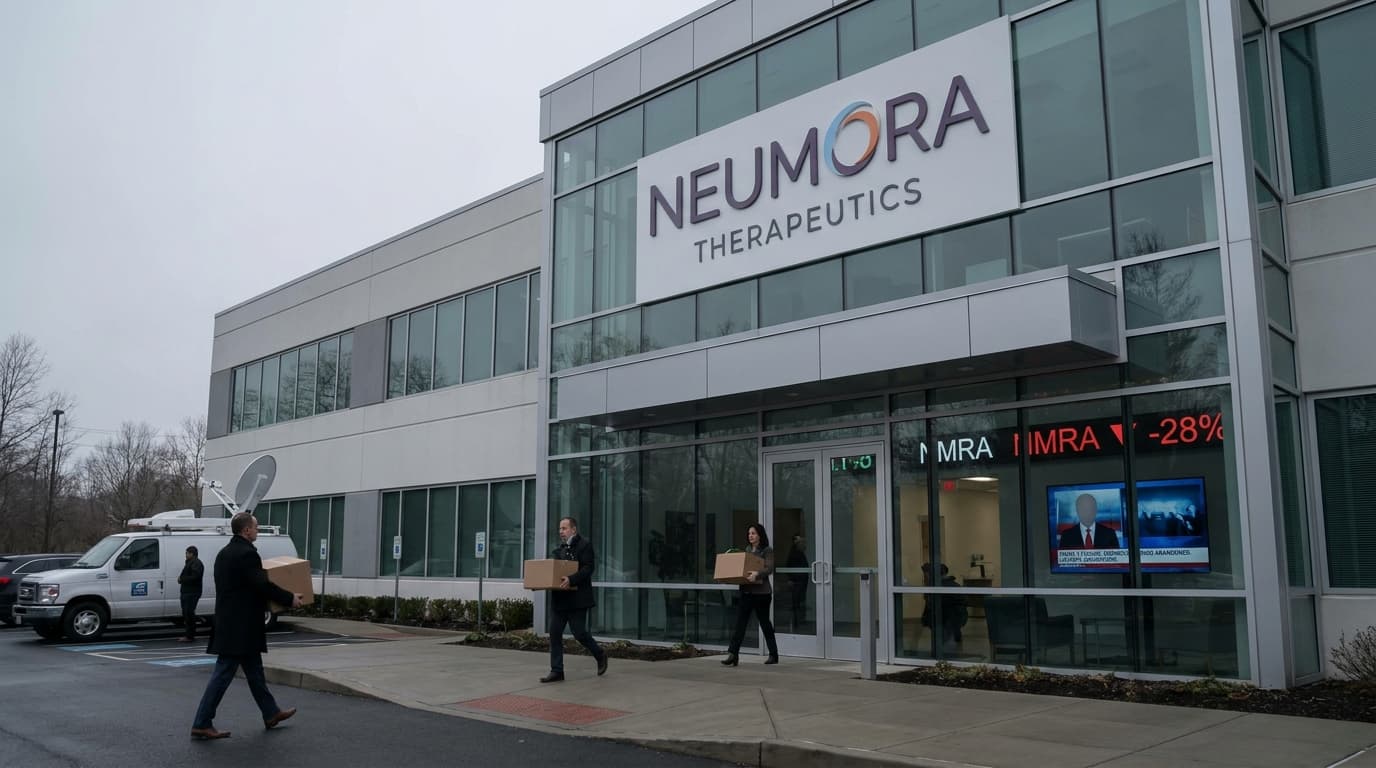
Neumora Abandons Depression Drug, Cuts Staff After Late-Stage Trial Failures

In a significant industry development, Neumora Therapeutics has elected to abandon its most advanced depression program, sparking a corresponding workforce reduction. The move highlights ongoing volatility in neuropsychiatric drug development and raises questions about the challenges facing biotech firms targeting CNS disorders.
The biopharmaceutical sector frequently witnesses dramatic shifts as companies respond to scientific setbacks and market realities. Neumora Therapeutics, a biotechnology company focused on neuropsychiatric and neurodegenerative diseases, recently experienced such a turning point. On June 15, 2026, it was announced that Neumora is discontinuing its most advanced clinical asset for depression after twin Phase 3 trial failures, resulting in a significant round of layoffs affecting roughly one-third of its workforce.
Background: High Hopes and High Stakes
Neuropsychiatric drug development, especially for major depressive disorder and related indications, presents an enduring challenge. Many companies chase breakthroughs in conditions with massive unmet need, yet few succeed in translating early promise into pivotal trial success. Neumora, which positioned itself at the vanguard of CNS (central nervous system) therapeutics, had invested heavily in a depression treatment it believed could become a new standard of care.
The Drug and the Trials
While the specifics of the late-stage asset and its mechanistic basis are not detailed, Neumora’s priority program reflects widespread industry optimism about targeting new pathways or employing precision medicine for mental health. Like many in the space, the company underwent resource-intensive, multi-site Phase 3 studies, enrolling hundreds — or possibly thousands — of patients, and subjecting its candidate to rigorous efficacy and safety testing.
Unfortunately, the drug did not deliver positive outcomes. Two separate Phase 3 trials failed to meet primary endpoints, eroding investor confidence and triggering a sharp downturn in Neumora’s stock as markets opened Monday. The consecutive failures left Neumora little choice but to cut costs and reassess its operating strategy.
The Fallout: Layoffs and Uncertainty
The impact of clinical trial failure in biotech is rarely confined to pipeline decisions. On the same day Neumora publicized its Phase 3 results, the company announced it would lay off 35% of its employees. Reductions of this magnitude are always difficult, affecting not just individual livelihoods but also institutional knowledge, morale, and scientific momentum.
Layoffs in biopharma are often seen following clinical disappointment; however, the abrupt downsizing at Neumora underscores the high-risk, high-reward calculus of CNS drug development. For many in the workforce, these losses reverberate beyond company walls, as local biotech clusters feel the economic and psychological ripple effects.
Broader Implications: The Challenge of CNS Drug Discovery
Neumora’s setback mirrors a historical pattern of difficulty in neuropsychiatry R&D. Despite decades of research and billions in investment, CNS disorders — particularly depression, schizophrenia, and Alzheimer’s disease — have yielded relatively few novel, approved therapies compared to oncology or rare diseases.
The underlying reasons are multifactorial:
- Incomplete disease models,
- Insufficient translational biomarkers,
- Heterogeneous patient populations,
- High placebo response rates,
- And challenges in clinical trial design.
Consequently, even promising assets may stumble late in the development pathway. For investors, this creates uncertainty and tempers enthusiasm for riskier CNS portfolios.
Financial and Strategic Repositioning
With its primary program discontinued, Neumora now faces strategic crossroads. Companies in similar situations may opt to:
- Refocus on earlier-stage assets with differentiated mechanisms,
- Seek partnerships or acquisition opportunities,
- Or aggressively restructure—including asset divestment and operational changes—to conserve capital and extend runway.
For Neumora, the pronounced workforce reduction is an initial step. Future strategic decisions will likely depend on the composition and maturity of the company’s remaining pipeline, its cash reserves, and the appetite of external investors for further engagement in high-risk neuroscience.
Industry Lessons: The Road Ahead for CNS Biotech
The Neumora episode offers several instructive lessons for industry stakeholders:
1. The Imperative of Data-Driven Decision-Making
Companies are increasingly reliant on interim data reviews and adaptive trial designs to minimize catastrophic late-stage failures. However, even the best-designed studies can produce unexpected outcomes, especially in heterogeneous and complex CNS indications.
2. The Value of Platform Approaches
Firms with platform technologies—AI-enabled compound screening, novel target identification, advanced translational models—may be better insulated from single-asset failures. Portfolio diversification is critical, albeit difficult to achieve for smaller or early-stage companies.
3. The Persistent Funding Dilemma
Investor appetite for neuropsychiatric ventures often waxes and wanes according to the visible successes and failures in the field. Large setbacks can lead to sector-wide retrenchment. Yet, the magnitude of unmet need ensures that interest persists, luring new entrants and capital even after periodic industry “winters.”
4. The Human Cost: Talent and Morale
Layoffs touch more than balance sheets. As highly specialized talent is released into the job market, questions arise about how to best retain expertise within the field and avoid “brain drain.” Regions known for biotech innovation may see short-term setbacks, but coordinated efforts between industry groups and local governments can cushion the blow.
Looking Forward: The Path for Neumora and Peers
As Neumora regroups, its strategy for managing scientific, financial, and personnel headwinds will be closely watched by other CNS startups and institutional investors. The company’s next steps—whether restructuring, M&A exploration, or pivoting to alternative indications—will serve as a case study for others navigating similar circumstances.
Ultimately, the challenge of CNS drug development is far from resolved. Neumora’s experience, while a setback, is part of a broader tapestry of effort and innovation in neuropsychiatry. Successful future advances may depend as much on lessons learned from failure as on scientific breakthroughs themselves.
For biotech professionals, investors, and patients seeking hope for new mental health treatments, Neumora’s experience is a sobering, but not unusual, reminder of the sector’s risks—and its continuing importance.
Join the BioIntel newsletter
Get curated biotech intelligence across AI, industry, innovation, investment, medtech, and policy delivered to your inbox.