Neurocrine Faces Seven Reported Deaths After Vykat XR Launch, As Prader-Willi Safety Signal Emerges

A newly approved treatment that brought long-awaited hope to Prader-Willi syndrome patients is now under sharper scrutiny after physicians flagged deaths and serious complications reported after launch. The episode shifts attention from approval-era efficacy to whether post-marketing surveillance changes prescribing behavior, uptake, or regulatory oversight.
Neurocrine Biosciences is facing a post-marketing safety challenge around Vykat XR, its approved treatment for Prader-Willi syndrome, after a group of physicians and experts warned clinicians about deaths and severe side effects potentially associated with the drug.
According to reports cited by the Prader-Willi Syndrome Association and STAT, seven people prescribed Vykat XR have died since the drug was cleared, and more than 100 serious adverse events have been reported to the FDA’s Adverse Event Monitoring System. The cases include swelling, respiratory complications, and heart complications. The physicians’ statement said the intention was to increase awareness of risks when starting Vykat XR, while also noting that neither the deaths nor the severe side effects have been definitively linked to the drug.
The safety signal
The warning marks a notable turn for a therapy approved by the Food and Drug Administration in March 2025 to curb the intense hunger sensation in children and adults with Prader-Willi syndrome. The rare genetic disease causes an insatiable desire to eat and a slow metabolism that can lead to significant weight gain; sources also describe cognitive disabilities and behavioral challenges as part of the condition.
The Prader-Willi Syndrome Association said that, for many families, Vykat’s approval brought a level of hope they had waited decades to see. Its recent note to patients and caregivers framed the new reports differently: every new treatment also brings a responsibility to keep learning as more patients use it in real-world settings.
That distinction matters commercially as much as clinically. Post-marketing case reports do not establish causation, but they can still change physician behavior, particularly in rare diseases where prescriber networks are concentrated and patient advocacy groups are highly influential.
What is known from pre-approval testing
BMO Capital Markets wrote that the serious events now being discussed do not appear to have been revealed in clinical testing for Vykat XR. In the Phase 3 pivotal trial that supported approval, the drug did show an elevated risk of swelling, but those events were listed as low severity. No deaths were reported in the trial.
That gap between controlled-trial experience and early commercial use is the core issue now confronting Neurocrine. A therapy can clear review with a manageable apparent safety profile and still run into harder questions once broader patient populations, comorbidities, and prescribing patterns enter the picture. At the same time, BMO said it was reserving caution in interpreting the cases as being directly linked to Vykat XR treatment because evidence establishing causality is absent.
The commercial picture
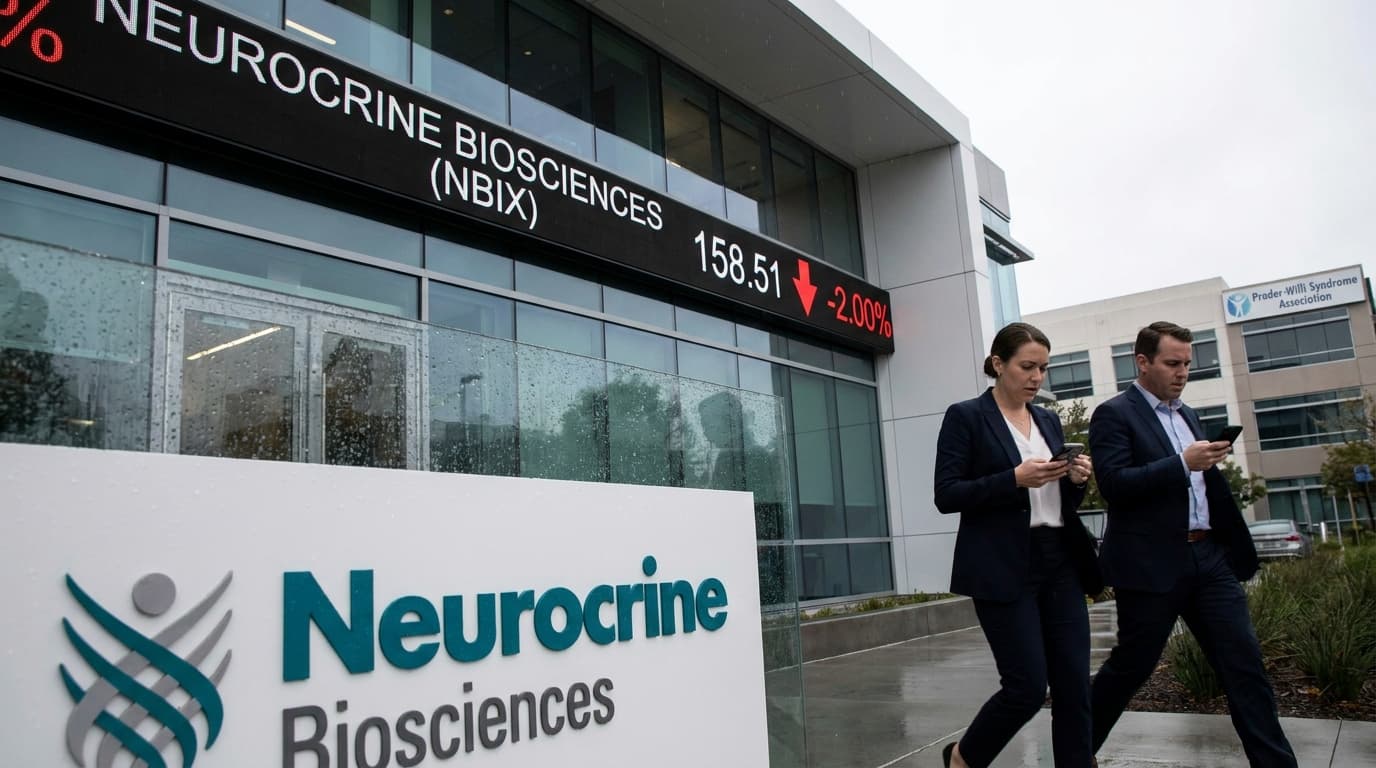
Investors reacted immediately. Neurocrine opened trading Wednesday down 2% to $158.51.
BMO said potentially increased physician caution around prescribing, along with the risk of regulatory scrutiny, could limit uptake and constrain the product launch in coming quarters. For a rare-disease product still early in commercialization, that is the main business risk: not necessarily an immediate label change, but a slower launch if doctors become more selective about who starts treatment and under what monitoring conditions.
Vykat also has corporate significance beyond a single launch. Neurocrine acquired the drug through its $2.9 billion purchase of Soleno Therapeutics in April, making the asset an important test of post-deal execution. If the safety signal persists, the debate will extend beyond pharmacovigilance and into acquisition-risk assessment for late-stage and newly commercial rare-disease assets.
Neurocrine’s response
In a statement provided to BioSpace, Neurocrine said it is in close contact with the FDA, patient advocacy groups, and prescribers about post-marketing surveillance as more patients get on treatment. The company said Vykat XR has a compelling risk-benefit profile in the context of a very serious disease and added that it conducted extensive diligence on the safety profile, including adverse event data, during the process to acquire Soleno.
The immediate signal for the sector is not that causality has been proved; the sources explicitly do not support that conclusion. It is that rare-disease launches can move from breakthrough moment to risk-management exercise quickly once real-world adverse event reporting begins, especially when the therapy addresses a severe condition but enters a population that may already be medically fragile.
Join the BioIntel newsletter
Get curated biotech intelligence across AI, industry, innovation, investment, medtech, and policy delivered to your inbox.