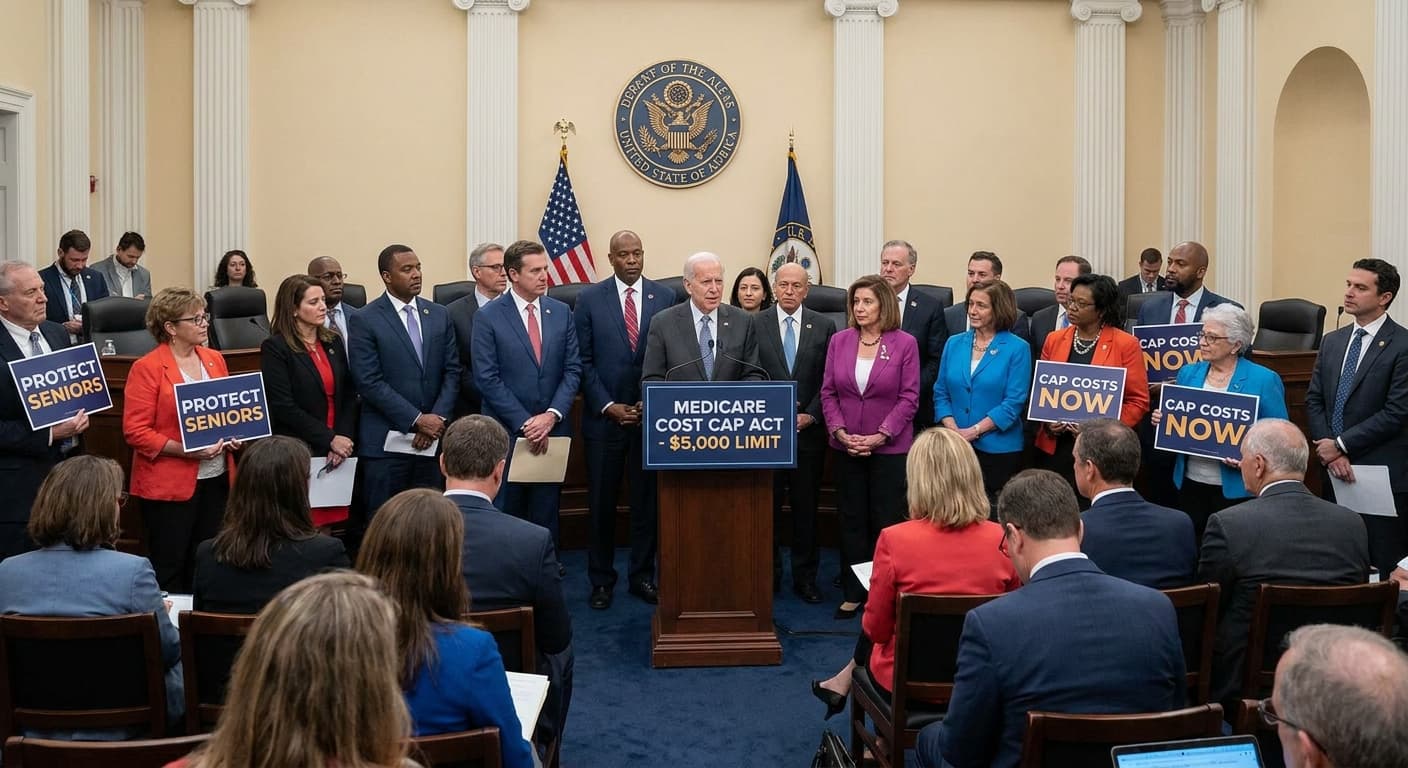
New Bill Led by Democrats Aims to Cap Medicare Out-of-Pocket Costs: Implications and Industry Reactions

The Medicare Cost Cap Act, introduced with bipartisan national interest, seeks to set a $5,000 limit on annual out-of-pocket expenses for traditional Medicare beneficiaries. This initiative marks a significant policy movement impacting retirees, care providers, insurers, and the broader healthcare economy.
Introduction
The financial burden placed on American seniors by out-of-pocket medical expenses has been a topic of national concern for decades. The Medicare Cost Cap Act, a legislative effort led by Democratic lawmakers, proposes to place a $5,000 cap on the annual out-of-pocket costs for beneficiaries of traditional Medicare. This proposed change, should it become law, would have cascading effects on patients, healthcare providers, policymakers, insurers, and the broader biopharmaceutical and medical technology sectors. In this in-depth analysis, we look at what the bill means, the problems it aims to address, the likely responses from key stakeholders, and the potential impact across the healthcare and life sciences ecosystem.
Background: What Is the Medicare Cost Cap Act?
The Medicare Cost Cap Act seeks to fundamentally reform how out-of-pocket expenses are handled within traditional Medicare. Currently, beneficiaries can face unlimited annual expenses for their healthcare once deductibles and coinsurance are exhausted, often resulting in extensive financial strain, debt accumulation, and even delayed or foregone medical care among seniors. This bill proposes a simple, transformative solution: a $5,000 ceiling on annual out-of-pocket costs for all traditional Medicare recipients.
The push for an out-of-pocket cap comes in response to data showing that the lack of a maximum exposure leaves seniors disproportionately vulnerable to devastating medical bills, especially those coping with chronic illnesses, cancer, rare diseases, and sudden acute medical events. According to industry experts and patient advocacy groups, the absence of such a limit is a principal reason some seniors opt for Medicare Advantage plans, which already feature caps, despite their narrower networks and sometimes stricter utilization controls.
The Scale of the Problem
Traditional Medicare serves over 30 million Americans, primarily those aged 65 or older. Unlike private employer-based insurance or Medicare Advantage plans, traditional Medicare currently does not have a statutory out-of-pocket maximum. As a result, a major hospitalization, a new chronic diagnosis, or repeated outpatient therapies can lead to costs far exceeding what many retirees can afford. These unbounded liabilities have led to a rising tide of financial stress among affected households, sometimes causing patients to ration medication, avoid preventive screenings, or resort to suboptimal care.
A $5,000 annual cap would be a watershed moment for the US healthcare system’s approach to financial risk protection for seniors. For context, a recent Kaiser Family Foundation report indicated that more than 7 million Medicare beneficiaries spent $2,000 or more on out-of-pocket healthcare costs in the last year, and a substantial portion face even higher bills, sometimes reaching five figures in a single year due to compounding illnesses or insufficient secondary coverage.
Policy Objectives and Rationale
The policy rationale behind the Medicare Cost Cap Act rests on both economic security and public health objectives. Proponents argue that reducing catastrophic out-of-pocket expenses could have the following benefits:
- Improved Medication Adherence: Cost barriers are a well-documented reason why seniors skip refills, abandon effective therapies, or forgo necessary care. A defined cap could encourage better chronic disease management, reduce downstream complications, and ultimately lower long-term medical costs.
- Prevention of Medical Debt: For older Americans living on fixed incomes, medical debt can quickly become unmanageable. By containing the out-of-pocket exposure, the policy aims to reduce bankruptcy risk and its associated social consequences.
- Economic Predictability: Having a capped maximum would make medical costs more predictable, helping seniors plan retirement budgets with greater confidence and assisting their caregivers in managing household finances.
- Equity: The current system disproportionately harms those with multiple or serious diagnoses, as opposed to healthier seniors, compounding disadvantage and causing disparities in health outcomes and security.
Industry Response: Insurers, Providers, Pharma, and Patients
Insurers
Insurance companies, particularly those that offer supplemental Medigap plans or Medicare Advantage, are keenly focused on the potential competitive reshuffling that a cost cap would trigger. Medicare Advantage plans, which cover nearly as many lives as traditional Medicare, have long leveraged their out-of-pocket maximums as a key selling point. A level playing field could shift enrollments and reshape product design, with Medigap policies possibly adjusting premiums, benefits, or administrative fees.
Some industry analysts note that plan sponsors could respond by tightening utilization controls or lobbying for commensurate changes in reimbursement models to protect profitability. The possible need for reimbursement adjustments or additional funding mechanisms has also emerged in policy debate.
Providers
Healthcare providers—ranging from primary care physicians to hospital systems and specialty clinics—are expected to cautiously welcome a move that makes patient bills more predictable. Less patient financial stress could mean fewer write-offs due to unpaid bills, streamlined collections, and more clinically sound care utilization, as patients would be less likely to defer or avoid treatment due to cost. However, providers may also brace for shifts in patient flow between Medicare Advantage and traditional Medicare.
Biopharma and Medical Technology
The life sciences industry, which regularly confronts patient access barriers tied to cost-sharing obligations, would likely see a net-positive effect from reforms that improve seniors’ ability to afford therapies. Some analysts suggest a cap could marginally improve the uptake of high-cost specialty drugs or novel diagnostics, especially in chronic and rare disease categories. However, the ultimate impact will depend on implementation specifics, including whether copays for drugs contribute to the cap and how ancillary services are treated.
Patient Advocacy Groups
Patient advocacy organizations have long advocated for greater protections against medical bankruptcy and for capped liabilities. The bill’s introduction has been met with support from groups such as AARP and various disease-specific associations that focus on cancer, heart disease, diabetes, and rare disorders.
Potential Economic and Operational Implications
The implementation of a $5,000 cap would likely necessitate a suite of operational, administrative, and fiscal changes at CMS, the agency overseeing Medicare. New billing systems, claims processing adjustments, and education for beneficiaries would be required. Policymakers may also face challenging decisions about how to fund the increased federal expenditure associated with capping beneficiary costs, as the economic burden of costs above the cap would shift in part to taxpayers.
Additionally, unintended consequences could include:
- Premium Adjustments: If funding formulas shift, traditional Medicare premiums could see upward pressure.
- Access Differences: Providers could experience regional differences in how quickly they adapt to new payment and billing frameworks.
- Care Utilization: There may be increased care-seeking behavior, especially among those who previously deferred treatment due to cost concerns.
Legislative Status and Political Outlook
The bill’s lead sponsors believe that bipartisan support is possible, given the widespread concerns about senior financial insecurity. However, congressional gridlock, broader debates about Medicare solvency, and parallel policy issues (such as prescription drug price negotiations) could delay or derail passage. The bill’s prospects will be shaped by ongoing negotiations, committee markups, industry lobbying activity, and voter sentiment as election cycles approach.
Forward-Looking Perspectives
Should the Medicare Cost Cap Act become law, it would significantly reshape the healthcare landscape for millions of Americans. Beyond the direct impact on beneficiaries, a successful cost-cap model could spur similar reforms in other public programs or inspire private insurers to reassess their benefit structures. Many experts believe that, if designed with robust implementation frameworks, the policy could enhance quality of life for seniors, reduce aggregate medical debt, improve disease management, and also trigger new waves of product and service innovation for healthcare and biopharma companies seeking to engage a newly empowered patient population.
Continued monitoring of the bill’s progress, regulatory guidance, and industry adaptations will be essential for investors, executives, care providers, and patient advocacy groups.
Conclusion
The Medicare Cost Cap Act represents a major effort to address a chronic weakness in US healthcare’s social contract: unbounded out-of-pocket risk for seniors relying on traditional Medicare. Its passage could have transformational implications—extending well beyond public sector insurance into commercial markets, R&D allocation decisions, and even global comparative debates over how to best protect vulnerable populations from financial hardship. Policymakers, health sector leaders, and stakeholders across the value chain will be closely watching developments in the coming months and years.
Source: MedCity News
Join the BioIntel newsletter
Get curated biotech intelligence across AI, industry, innovation, investment, medtech, and policy delivered to your inbox.