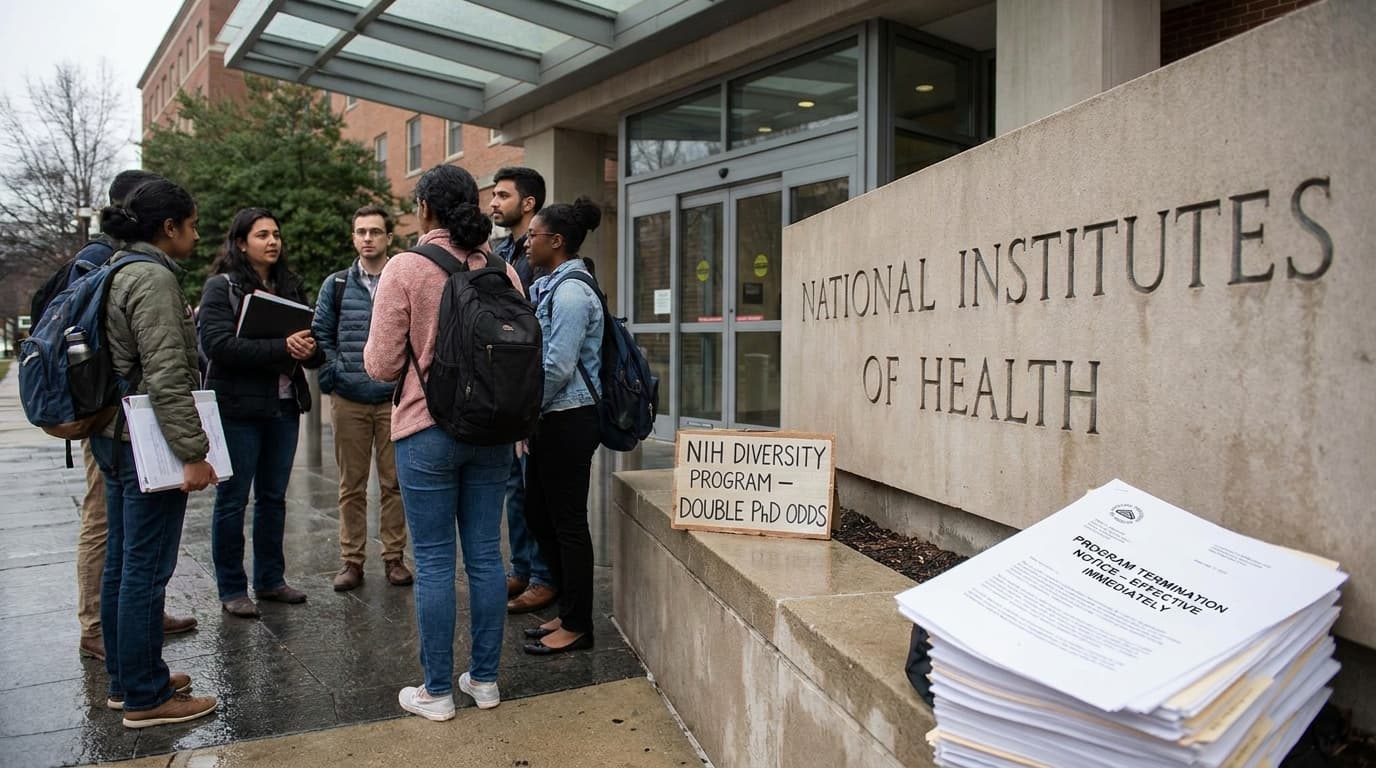
NIH Diversity Programs Double Undergraduate PhD Odds, but are Axed Anyway: Lessons from a 20-Year Study

A landmark study finds diversity-focused NIH programs dramatically increased students' Ph.D. attainment, yet they were discontinued despite proven success. This decision’s implications reverberate across U.S. biomedical training, spotlighting critical debates on equity, effectiveness, and long-term scientific impact.
Introduction
Scientific talent drives progress in the biomedical arena, yet persistent inequities along racial, ethnic, and socioeconomic lines have traditionally limited access to advanced educational opportunities. With the current landscape under the microscope, a new 20-year longitudinal study has delivered striking news: Diversity-oriented programs supported by the National Institutes of Health (NIH) were found to double the likelihood that undergraduate participants would earn a Ph.D. Despite this positive outcome, these highly effective initiatives were ultimately terminated. This in-depth analysis explores the evidence, context, and far-reaching implications of both the programs and their shuttering, drawing on new findings and policy debates without promotion or speculation.
The Study: Two Decades of Impact
The study at the center of this discussion tracked undergraduates for 20 years to analyze the effects of two major NIH diversity programs. Its most headline-grabbing takeaway: Participation in these programs doubled students’ odds of completing doctoral training, a remarkable achievement given longstanding disparities in graduate science education.
The scope of the study ensured robust, real-world conclusions—by choosing a longitudinal approach, researchers could follow participants and compare outcomes against similar peers outside the programs. The findings are especially notable for their scale and temporal reach, addressing often-cited gaps regarding the durability and generalizability of diversity program effectiveness.
What Were the NIH Diversity Programs?
While the specific names and operational details of the programs were not provided in the initial source snippet, NIH has for decades launched and refined efforts aimed at broadening access to advanced research training. Such programs often target undergraduates from groups historically underrepresented in biomedical research, providing research experiences, mentorship, networking, financial support, and access to scientific conferences or summer internships.
Core goals have typically included:
- Increasing entry and retention in STEM (science, technology, engineering, and mathematics) fields
- Supporting transitions from undergraduate to graduate or professional training
- Creating an inclusive pipeline for the next generation of academic, clinical, and biomedical leaders
Evidence of Success: Doubling PhD Odds
The study’s robust finding—doubling the odds of earning a Ph.D.—places NIH’s diversity initiatives among the most effective interventions disclosed in recent U.S. biomedicine education research. Such a dramatic difference in outcomes highlights the unique value-add of targeted mentorship and hands-on research experiences for students who might otherwise lack access to scientific careers.
The context is critical: Multiple reports and statistics have demonstrated that individuals from historically marginalized backgrounds—whether due to race, first-generation status, or socioeconomic disadvantage—face significant barriers in accessing advanced study. Shrinking opportunity gaps at the undergraduate level has the potential for compounding positive effects throughout the entire biomedical ecosystem, strengthening research, healthcare innovation, and ultimately patient outcomes.
Program Termination: Weighing Evidence vs. Budget Priorities
Despite clear success, the NIH discontinued these diversity initiatives. While the reasons were not explicated in the news blurb, such decisions typically reflect complex trade-offs between budgetary constraints, shifting programmatic priorities, and political winds.
The termination raises tough questions for policymakers and academic stakeholders:
- What criteria are used to assess program success and continued funding?
- To what extent should evidence of effectiveness outweigh competing fiscal or strategic priorities?
- How can stakeholders ensure that program discontinuation does not erase hard-won gains or stifle future progress on diversity, equity, and inclusion?
Such questions are increasingly urgent as diverse representation remains an explicit goal of many major health and science funders, institutions, and legislative agendas.
What Are the Broader Implications?
-
Future Pipeline Risk: Ending proven programs risks reversing recent advances in representation within the biomedical research workforce. The downstream effects could influence the composition of laboratories, the content of research questions, and patient impact for decades to come.
-
Signal to Institutions: The move may signal to universities and other funders either a call to fill the gap or, conversely, a reason to deprioritize similar work if federal support is seen as unstable.
-
Evaluation Challenges: Demonstrating causation from short-term outcomes is complex, but this longitudinal research provides robust, actionable metrics. Ignoring such evidence sets a precedent for discarding data-driven program evaluation.
-
Equity Commitments: The contrast between program effectiveness and discontinuation could undermine trust that agencies are fully committed to their stated equity objectives, especially for stakeholders who only gained opportunities through such interventions.
National Context: Ongoing Debate Over Diversity in Science
The decision to terminate these programs unfortunately emerges at a time when science and medicine are already reckoning with issues of representation, equity, and institutional inertia. Numerous high-profile reports over the past decade have documented the benefits of increased diversity—for scientific discovery, for clinical trial outcomes, and for retaining top talent in U.S. research. At the same time, legal and political battles over affirmative action (including at the Supreme Court), changing demographics, and budget uncertainty combine to make sustained progress uncertain.
Conclusion: Balancing Evidence-Based Policy and Future Progress
The story of the NIH’s terminated diversity programs offers a textbook example of the complex interplay between evidence, policy, and values in American science. Empirical data supports the notion that targeted support for undergraduates yields dramatic results, and yet the discontinuation of such programs—despite their proven worth—highlights enduring tensions within the research enterprise.
For medical educators, academic leaders, policy makers, and students, the lesson may be clear: The evidence robustly supports continued investment in equity-building programs. Whether or not future funding restores what was lost, the conversation about diversity, access, and scientific excellence will persist as a key national concern.
Read the full study and more in-depth reporting at STAT News.
Join the BioIntel newsletter
Get curated biotech intelligence across AI, industry, innovation, investment, medtech, and policy delivered to your inbox.