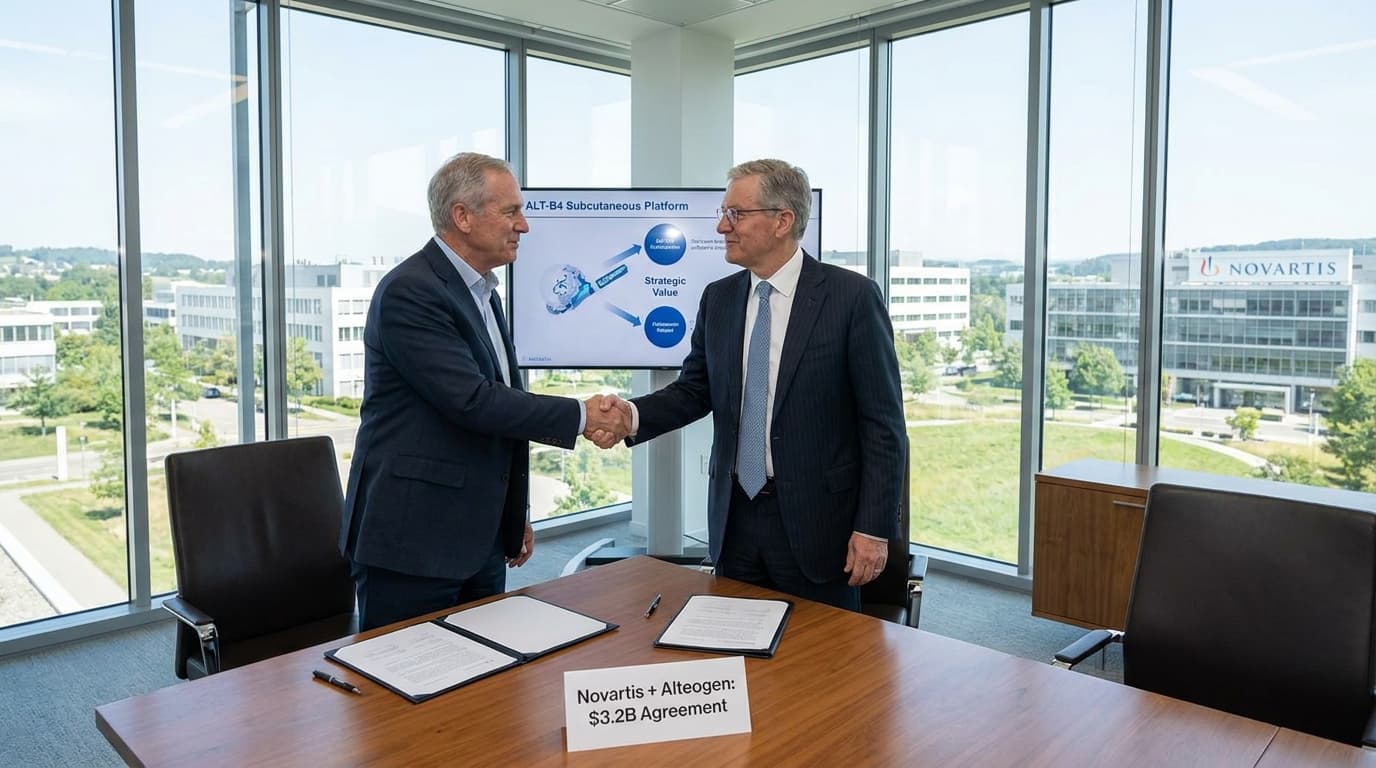
Novartis Signs Up To $3.2 Billion Alteogen Deal, Expanding Its Subcutaneous Delivery Options

Alteogen said Novartis will hold multiple options to secure exclusive rights to develop drugs using ALT-B4, though the release did not disclose an upfront fee. The agreement extends a run of partnerings that has turned the Korean company into one of the main challengers to Halozyme Therapeutics in subcutaneous drug delivery.
Novartis has struck an option and license agreement with Alteogen for its ALT-B4 subcutaneous drug delivery technology, in a deal that could be worth more than $3.2 billion if all options are exercised and all milestones are achieved. The Swiss drugmaker will have multiple options to obtain exclusive rights to develop drugs using the platform.
Neither company disclosed an upfront payment. Alteogen’s press release omitted one, and Novartis did not immediately provide further detail to Fierce Biotech. That leaves the headline value heavily milestone-driven, which is typical for platform access deals but also means the near-term financial commitment is unclear.
Why This Platform Keeps Drawing Partners
Alteogen has become one of the more prominent companies in subcutaneous delivery by offering an alternative to Halozyme Therapeutics. Its ALT-B4 technology is designed to facilitate subcutaneous administration, a formulation shift that large drugmakers increasingly pursue when they want to broaden use settings or improve product convenience.
Merck & Co. gave Alteogen a major endorsement in 2020 by choosing ALT-B4 for the subcutaneous version of Keytruda. Since then, Alteogen has continued to add large pharmaceutical partners. AstraZeneca partnered with the company in 2025. This year, GSK disclosed a single-product deal worth up to $265 million and Biogen signed a pact worth up to $549 million covering as many as two assets. Last month, Alteogen announced another agreement valued at up to $365 million with an unnamed drugmaker.
Those earlier transactions provide some context for the Novartis number. Biogen and GSK each paid $20 million upfront, but their total economics were far smaller than Novartis’ stated ceiling. The scale difference suggests Novartis may be seeking broader optionality across more products rather than a narrow one-asset use case.
Strategic Readthrough For Novartis
Novartis has already shown interest in formulation technologies. In 2024, it paid $20 million upfront to Lindy Biosciences for access to a suspension technology for medicines against multiple biologic targets. The Alteogen agreement adds another tool to that strategy, and potentially a more expansive one given the multiple options embedded in the deal.
The signal here is less about one named drug than about portfolio design. Large biopharma companies are paying meaningful sums for delivery technologies because administration route can shape competitiveness late in development and after launch. By joining Alteogen’s client list now, Novartis is buying flexibility before specific asset choices are public, which can be valuable if it wants to make existing or future biologics easier to use without having to build the enabling platform itself.
Join the BioIntel newsletter
Get curated biotech intelligence across AI, industry, innovation, investment, medtech, and policy delivered to your inbox.