Obesity Genes: Moving Beyond a Binary View of Genetic Risk

While mainstream discussion centers on only two obesity-associated gene variants, hundreds of genetic factors shape individual risk. This post delves into why oversimplifying genetic causality in obesity distorts scientific understanding, clinical approaches, and public policy—and why a more nuanced view is vital for innovation.
Introduction
Obesity is among the most urgent public health issues of the 21st century, characterized by complex biological, environmental, and social determinants. Yet, despite decades of genetic research revealing a highly intricate picture, recent discourse on obesity genetics still seems to orbit primarily around two gene variants. In this analysis, we explore why restricting focus to these few genes does a disservice to science and society, and how a broader genetic perspective offers the map we need for truly personalized obesity prevention and care.
The Oversimplification of Obesity Genetics in Public Discourse
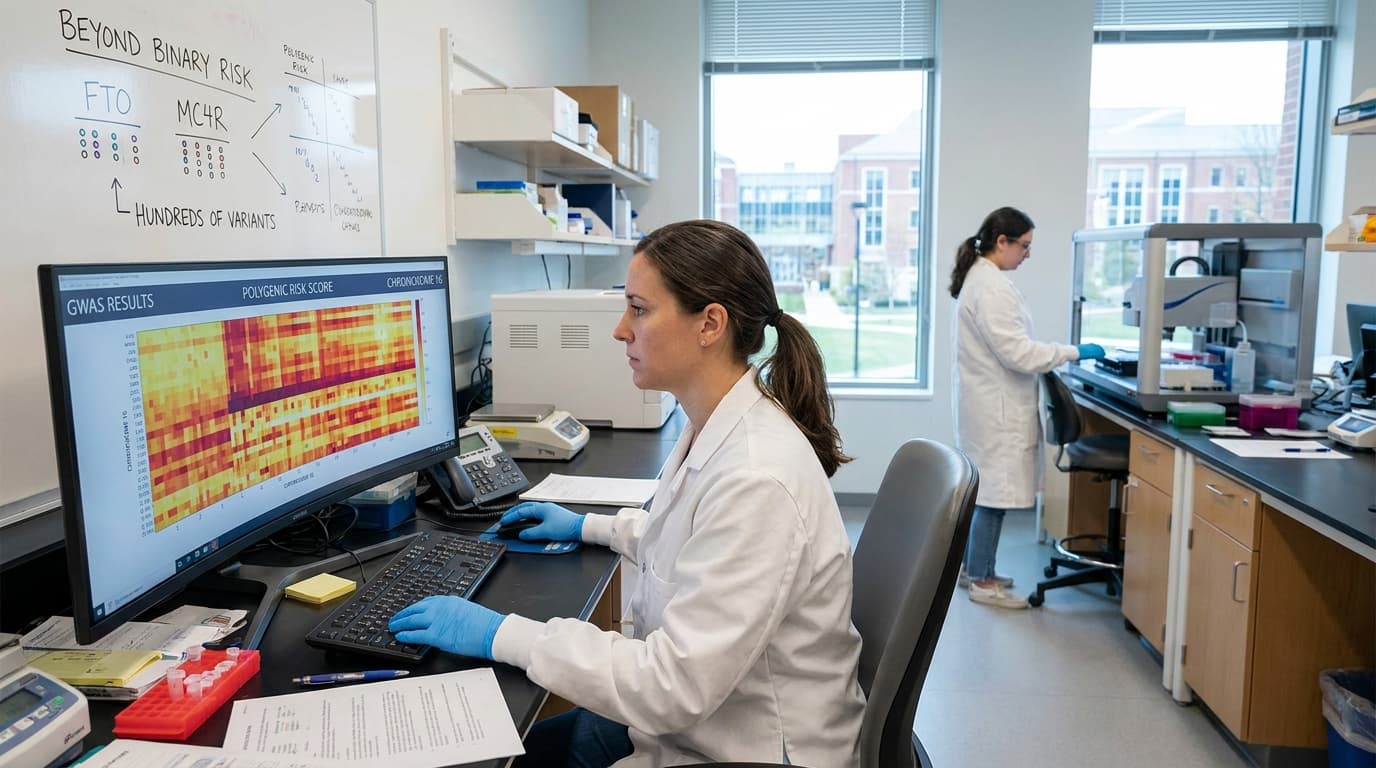
Mainstream news coverage, popular health resources, and even some clinical pathways continue to elevate a binary narrative: certain gene variants, most notably FTO and MC4R, are treated as the defining factors of an individual’s risk for developing obesity. While the role of these genes is both real and statistically significant, this emphasis eclipses the profoundly polygenic nature of obesity risk.
Hundreds of gene variants—across metabolic pathways, neuroendocrine axes, and even genes with as-yet-unknown functions—influence weight. The genetic contributions to obesity are not only numerous, but interact in subtle, contextual ways that defy simplistic one-size-fits-all solutions. By centering the debate on just two genes, we risk perpetuating clinical misconceptions, narrowing the field of research, and shaping policy in misguided ways.
Understanding the Real Genetic Architecture of Obesity
The Science: More Than a Handful of Genes
Extensive genome-wide association studies (GWAS) and sequencing projects across diverse human populations have revealed that obesity heritability is spread over hundreds—if not thousands—of genetic loci. These variants may individually exert only a small effect, but their cumulative impact is substantial. Recent research has detailed the following:
- Polygenic Risk Scores: By aggregating information from hundreds of SNPs (single nucleotide polymorphisms), researchers can begin to explain much more of the observed variation in body mass index (BMI) and obesity risk than by focusing on just a few mutations.
- Gene–Environment Interactions: The genetic signature that predisposes an individual to obesity can interact with their diet, activity, stress, sleep, and even gut microbiome in complex and non-linear ways.
- Epigenetics and Modifiers: Many gene variants are silently influenced by epigenetic modifications such as DNA methylation or histone acetylation, further complicating the deterministic narrative around genetic risk.
- Rare Variant Contribution: While common variants dominate the statistical landscape, rare sequence disruptions in certain genes can have severe consequences for weight regulation, but these account for a minority of cases seen in clinical practice.
Why Do We Still Hear About Just Two Genes?
The persistent focus on a small number of gene variants emerges from several overlapping dynamics:
- Early Research Legacy: FTO and MC4R were among the first-identified genetic ‘hits’ in human obesity genetics, hence their continued prominence.
- Media and Clinical Simplicity: Narratives that reduce risk to a binary—“you have the variant, or you don’t”—are easier to communicate, but not necessarily accurate or actionable.
- Commercial Testing Models: Many direct-to-consumer genetic tests for health or wellness focus on the most well-established variants, which can give a misleading impression of completeness.
- Regulatory, Policy, and Insurance Barriers: Because much guidance and medical reimbursement hinge on clearly defined, validated risk markers, most clinical implementations remain limited to a handful of genes.
What’s Missed with an Overly Narrow Genetic Framework
Neglecting the complexity of obesity genetics has practical and societal implications across multiple domains:
1. Scientific Discovery and Innovation
By focusing research investment primarily on two genes, the pace of scientific innovation suffers. Dozens of metabolic and signaling pathways that could be leveraged for new therapies, diagnostics, or preventive strategies remain underexplored.
Broader genetic panels and high-throughput sequencing approaches are unlocking new mechanisms of weight regulation, but the inertia of the status quo slows their translation into clinical tools.
2. Personalized Medicine Limitations
If polygenic risk is underappreciated, efforts to personalize prevention and treatment lose accuracy. Individuals may be incorrectly categorized as high or low risk based on incomplete profiles. As the field matures, polygenic risk scores—and eventually, whole-genome data—will allow for much finer granularity in predicting who is at greatest risk and who might respond best to different interventions.
3. Public Policy and Health Messaging
Policy shaped by binary narratives may inadvertently reinforce stigma or overpromise on the power of genetic testing. Obesity is not deterministic, nor is it entirely explained by a few gene variants. Messaging to patients, families, and populations should reflect the multifactorial, modifiable nature of risk, not simply genetic ‘destiny.’
4. Equity Impacts
Genetic research on obesity has historically been overrepresented in populations of European ancestry. Singular focus on legacy variants can further disadvantage groups whose risk profiles may stem from an entirely different constellation of genetic factors yet to be adequately characterized.
Toward a Comprehensive Genetic View in Obesity Care
A reset is underway in academic circles, with bioinformaticians and clinical geneticists developing increasingly sophisticated models of obesity risk that aggregate many sources of genomic and non-genomic (environmental, behavioral, metabolic) data.
- Integration of Multi-omic Data: Modern obesity genetics is moving into transcriptomics, metabolomics, and proteomics, linking DNA variants to functions in RNA and proteins to paint a much richer portrait of risk.
- Machine Learning and Predictive Analytics: With big data from biobanks and clinical registries, AI tools are being deployed to pinpoint compound genetic risks and develop risk predictions that factor in individual, societal, and environmental context.
- Personalized Intervention Pathways: Efforts to prevent or treat obesity are beginning to take this complexity into account. Future clinical trials increasingly stratify participants by polygenic risk, study differential response to interventions, and refine protocols accordingly.
Implications for Researchers, Clinicians, and Policymakers
A deeper, more nuanced understanding of genetic risk is required to fully harness the potential of genomics in addressing obesity. Researchers should prioritize breadth and diversity in their studies. Clinicians must become conversant in polygenic risk rather than just monogenic explanations. Policymakers should structure funding, regulation, and patient communication in ways that respect the complexity of genetic influence.
Organizations engaged in biopharma research or commercializing interventions should beware the risks of overpromising the value of single-gene testing. Only with a comprehensive, multi-factorial approach will the promise of personalized, equitable prevention and care in obesity be realized.
Conclusion
Limiting the discussion of obesity to a small number of gene variants does a tremendous disservice to patients, innovation, and the future of the field. Obesity’s genetic roots run far deeper and wider than the headlines suggest. As science advances, healthcare systems, clinicians, researchers, and policymakers must ensure their models and messages reflect all that the genome can—and cannot—tell us about weight, health, and the lifelong, multi-dimensional challenge of obesity.
(Source: MedCity News)
Join the BioIntel newsletter
Get curated biotech intelligence across AI, industry, innovation, investment, medtech, and policy delivered to your inbox.