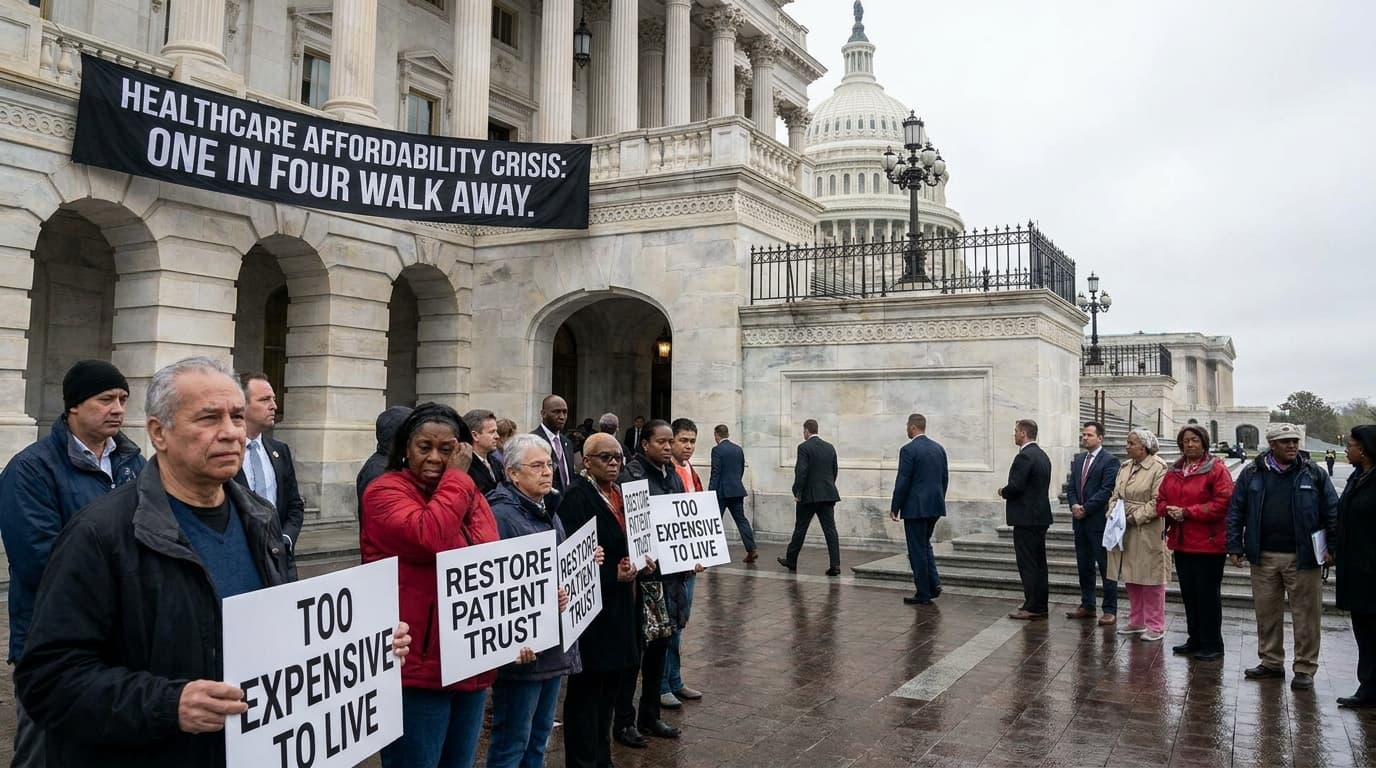
Why One in Four Americans Is Walking Away from Healthcare

The healthcare affordability crisis is quietly eroding trust in the U.S. medical system, with one in four Americans opting out of care. Experts and industry leaders are now exploring transformative ideas that genuinely start with patient needs and priorities, challenging longstanding assumptions.
Introduction
Healthcare affordability in the United States remains one of the most debated and impactful issues of our generation. As attention repeatedly swings between political wrangling over insurance reform, major breakthroughs in drug development, and the technological transformation of medicine, a subtler yet more devastating dynamic is taking hold: the quiet, persistent worsening of affordability and access to care for millions of Americans. According to recent reporting, the crisis has reached a point where one in four Americans is now walking away from healthcare altogether, a statistic that both alarms and demands deeper investigation.
The Dimensions of Affordability and Access
The cost of healthcare in the United States continues to rank among the highest globally, often prompting policymakers, payers, and healthcare systems to frame affordability as a matter of insurance design, cost-sharing requirements, or pharmaceutical pricing. Yet for individuals and families, the calculus is more visceral and immediate. High deductibles, unaffordable copays, and lack of price transparency all conspire to render even basic medical visits prohibitively burdensome.
It is no longer simply an issue of high costs at the abstract, systemic level. The affordability crisis has become a trust crisis. The effect is a profound, system-wide disengagement, with many Americans opting out of recommended care, skipping needed prescriptions, or avoiding physicians entirely. For many, avoiding the health system is a rational response to both financial strain and the perceived lack of support from payers and providers alike.
Patient Stories: More Than Statistics
Every statistic hides countless lived experiences. For the millions counted among the one in four walking away, the reasons may differ, but the underlying stories tend to share a common thread: a sense of being let down by a system that should be designed to help, not burden, its users. Some decline preventive screenings, others miss follow-ups for chronic conditions, while many delay urgent care due to cost anxiety.
To better understand this national phenomenon, interviews with individuals across the socioeconomic spectrum often reveal crises triggered by medical bills that upend household budgets, bankruptcies arising from a single episode of unplanned hospitalization, or a simple inability to find in-network providers, all exacerbated by widespread uncertainty about what care will actually cost.
Economic and Social Impacts
The ramifications of healthcare avoidance are far-reaching. At the macroeconomic level, decreased engagement with preventive and early intervention services leads to worsening outcomes and higher downstream costs, not only for individuals but for the entire economy. When a significant proportion of the population forgoes medical care, untreated conditions escalate into emergencies, productivity declines, and families destabilize under mounting stress.
The downstream impacts—ranging from increased hospital readmissions to rising disability rates and premature deaths—reverberate through workplaces, schools, and communities. Children forego vaccines and checkups, elderly patients remain isolated or untreated, and adults living with chronic illnesses risk complications that would have been manageable, or even avoidable, had they received timely care.
Trust Erosion and the Healthcare Relationship
Increasingly, industry leaders and patient advocates alike acknowledge that affordability isn't only a financial challenge but a fundamental matter of trust. The perception that healthcare systems prioritize profits, billing complexity, or bureaucratic requirements over the wellbeing of patients leads to a breaking point—a moment when patients choose to exit the system, perhaps for good.
Patient trust, once lost, is notoriously difficult to repair. Stories abound of patients being unable to reach their doctors due to network limitations, experiencing opaque billing practices that multiply costs unexpectedly, or finding crucial medications suddenly unaffordable following insurance plan changes. These scenarios contribute to a growing belief that the system is not only unaffordable but also unreliable and even adversarial.
Industry Response: Calls for a Patient-Centered Overhaul
Faced with these realities, healthcare industry leaders propose a radical shift in priorities. The consensus is that the system must begin where it always should have: with genuine patient needs, perspectives, and lived realities. This implies addressing affordability at its roots, ensuring care is designed and delivered in ways that align with patient circumstances, not just institutional convenience or payment models.
Some proposals focus on "starting with the patient"—a simple yet profound pivot away from top-down mandates toward co-created solutions. For instance, streamlining billing and claims, reducing administrative friction, or restructuring benefit designs so that financial barriers no longer deter appropriate care are on the table. Others advocate for more radical fee model innovations, alternative payment structures, and robust safety nets for the most vulnerable populations.
Institutional Barriers and Systemic Inertia
Reshaping such a deeply entrenched system is no small feat. Current financial incentives often reinforce status-quo behaviors, channeling resources into administrative complexity and specialty services, while primary care and preventive services remain underfunded. Rebalancing these priorities requires not just technical fixes but the political will to reimagine insurance, payment, and provider relationships.
Legislative efforts, both at federal and state levels, are perpetually under debate. Some initiatives seek to cap out-of-pocket expenses, enforce pricing transparency, or regulate pharmacy benefit managers. Meanwhile, non-profit organizations and patient advocacy groups fill some gaps, but structural solutions remain elusive without wide-ranging policy action.
Broader Societal Implications
The persistence of the affordability crisis underscores deeper questions about the role of healthcare in society at large. Access to medical care is not simply a private good but a public concern, intimately tied to workforce health, educational attainment, life expectancy, and national productivity. The crisis is a bellwether signaling the need for a realignment of sectoral aims and public priorities.
Moreover, the burden of unaffordable care falls disproportionately on the most marginalized—those with low incomes, chronic illnesses, disabilities, or unstable employment. The resulting inequities perpetuate cycles of ill health and poverty, undermining not only individual lives but the nation’s collective wellbeing.
Looking Ahead: Opportunities for Transformation
As the healthcare affordability dilemma continues to make headlines and elicit urgent debate, the search for more effective solutions grows ever more intense. Stakeholders from across the ecosystem—regulators, industry executives, technology innovators, clinicians, and patient voices—are enjoined to build a system that prioritizes health over profit, access over exclusion, and patient well-being over process adherence.
With one in four Americans feeling compelled to walk away from healthcare, the time for incremental change may be past. The dialogue is now shifting towards bold reforms, rooted in long-term sustainability and moral imperatives alike. The challenge facing American healthcare is immense, yet it is not insurmountable, provided the sector delivers on the long-standing promise to serve patients first, and to make affordability and trust foundational pillars of the future system.
Source: MedCity News – Why One in Four Americans Is Walking Away from Healthcare
Join the BioIntel newsletter
Get curated biotech intelligence across AI, industry, innovation, investment, medtech, and policy delivered to your inbox.