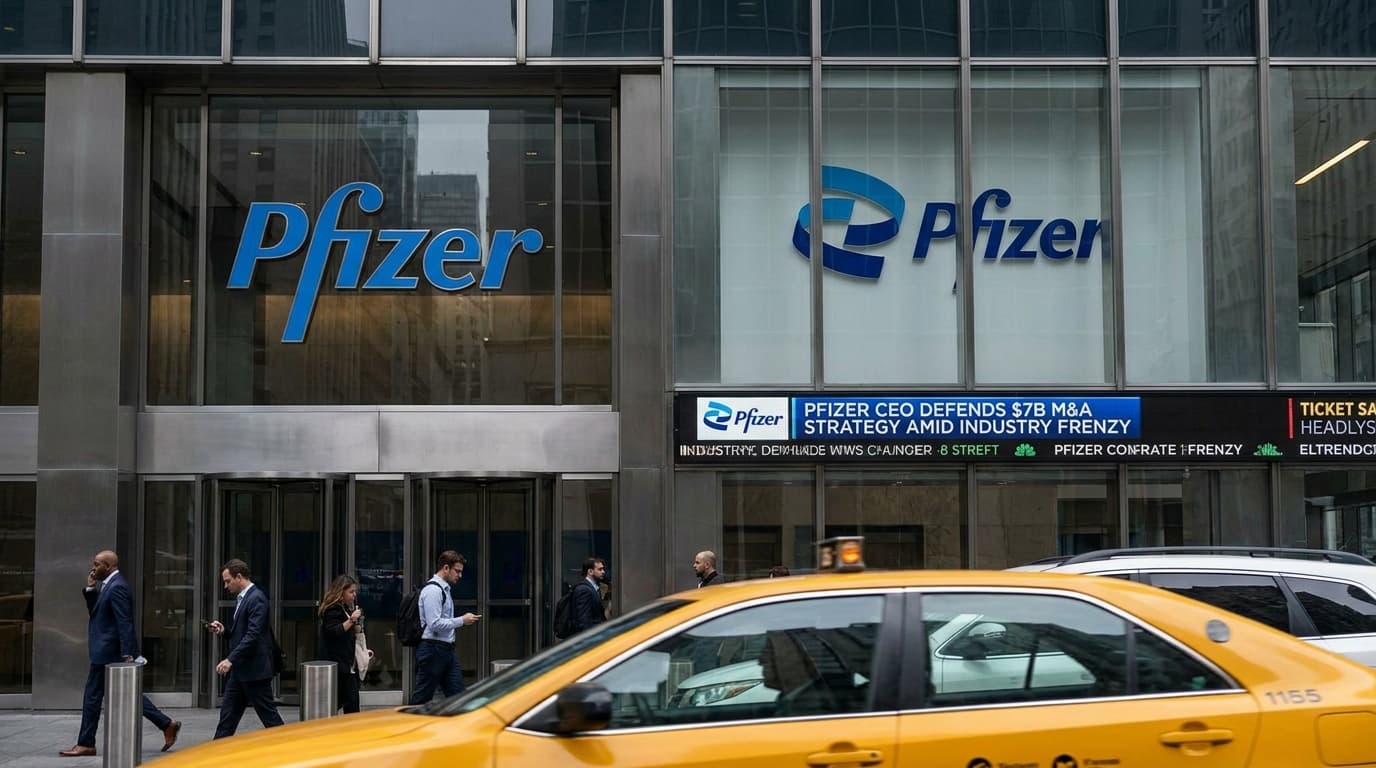
Pfizer CEO Stands By $7B M&A Strategy Amid Industry Buying Frenzy

With the pharmaceutical sector witnessing heightened merger and acquisition (M&A) activity in 2026, industry analysts and investors are closely watching how juggernauts like Pfizer plc navigate a landscape defined by rising valuations, regulatory scrutiny, and strategic shifts. CEO Albert Bourla’s recent statements defending Pfizer’s $7 billion bolt-on strategy, even as peers pursue bigger deals, offer critical insight into the evolving playbook for pharma growth in a post-pandemic world.
Pfizer’s M&A Strategy: Staying the Course Amid 2026's Pharma Acquisition Frenzy
The pharmaceutical industry’s landscape in 2026 is dominated by a surge in merger and acquisition (M&A) activity. With competition intensifying and patent cliffs threatening legacy revenue streams, major players are racing to secure pipelines, platforms, and people through both transformative and bolt-on deals. Among the dominant voices shaping the discourse is Pfizer CEO Albert Bourla, who, during the company’s second quarter earnings call, responded to investor queries about whether Pfizer would escalate its M&A activity to match the feverish pace set by competitors. The answer: a firm defense of the company’s existing $7 billion bolt-on M&A strategy.
Albert Bourla’s “Disciplined Capital Deployment” Philosophy
Bourla’s approach stands in contrast to the deep-pocketed, high-profile spending that often characterizes boom cycles in pharmaceutical M&A. He explicitly articulated Pfizer’s commitment to execute a measured, strategic plan rather than chase short-term headlines or inflate company debt to pursue blockbuster deals at any price. Instead, Bourla’s preference for so-called “bolt-on acquisitions”—smaller, targeted buys that neatly complement existing assets—speaks to a longer-term vision of growth through added innovation and portfolio strengthening, rather than scale for its own sake.
Context: The 2026 Wave of Pharma M&A
2026 has seen a veritable arms race among large pharmaceutical companies. As peer organizations rush to strike deals—motivated both by industry consolidation trends and a desire to replenish pipelines before high-value patents expire—Pfizer faces mounting pressure from analysts and shareholders to act decisively. The company’s own post-pandemic challenges, including declining COVID-19-related demand and heightened competition across major markets, has intensified scrutiny on its capital deployment strategy.
Yet, while some industry peers opt for headline-grabbing acquisitions or pursue large-scale mergers with overlapping product portfolios, Pfizer’s stance remains: prioritizing value over volume. This philosophy, according to company communications, serves to protect shareholder value, avoid integration headaches, and maintain financial flexibility for future opportunities.
Investor Expectations and Wall Street’s Appetite for Deal Flow
The M&A race is not just about clinical assets—it’s about market perception. Wall Street typically rewards biopharma firms for aggressive moves that promise future growth and headline synergy targets. However, history has been replete with failed mega-mergers, costly integrations, and the dilution of research focus after large, unfocused M&A events.
Bourla’s defense of the bolt-on approach is a calculated move that attempts to align investor and board expectations with a prudent risk profile. Rather than swing for the fences with a single megadeal, Pfizer is opting for chess over checkers—targeting smaller acquisitions that fill specific gaps or expand into promising adjacent markets. In times of industry frothiness, such restraint is both praised and criticized, depending on market moods and the successes or miscues of rivals.
Beyond Strategy: The Risks and Rewards of Bolt-On Acquisitions
Bolt-on deals offer distinct benefits: they are inherently less risky, less likely to trigger antitrust scrutiny, and offer faster integration cycles compared to transformative mergers. In the best case, they allow a pharma giant like Pfizer to quickly supplement its R&D pipeline, enhance its therapeutic franchises, or access cutting-edge platforms (such as gene therapies or AI-driven drug discovery tools) without the distracting cultural and operational integration work demanded by megamergers.
However, critics argue that caution can also be costly. Passivity during periods of industry transformation can mean losing access to first-mover advantages or ceding valuable ground to rivals who are willing to pay more for innovation and scale. If bolt-on targets are continuously outbid, Pfizer runs the risk of missing key new medicines or platforms that could power growth for decades.
Industry Impacts: What Does Pfizer’s Stance Signal?
Pfizer’s strategy may influence not just its own fortunes but also sector-wide behavior. If their approach proves successful—delivering revenue growth, innovation, and investor returns without the pitfalls of blockbuster integration—other firms may follow suit, ushering in a new era defined by discipline rather than exuberance. Conversely, should competitors’ larger bets pay off, Pfizer’s leadership may face greater pressure to reconsider its tactics.
Regulatory Environment and Policy Considerations
Another vital dimension to Pfizer’s M&A calculations are regulatory expectations. Bodies in the U.S., EU, and other major markets have signaled an increased scrutiny of anticompetitive behavior and the risks of industry consolidation. Bolt-on deals, by virtue of being smaller and highly targeted, skirt much of the regulatory complexity that comes with major mergers—a reality not lost on executive leadership across the industry.
The Bottom Line for Pfizer and the Broader Pharma Industry
Bourla’s invocation of “disciplined capital deployment” is more than just strategic rhetoric—it’s a signal to shareholders, partners, and rival firms about how Pfizer intends to remain competitive amid the shifting sands of 2026’s biopharmaceutical sector. The company’s leadership continues to bet that a steady, incremental approach to M&A will ultimately drive sustainable growth, especially as the company navigates ongoing challenges in its existing business (such as patent expirations and fluctuating demand levels).
Industry observers will be tracking not only Pfizer’s forthcoming deals but also the company’s ability to convert its pipeline into meaningful late-stage and commercial assets. If the bolt-on approach yields new blockbusters while avoiding the challenges of large-scale integration, it may well redefine best practices for future M&A activity throughout the global life sciences sector.
For original reporting and additional analysis, see BioSpace: Pfizer CEO defends $7B bolt-on M&A strategy as peers rush to buy
Join the BioIntel newsletter
Get curated biotech intelligence across AI, industry, innovation, investment, medtech, and policy delivered to your inbox.