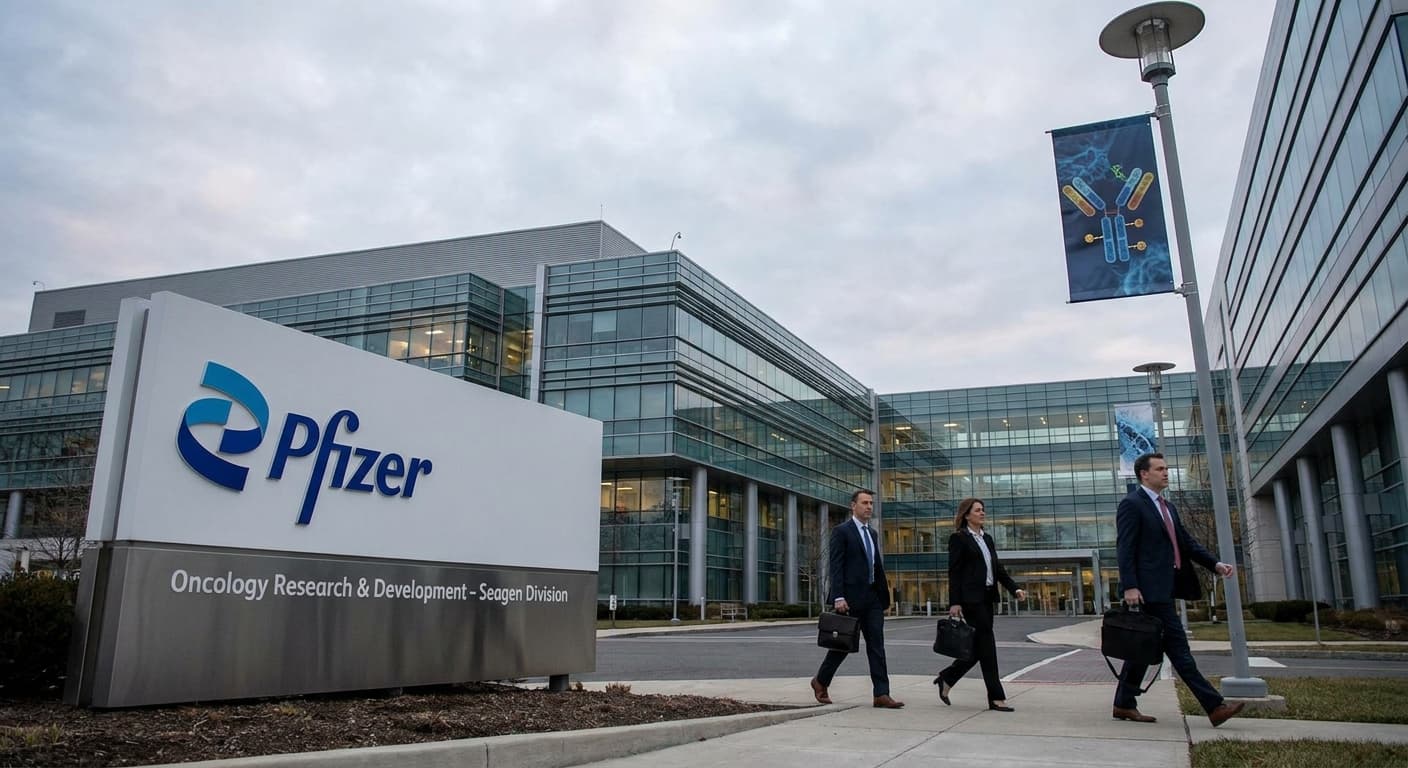
Pfizer Discontinues Seagen-Developed ADC for Solid Tumors: Implications for Oncology Drug Pipelines

Following a recent Phase 3 failure, Pfizer has quietly discontinued a Seagen-developed antibody-drug conjugate (ADC) for solid tumors. This decision marks a significant moment for both Pfizer’s oncology ambitions and the broader ADC sector, known for high hopes and recurring setbacks.
Introduction
In a move that has reverberated through the oncology biotech sector, Pfizer recently discontinued further development of a Seagen-developed antibody-drug conjugate (ADC) targeting solid tumors. The decision comes on the heels of an earlier failure in a pivotal Phase 3 study evaluating the candidate, sigvotatug vedotin, in non-small cell lung cancer. For Pfizer and the broader ADC industry, this development is more than just another program being shelved—it is a reflection of the significant challenges, scientific complexity, and strategic recalibrations shaping the pursuit of next-generation cancer therapies.
What Are ADCs and Why Are They Important?
Antibody-drug conjugates (ADCs) have long promised to revolutionize cancer treatment by combining the specificity of monoclonal antibodies with the potent cell-killing ability of chemotherapies. More simply, ADCs are "smart bombs," engineered to deliver toxins directly to cancer cells, thus improving efficacy while theoretically reducing harm to healthy tissue. This concept has fueled massive investment and intense competition among pharmaceutical giants and biotech startups alike. Key recent market approvals and hefty acquisition deals—Pfizer's $43 billion purchase of Seagen among them—fueled expectations that the ADC sector would represent the next major innovation wave in oncology.
Pfizer’s Bet on Seagen and the Outcome
Pfizer’s 2023 acquisition of Seagen was a defining moment for the oncology landscape. The deal was explicitly intended to bolster Pfizer's cancer portfolio, especially in the high-stakes field of ADCs. However, realizing the full potential of these therapies has proved elusive. The discontinuation of this latest program, announced with little fanfare, signals not only technical barriers to ADC development but also market and pipeline realities that large pharmas must continuously navigate.
The Fallout: Non-Small Cell Lung Cancer Setback
The specific asset at issue, sigvotatug vedotin, failed a Phase 3 study in non-small cell lung cancer (NSCLC), one of the most challenging and intensely pursued cancer subtypes worldwide. The failure underscored the gap between preclinical promise and real-world efficacy in heterogeneous and complex tumor environments. For patients, it means one fewer experimental treatment option and a reminder of the unpredictable road from preclinical validation to clinical and commercial adoption.
Broader Trends in ADC Development
The difficulties faced by Pfizer and Seagen are not isolated incidents. Across the industry, ADCs have exhibited a mixed track record. While there have been notable approvals, such as AstraZeneca and Daiichi Sankyo’s Enhertu and Gilead’s Trodelvy, many candidates have struggled with toxicity, limited efficacy, or difficulties in targeting. As the field moves from hematologic cancers (historically more amenable to targeted approaches) to solid tumors, the hurdles—tissue penetration, off-target effects, treatment resistance—become markedly higher.
Lessons Learned: Scientific, Clinical, and Regulatory Hurdles
One core challenge in ADC development is striking a balance: payload potency must be high enough to kill cancer cells, but not so high as to unleash unacceptable toxicity. Linker technology (the chemical tie between antibody and payload) also remains an ongoing site of innovation and setback, influencing both safety and efficacy. Furthermore, as companies pivot from blood cancers to solid tumors, the microenvironment of these tumors often hinders ADC delivery and action, making translation from lab to clinic especially difficult.
Strategic Implications for Pfizer and Competitors
Pfizer’s discontinuation of the Seagen-developed ADC program also signals how even the best-resourced pharma pipelines are not immune to attrition. The company’s decision to quietly cut the program without a major announcement may be a tacit acknowledgment of the fierce scrutiny now facing late-stage oncology bets, and the growing pressure to show not just scientific ambition but also clinical proof and economic value.
R&D Prioritization and Portfolio Review
In the current environment, pipeline prioritization has become a central theme for all major biopharma companies. Programs must clear ever-higher efficacy and safety bars while also demonstrating--early and convincingly--how they can fit into evolving treatment paradigms. Failures such as this one typically spur portfolio reviews, reallocation of resources, and in some cases, realignment of R&D strategy away from exposed or saturated subfields.
ADC Market Outlook: Is Momentum Slowing?
Despite setbacks, the ADC market remains robust, with multiple compounds moving through clinical development and several high-profile partnerships and acquisitions in recent months. However, every high-profile discontinuation acts as a “reality check” for investors, researchers, and clinicians, reinforcing the notion that scientific complexity demands patience and that universal solutions in oncology remain elusive.
Implications for Biotech Investors and Patients
For investors, Pfizer's move is a stark reminder of the risks inherent in oncology drug development, particularly in rapidly evolving modalities like ADCs. For patients, especially those with fewer lines of therapy left, each discontinued program can feel like a lost hope. However, it is worth remembering that attrition is an expected—if disheartening—part of the development pipeline, and that today’s failures often pave the way for tomorrow’s successes by illuminating new scientific questions or novel therapeutic approaches.
Regulatory and Policy Backdrop
As ADC development advances, regulatory scrutiny is intensifying. Agencies such as the FDA and EMA have implemented new guidance and post-marketing requirements to better track long-term toxicity, rare side effects, and real-world performance in diverse patient populations. This regulatory environment increases the cost and time-to-market for experimental therapies but, ideally, ensures better patient safety and more robust evidence for efficacy.
Conclusion: The ADC Sector at a Crossroads
Pfizer’s quiet discontinuation of its Seagen-developed ADC underscores that, for all its promise, the field remains both highly competitive and fraught with clinical risk. Advances in linker technology, new approaches to antibody design, and deeper mechanistic understanding are needed to unlock the full potential of ADCs—particularly in solid tumors.
For the ADC field, each setback is part of an iterative process, compelling the industry to refine strategies, focus on translational science, and manage both regulatory and patient expectations. The wave of innovation is far from over, but the path ahead is neither linear nor guaranteed. Stakeholders across pharma, biotech, regulatory agencies, and patient communities will be watching closely as the next chapter in ADC development unfolds.
Source: BioSpace
Join the BioIntel newsletter
Get curated biotech intelligence across AI, industry, innovation, investment, medtech, and policy delivered to your inbox.