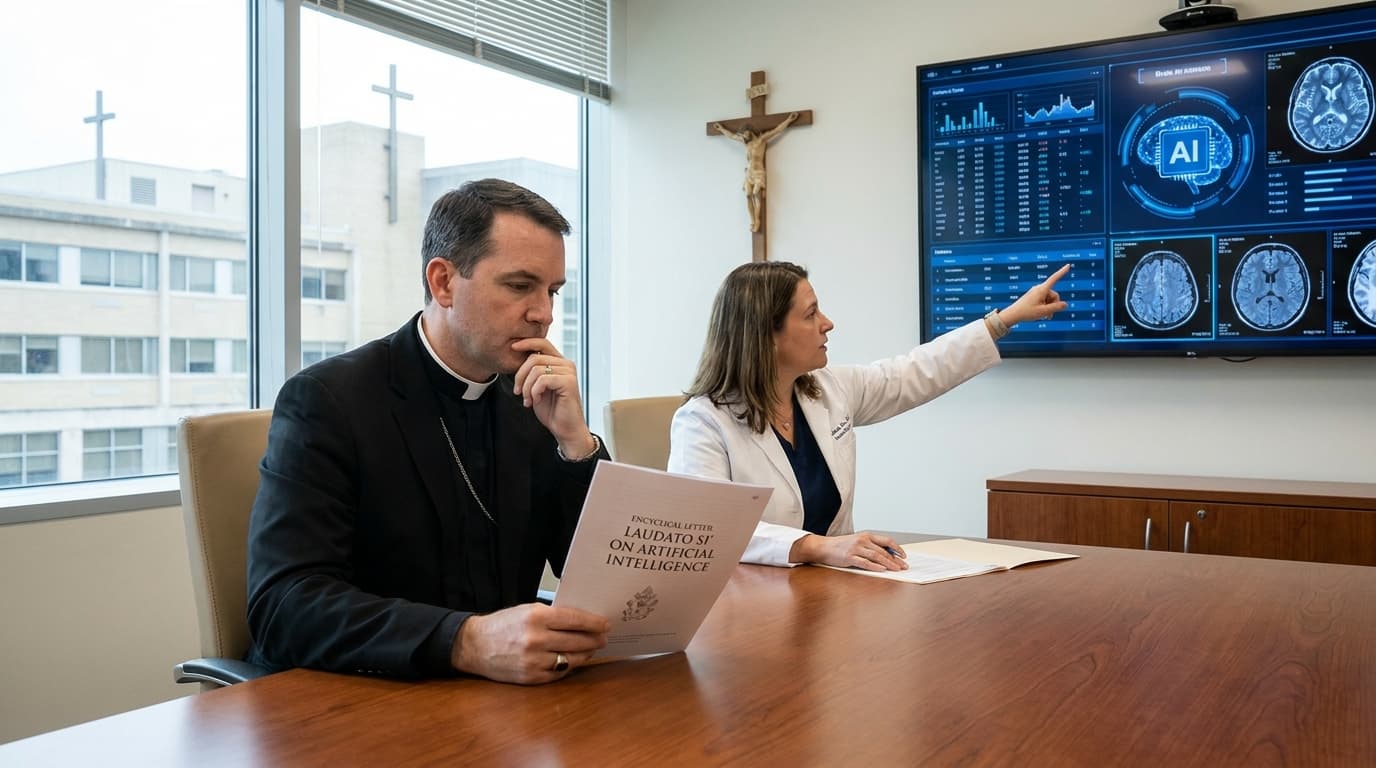
The Pope’s Encyclical on AI: Exploring Its Impact on Catholic Hospitals and Healthcare

This analysis delves into the themes of the pope's encyclical on AI, examining how its principles relate to healthcare delivery in Catholic institutions and beyond, with a focus on ethical considerations and AI integration.
In a significant development linking faith and modern technology, the pope has issued an encyclical on artificial intelligence (AI), with notable implications for Catholic hospitals and the wider healthcare industry. This comprehensive document offers ethical guidance and reflections on the opportunities and challenges AI presents in medical settings.
Background on the Encyclical
An encyclical is a formal papal letter sent to Catholic bishops and, by extension, the global Catholic community to address important issues. The pope’s focus on AI highlights the church’s engagement with 21st-century technological advances and their potential impact on human dignity and society.
AI in Healthcare: Opportunities and Ethical Challenges
Catholic hospitals, which form a substantial part of the healthcare landscape, are increasingly incorporating AI technologies for diagnostics, patient management, and treatment planning. The pope's encyclical urges a balance between embracing technological innovation and maintaining core ethical principles such as respect for human life, privacy, and social justice.
The document calls for critical examination of AI’s role in healthcare decisions, cautioning against overreliance on algorithms that might overlook the personal and spiritual dimensions of patient care. It underscores the need for transparency, accountability, and the protection of vulnerable populations in deploying AI tools.
Implications for Catholic Hospitals
The encyclical prompts Catholic healthcare institutions to reflect on their mission and values in an age of AI. It encourages incorporating ethical frameworks into AI adoption strategies, including guidelines for informed consent, data stewardship, and equitable access to AI-driven services.
This engagement may lead to the development of institutional policies that ensure AI technologies serve to enhance—not replace—the compassionate, holistic care that is central to Catholic healthcare.
Broader Impact on Healthcare
While rooted in Catholic teaching, the ethical themes addressed resonate widely across the healthcare sector. Healthcare providers, policymakers, and technology developers can draw lessons from the encyclical’s emphasis on dignity, justice, and the common good.
The pope’s insights invite broader societal reflection on how AI can be harnessed responsibly in healthcare to improve outcomes without compromising ethical standards or exacerbating disparities.
Conclusion
The pope’s encyclical on AI represents an important intersection of faith, ethics, and technology, particularly relevant to healthcare providers within Catholic systems but extending beyond them. By advocating for a measured, values-based approach to AI adoption, it contributes to an ongoing global dialogue about the responsible integration of AI in medicine.
Source: What the pope’s encyclical on AI means for Catholic hospitals, and all of health care
Join the BioIntel newsletter
Get curated biotech intelligence across AI, industry, innovation, investment, medtech, and policy delivered to your inbox.