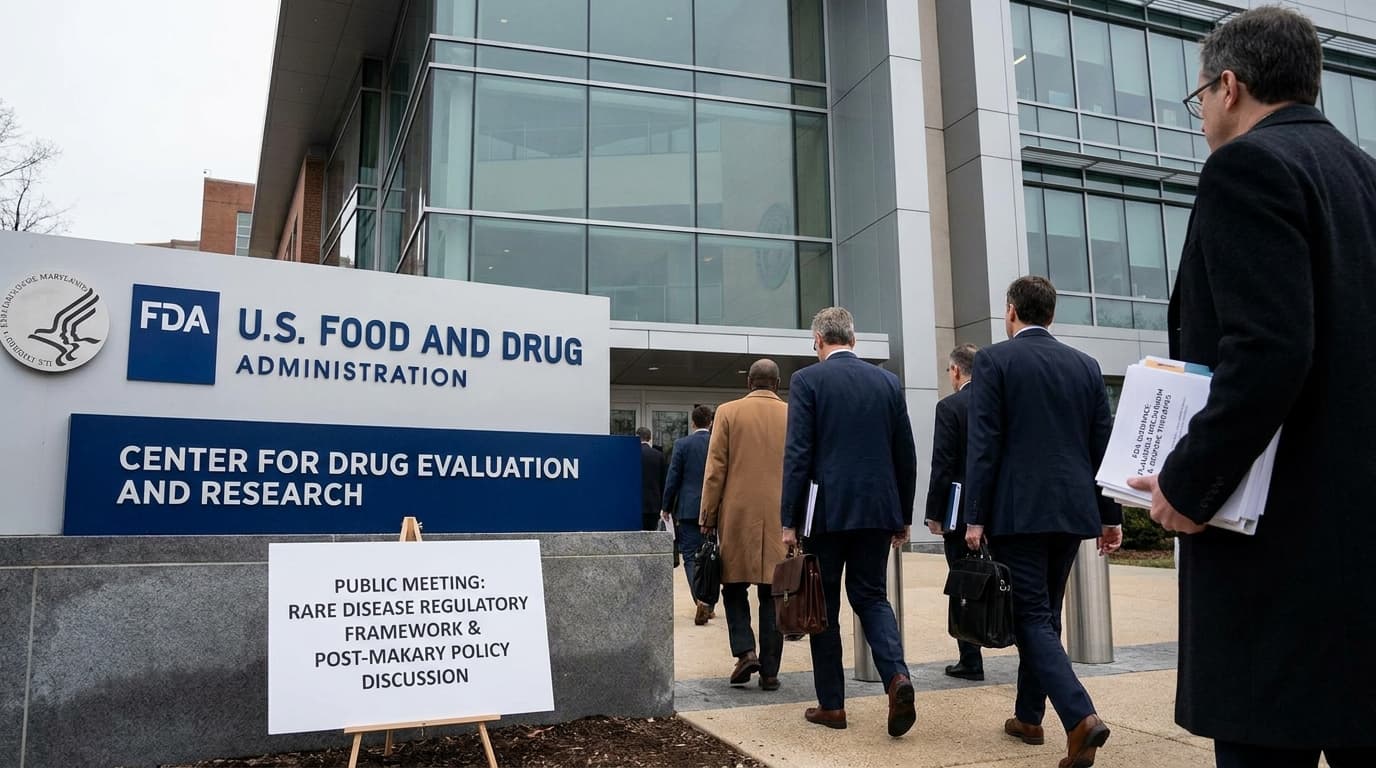
Post-Makary FDA Framework for Rare Disease Faces Uncertainty

The FDA’s efforts to define and expand the plausible mechanism framework for bespoke and rare disease therapies encounter new challenges. As leadership changes and increasing pressures shape the agency’s actions, stakeholders are left to navigate ambiguity regarding the scope and future direction of rare disease policy.
Introduction: Evolving Definitions in the Realm of Rare Disease Regulation
In the wake of Dr. Marty Makary’s tenure as commissioner of the U.S. Food and Drug Administration (FDA), the regulatory roadmap guiding rare and bespoke therapies is once again in question. As the agency undertakes new efforts to delineate the parameters of the "plausible mechanism" framework initiated under Makary, a host of challenges and uncertainties are emerging for drug developers, clinicians, and patients alike.
The Plausible Mechanism Framework: Origins and Intent
The plausible mechanism framework was initially envisioned as a flexible policy vehicle specifically geared toward advancing custom, or bespoke, therapeutic approaches for patients with ultra-rare conditions. It granted developers a pathway to regulatory consideration based on mechanistic rationale, even in situations where robust clinical data—traditionally required for drug approval—was difficult or impossible to generate due to the small patient populations involved.
The intent mirrored ongoing shifts in the rare disease field, as new science and emerging technologies, such as gene editing, individualized cell therapy, and tailored biologics, enabled precision interventions for previously untreatable disorders. Makary championed this framework as a dynamic tool to bridge the divide between scientific promise and practical access, encouraging innovation while attempting to maintain safety oversight.
Leadership Transition and Regulatory Realignment
Post-Makary, the FDA is seeking to clarify the future of the plausible mechanism framework, raising important questions for a sector where certainty is already in short supply. New leadership at the agency is evaluating how this approach fits within the broader regulatory agenda, particularly as rare disease therapies increasingly target groups that exceed the narrowest definitions of rarity.
Experts monitoring these developments underscore the need for expanding the scope of the framework, warning that an overly restrictive or ambiguous policy could unintentionally limit access to life-saving therapies for patients with small, but not vanishingly rare, conditions. They argue that the lines between ultra-rare, rare, and more prevalent but still underserved diseases are blurring, necessitating regulatory flexibility and creativity.
The Challenge of Scope: Bespoke to Broader Populations
A central issue now is whether the plausible mechanism framework—originally constructed for "n-of-1" or extremely infrequent disease cases—should be extended to cover populations where patient numbers, while small, are not negligible. Advocates and stakeholders question whether continuing to restrict eligibility for these regulatory flexibilities risks leaving a significant portion of the rare disease community without meaningful pathways to innovation.
-
For Developers: Companies seeking to develop bespoke or small-population therapies are waiting for the FDA to clarify its regulatory expectations. The lack of transparency around acceptable endpoints, standards of evidence, and post-market requirements increases uncertainty and may chill investment in promising research.
-
For Patients and Families: Those affected by rare or ultra-rare diseases are calling for a broader, more inclusive framework that accounts for the diverse needs across the spectrum of rarity. They contend that regulatory decisions must not inadvertently “draw a line in the sand” that excludes significant patient groups.
-
For Regulators: Balancing safety, scientific evidence, and public accountability, the FDA faces the difficult challenge of articulating flexible policies that are nonetheless rooted in firm principles of transparency, patient safety, and data-driven evaluation.
Reacting to a Dynamic Therapeutic Landscape
The rare disease sector is characterized by ongoing evolutions in scientific capacity and treatment paradigms. Platform technologies, gene and cell therapies, and molecularly targeted drugs are changing what is possible, sometimes faster than regulatory agencies can adjust. As the FDA works to reconcile the intent of the plausible mechanism framework with a rapidly changing landscape, pressure mounts to define not only what counts as “plausible” but also for whom these approaches are most appropriate.
A central part of the debate is whether new criteria should be implemented to move beyond the traditional focus on individual or minuscule patient populations. Many experts argue that current and future regulatory frameworks ought to provide scalable guidance, allowing the benefits of innovation to flow to tens or even hundreds of patients, not just isolated cases.
Stakeholder Perspectives: Calls for Expansion and Transparency
The push to clarify and expand the plausible mechanism framework unites a diverse coalition of voices. Drug developers express frustration at moving regulatory targets, which complicate investment decisions and slow the pace of development. Patient advocacy groups highlight the importance of reducing barriers and supporting therapies that offer scientifically grounded hope to more families.
Yet some caution remains, particularly with respect to safety and scientific rigor. Policymakers must ensure that a flexible system does not inadvertently enable the proliferation of inadequately tested treatments or undermine public trust in the drug approval enterprise.
Moving Forward: The Future of Rare Disease Regulation
With each new leadership phase at the FDA, expectations around rare and bespoke disease regulation are reshuffled. The immediate future is likely to see ongoing dialogue among regulators, industry, academia, and the patient community. Many are hopeful that a sustainable, adaptive policy—capable of serving both the smallest and larger rare disease populations—will ultimately emerge.
For now, however, the rare disease sector confronts fresh uncertainty. The plausible mechanism framework, while a promising tool, will require further refinement and clear boundary-setting to have broad impact. Ensuring a transparent, equitable, and predictable regulatory path for rare disorders remains a central policy challenge, one likely to shape the future of biopharmaceutical innovation well beyond the current FDA leadership cycle.
Original Source: BioSpace - Post-Makary, new rare disease framework faces fresh uncertainty
Join the BioIntel newsletter
Get curated biotech intelligence across AI, industry, innovation, investment, medtech, and policy delivered to your inbox.