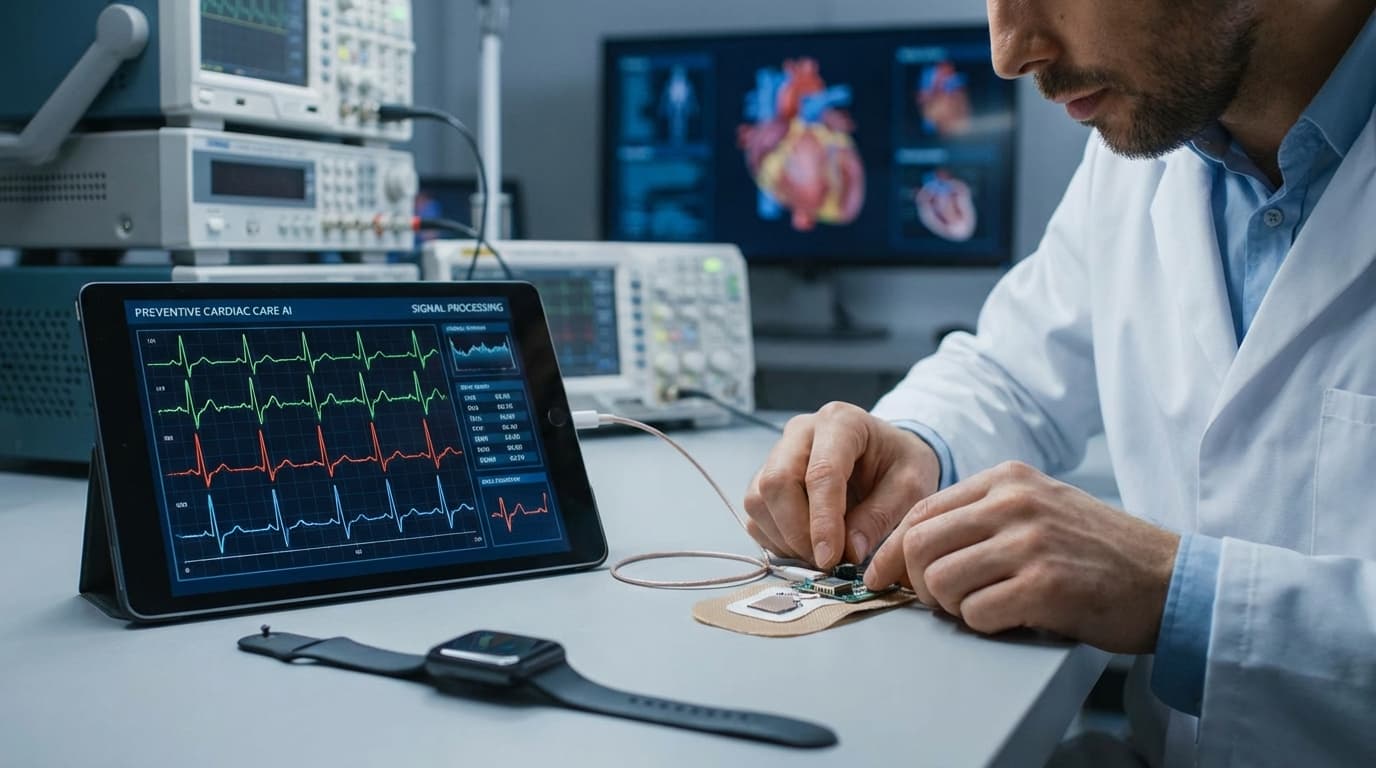
The Moment is Now: Preventive Cardiac Care is in Sight

Recent advancements in AI, signal processing, and digital health tools are creating unprecedented opportunities for the early detection and prevention of cardiac diseases, signifying a potential paradigm shift in cardiovascular healthcare.
The healthcare industry is rapidly evolving, particularly in the realm of cardiology, where advances in artificial intelligence (AI), advanced signal processing, and wearable technologies are converging to revolutionize cardiac care. This convergence is fostering a moment where prevention, rather than reaction, becomes the focal point of treatment strategies for heart failure and other cardiovascular conditions.
The Current Landscape of Cardiac Care
Traditionally, cardiac care has emphasized reactive treatment — addressing symptoms and complications after they manifest. Heart failure, a critical endpoint of many cardiac conditions, has often been managed following hospitalization or acute clinical events. However, the healthcare community increasingly recognizes the need for shifting toward prevention to reduce morbidity, mortality, and healthcare costs.
The Role of Artificial Intelligence and Wearable Technology
AI technologies are enhancing the capacity to analyze complex physiological data streams in real time, enabling clinicians to detect subtle signs of cardiac stress before they escalate into severe issues. Advanced signal processing techniques allow accurate extraction and interpretation of vital signals, such as heart rhythms and blood pressure variations, from non-invasive wearable devices.
Wearable tech, including smartwatches, patches, and sensors, provides continuous, high-quality data without interrupting patients' daily lives. The integration of these devices into clinical practice supplies providers with robust datasets crucial for early diagnosis, risk stratification, and personalized intervention strategies.
Innovations Facilitating Preventive Care
Combining AI with wearables produces predictive models that identify individuals at elevated risk for heart failure or other cardiac events. Providers can then implement tailored preventive measures, such as lifestyle interventions or medication adjustments, to forestall disease progression.
The digital transformation also promotes patient engagement, empowering individuals to monitor their health actively and adhere to care plans, which is vital for successful prevention.
Challenges and Opportunities
While promising, the implementation of AI-powered preventive cardiac care poses challenges, including data privacy, integration with existing electronic health records (EHR), and ensuring equitable access to technologies. However, the potential clinical and economic benefits are substantial, motivating ongoing research and investment.
Future Directions
Looking ahead, the healthcare system stands on the brink of a new era where early detection and prevention of cardiac diseases become standard care. Continuous improvements in AI algorithms, sensor technologies, and clinical workflows will further refine preventive strategies, reducing the burden of cardiac diseases globally.
Conclusion
The current advances represent a pivotal shift toward preventive cardiac care, leveraging the synergy of AI, signal processing, and wearable technology. This transformation is poised to yield better patient outcomes, more efficient resource utilization, and a healthier population.
For the full exploration of this emerging field, visit the original article at MedCity News.
Join the BioIntel newsletter
Get curated biotech intelligence across AI, industry, innovation, investment, medtech, and policy delivered to your inbox.