Replimune Gains FDA Advisory Committee Support for Melanoma Therapy Despite Data Hurdles

The FDA advisory panel’s 10 to 3 vote in favor of Replimune’s immunotherapy, used in combination with Bristol Myers Squibb’s Opdivo for advanced melanoma, demonstrates the complexity of regulatory decision-making where clinical data present significant challenges. The trial design, deliberations, and broader industry implications are explored in depth.
Replimune Overcomes Data Challenges to Secure Positive FDA Adcomm Vote for Melanoma Therapy
Introduction
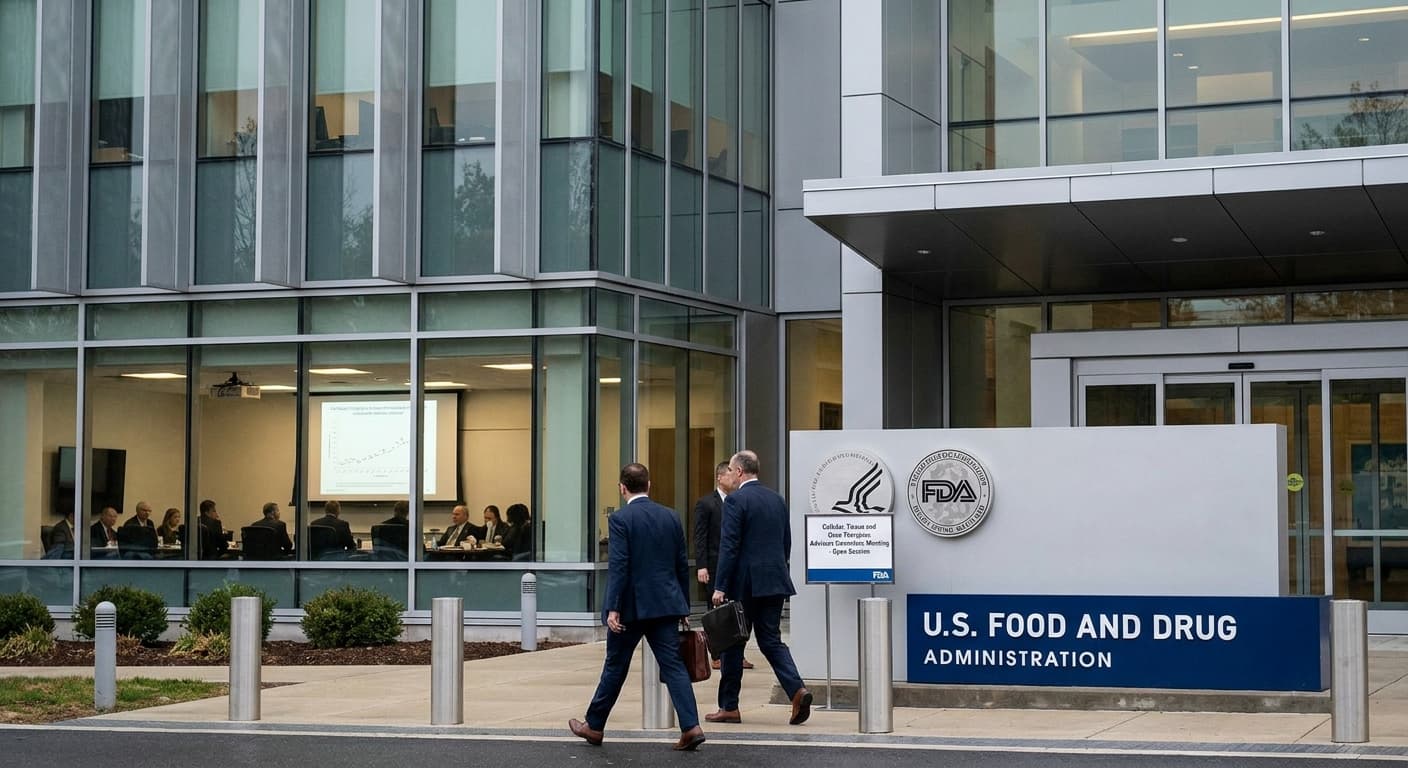
The U.S. Food and Drug Administration’s (FDA) advisory committee system serves as a critical checkpoint in the drug approval process, especially for therapies employing novel mechanisms or treating life-threatening diseases such as melanoma. Recently, Replimune faced one of its most significant regulatory challenges as its immunotherapy for advanced melanoma, in partnership with Bristol Myers Squibb’s Opdivo, was brought before the FDA’s Cellular, Tissue and Gene Therapies Advisory Committee. Notably, the committee delivered a 10 to 3 vote in favor of the therapy, a decision shaped by contentious deliberations around trial design and the reliability of the clinical data, often described as 'messy.'
The Advisory Committee Process: Navigating Risk, Benefit, and Controversy
FDA advisory committees exist to offer expert, impartial advice on the safety and effectiveness of treatments. On July 30, 2026, the panel faced a complex task: evaluating Replimune’s immunotherapy in the context of imperfect but promising clinical evidence. Despite mounting anticipation within the industry, regulatory scrutiny centered on data quality and trial design. This interplay of uncertainty and hope is emblematic of contemporary oncology drug development, where the margin for error is slim but the stakes for patients are high.
The Role of Advisory Committees in Regulatory Approval
Advisory committees convened by the FDA include a roster of experts drawn from clinical practice, academia, and regulatory backgrounds. Their role is not to approve or reject a therapy, but to advise the agency through nonbinding votes based on a detailed review of data. Such meetings are often the most public-facing aspect of the FDA’s deliberative process. A positive outcome—from a regulatory standpoint—signals industry confidence, though the FDA ultimately retains the authority to approve or deny a drug application.
Replimune’s Melanoma Therapy: An Overview
The therapy in question combines Replimune’s immunotherapy platform with Opdivo (nivolumab), a leading checkpoint inhibitor marketed by Bristol Myers Squibb (BMS). Immunotherapies, especially those leveraging the power of the patient’s immune system, have become a backbone of modern oncology care, offering new hope for patients with metastatic and advanced disease. However, the path from proof-of-concept to regulatory approval is often fraught with scientific and methodological controversy.
The Challenge of ‘Messy Data’
The committee’s review of Replimune’s submission was marked by concerns over data integrity and clarity—commonly referred to as ‘messy data.’ Such data challenges can arise from inconsistencies in how patients are enrolled, treated, and assessed during clinical trials. In oncology, especially with advanced melanoma, rapidly evolving standards of care, crossover designs, and heterogeneous patient populations contribute to difficulties in attributing outcomes directly to the therapy under investigation. Experts on the committee spent considerable time exploring how these variables might affect the reliability and reproducibility of the trial’s findings.
Scrutiny Over Trial Design
Central to the committee deliberation was not only the outcome data, but the manner in which the clinical trial was designed. Key points of contention included:
- Selection Criteria: Were the right patients recruited, given the intended indication?
- Endpoints: Did the study use endpoints—such as progression-free survival or overall survival—that are validated and clinically meaningful?
- Comparator Arms: Was the comparison to standard of care appropriate and reflective of real-world clinical settings?
- Data Handling: How were missing or inconsistent data treated during the analysis, and what biases might this introduce?
As is common in high-stakes oncology reviews, these issues sparked intense debate among advisory committee members. Some experts voiced concern that the study, as conducted, could not definitively demonstrate efficacy or safety; others argued that in certain clinical contexts, especially where patient options are limited, regulatory flexibility is warranted if the potential patient benefit outweighs the risk of uncertainty.
The Vote: 10 to 3 in Favor—What It Means
The final tally—10 for, 3 against—reflects both cautious optimism and the enduring complexities of cancer drug development. Those voting in favor were generally persuaded that, despite trial design challenges and less-than-ideal data clarity, the overall evidence suggested the Replimune-Opdivo combination could provide meaningful clinical benefit for advanced melanoma patients. The dissenting votes predominantly hinged on methodological reservations and the possibilities of bias or overestimated effect sizes.
Implications for Patients and Physicians
For the patient community, and for oncologists at the front line, the advisory committee’s vote delivers a measure of hope. The combination of immunotherapies has reshaped the treatment paradigm for diseases like melanoma, and each new entrant expands the toolkit available to clinicians. Access to more treatment options, particularly for those failing standard therapies, is a vital patient need. However, physicians must also weigh these possibilities against the backdrop of data disputes and unresolved questions about optimal patient selection.
Industry Impact: Signals for Drug Developers
The industry monitors such votes closely, as advisory committee decisions can set precedent for both regulatory expectations and investor sentiment. In cases like Replimune’s, overcoming regulatory skepticism about messy data could embolden other developers pursuing innovative therapies with similarly imperfect but promising evidence. It also spotlights the importance of robust clinical trial design and data management practices, as these will remain principal axes of FDA scrutiny.
Broader Context: The Evolving Drug Approval Landscape in Oncology
Oncology drugs, especially those introducing new mechanisms of action, often face a uniquely challenging regulatory landscape. This is due, in part, to the urgent patient need, rapid advancement in scientific understanding, and an ever-evolving competitive arena. Regulators are increasingly tasked with balancing scientific rigor with flexibility—ensuring patient safety without unnecessarily delaying access to transformative therapies.
Expert Panel Deliberation: A Closer Look
The advisory committee’s meeting illustrated the complexity of translating clinical research into real-world regulatory outcomes. Throughout the session, committee members drilled into issues such as:
- The statistical methods used to interpret efficacy signals amid missing or censored data.
- The impact of patient heterogeneity—encompassing age, comorbidities, genetic risk factors—on generalizability of the findings.
- Comparisons against existing therapies in a rapidly changing standard-of-care environment.
The willingness of a majority to vote in favor underscores ongoing debates about what constitutes “substantial evidence” in settings where randomized, double-blind, placebo-controlled trials may not be completely feasible or ethical.
Discussion of Risk-Benefit Calculus
Throughout the proceedings, the notion of benefit-risk calculus was omnipresent. FDA advisory panels, while scientific, are also required to make value judgments about uncertainty versus unmet need. This means considering not only the totality of the evidence but also context such as the natural history of the disease, available therapies, and the needs of patients who may otherwise have no viable treatment options. Occasionally, panels will accept greater uncertainty for therapies that address very high unmet needs or offer a mechanism of action distinct from existing options.
The Road Ahead: FDA’s Decision and Industry Watchpoints
The FDA is not bound to follow the recommendations of its advisory panels, but it does so in the majority of cases, especially when a decision is strongly supported by expert consensus. As the agency considers the committee’s recommendation, it will weigh:
- The statistical robustness and clinical meaningfulness of the efficacy signals
- The strength and clarity of the trial’s safety data
- Input from the broader medical community, including patient advocacy perspectives
Drug developers, investors, and patients all await the FDA’s final decision, recognizing that the resolution of this case could have a ripple effect on how future therapies—especially those with nontraditional datasets—are evaluated.
Conclusion
Replimune’s navigation of the FDA advisory process for its advanced melanoma immunotherapy highlights both the promise and the persistent challenges in modern drug development. A positive panel vote, achieved amidst controversy over ‘messy data’ and trial methodology, sets a significant precedent for regulatory flexibility balanced against the imperative for scientific rigor. As patients, clinicians, and the industry at large watch closely, this case stands as an example of the multidimensional calculus at play in bringing innovative cancer therapies from the laboratory to the clinic.
Join the BioIntel newsletter
Get curated biotech intelligence across AI, industry, innovation, investment, medtech, and policy delivered to your inbox.