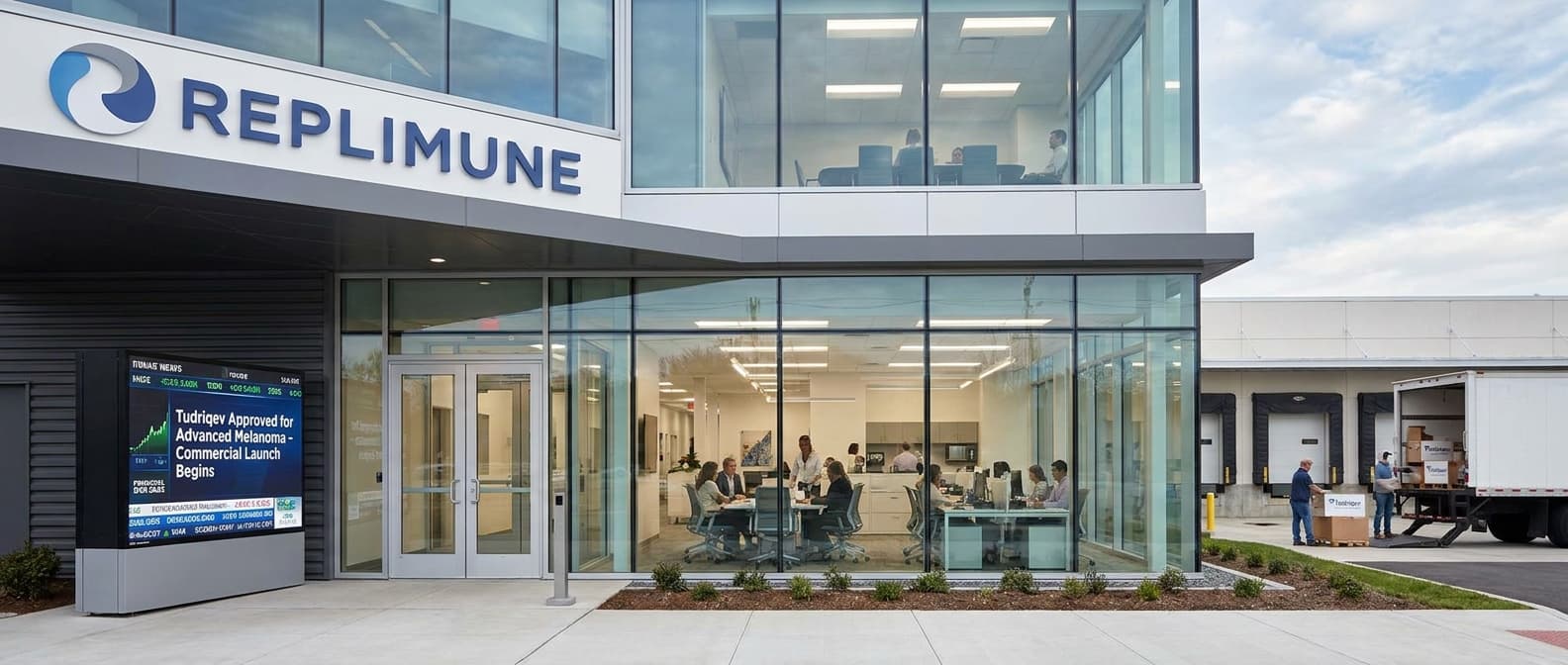
Replimune Plans 200-Account Tudriqev Rollout After Advanced Melanoma Approval

Replimune said it will begin a slow launch of Tudriqev, targeting 200 early adopter accounts in the first six months after approval and preparing to ship product in about 60 days. The approval gives the company an entry into the PD-1-refractory melanoma market, while leaving a confirmatory Phase 3 program still in progress.
Replimune is moving from regulatory recovery into commercial execution after securing approval for Tudriqev in advanced melanoma. The company had spent months defending the therapy through repeated FDA setbacks and a contentious advisory committee process, but now faces a different test: turning physician support into sustained uptake in a hard-to-treat market.
Management argued on a Thursday afternoon conference call that the public debate around the product may have helped rather than hurt launch readiness. CEO Sushil Patel said the advisory committee process created physician awareness and highlighted patient demand for another option in PD-1-refractory melanoma, adding that Replimune received “significant proactive requests for engagement immediately following approval.”
The commercial picture
Replimune is planning what Patel described as a slow and steady rollout. The initial target is 200 early adopter accounts in the first six months, expanding to 450 accounts at 9-12 months and 1,200 long term. Patel said the first 200 accounts represent about 30% of melanoma patients treated annually, and the company put the total annual patient population at about 10,000.
Chief Financial Officer Emily Hill said Replimune is prepared to begin shipping the product in about 60 days. The cost of an average round of treatment will be about $450,000, though Hill said that figure will vary based on tumor burden and the number of rounds required.
BMO Capital Markets modeled $1.3 billion in peak revenue for Tudriqev in 2035. The firm argued that the FDA granted a broad label with few restrictions, which could help the product become a preferred option in the U.S. refractory melanoma market. BMO also said there are no requirements for previous BRAF treatment or restrictions on tumor selection, leaving physicians with room to individualize treatment and potentially lowering adoption barriers.
That matters because Replimune is not launching into a broad first-line setting. It is entering a segment defined by prior anti-PD-1 treatment failure, where the company and BMO both framed available options as limited. The strategic implication is that Replimune does not need mass-market penetration immediately; it needs concentrated adoption at specialist centers that already treat a meaningful share of these patients.
To support that launch, Patel said Replimune is rehiring its commercial team. The company is about a third of the way through the process, with a goal of adding about 50 people, including 20 sales reps. Replimune had conducted layoffs after Tudriqev was rejected for the second time in April, and Patel said a number of former team members have returned.
The road here
The launch planning follows what BioSpace described as a come-from-behind victory. Tudriqev was twice rejected by the FDA, and in briefing documents released before last week’s advisory committee meeting, the agency called data from the Phase 1/2 IGNYTE trial “not interpretable.” Even after the committee supported the therapy, some members voiced reservations.
Patel said he does not expect those disputes over response assessment in IGNYTE to carry over to the confirmatory Phase 3 program. He said the ongoing study uses overall survival as its primary endpoint, which he distinguished from the response criteria that drew FDA criticism in the earlier trial.
Chief Medical Officer Kostas Xynos said the confirmatory study is already about 1/3 enrolled, and Replimune expects topline data in 2030. That leaves the company with a lengthy post-approval window in which commercial performance may depend less on resolving every debate from the registrational study than on whether physicians act on the broad label and the unmet need they emphasized during the approval process.
Join the BioIntel newsletter
Get curated biotech intelligence across AI, industry, innovation, investment, medtech, and policy delivered to your inbox.