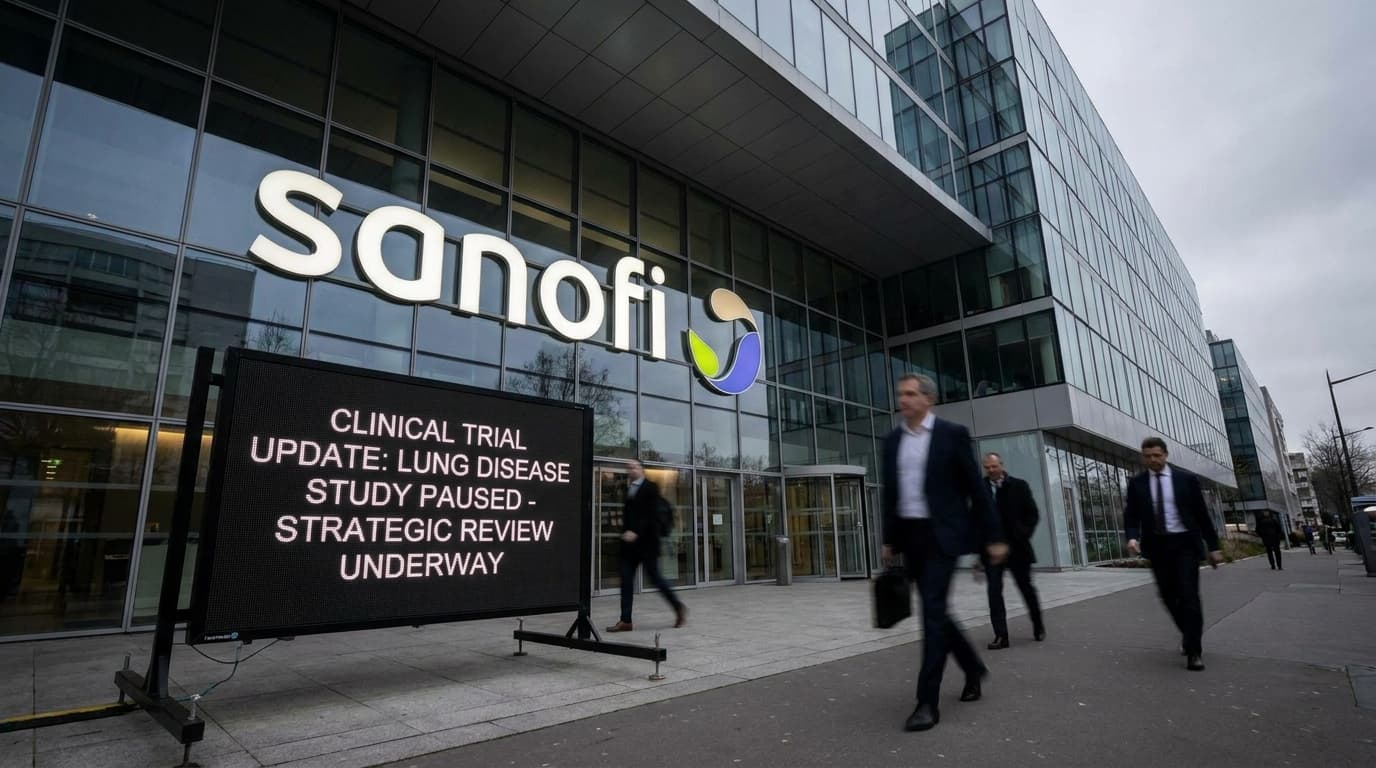
Sanofi Halts Lung Disease Trial Amid CEO's Strategic Reassessment

Under the stewardship of Belén Garijo, Sanofi is undertaking a major portfolio review, leading to the pausing of a mid-stage lung disease trial. This move signals an industry-wide trend toward sharper portfolio focus and renewed scrutiny on scientific merit.
Sanofi, one of the world’s leading biopharmaceutical companies, has announced a significant pause in a mid-stage lung disease study as part of a sweeping strategic review coordinated by its new CEO, Belén Garijo. The move, setting an important tone early in Garijo’s tenure, underscores both the pressures facing large pharmaceutical companies to deliver sustainable innovation and returns, and the volatility of drug development pipelines in an era marked by high expectations for transformative medicines.
The Decision: Pausing a Key Mid-Stage Program
Since taking the helm in April, Garijo has initiated an extensive examination of Sanofi’s entire research and development portfolio. The goal: A rigorous reassessment of assets with an eye toward their scientific merit and long-term value creation. In this context, the company’s decision to halt a promising, though as yet unproven, Phase 2 clinical trial in lung disease is viewed as emblematic of a new era of strategic caution.
Sanofi’s portfolio review is not isolated. With global economic uncertainty, increasing investor scrutiny, and intensifying competition—especially in lucrative markets such as respiratory and immunology—major drug makers are opting for more disciplined capital allocation. The pursuit of “the next Dupixent,” Sanofi’s blockbuster immunology product, is central to both investor expectations and corporate strategy. Analysts see this action as the company’s effort to avoid sunk cost fallacy and focus on assets with a higher likelihood of regulatory and commercial success.
Belén Garijo’s Playbook: Prioritizing Potential
Garijo’s leadership marks a shift toward deeper analysis of pipeline projects. Rather than advancing every promising compound into costly late-stage trials, her approach is to narrow down efforts to those that demonstrate truly differentiating data or address significant unmet needs. The decision to pause active development in lung disease—a space crowded with other pharmaceutical giants and marred by high late-stage attrition rates—reflects this rigor.
Pipeline Repositioning in the Biopharma Industry
The announcement is part of an industry-wide wave of heightened prioritization. As R&D costs escalate, the cost of failed trials grows ever steeper, and regulatory pathways become more complex, companies like Sanofi must weigh not only the scientific rationale for continuing development, but also considerations such as:
- Commercial viability in crowded treatment landscapes
- Differentiation from competitors’ products
- Real-world evidence and value-based care goals
- Shifting payer and health system demands
Intensifying Focus on Portfolio Optimization
Historically, large pharma companies sought to build broad-based therapeutic pipelines, covering oncology, immunology, rare diseases, and more. However, recent market and financial pressures have forced a more focused strategy, especially as investors demand faster returns and lower risk exposure.
- “Rigorous portfolio prioritization” is now a watchword across the industry.
- Companies are pruning non-core assets, partnering or divesting projects that lack clear competitive advantages, and reallocating resources to high-potential areas.
Impact on Patients and the Scientific Community
While these moves may be positive for fiscal discipline, there are concerns about the impact on patients with rare or underserved diseases, where riskier or less profitable therapeutics may receive diminished attention. For the scientific community, such pauses can mean either an opportunity to revisit and strengthen the science underlying development candidates or a loss of momentum and morale after years of early enthusiasm.
The Quest for a Dupixent Follow-up
Sanofi’s quest for a successor to Dupixent is central. That medicine, which has driven much of Sanofi’s recent growth, set a high benchmark for both clinical and commercial performance. The current freeze in the lung disease trial signals that only candidates with potential to achieve or surpass that level of impact will advance in the pipeline moving forward.
Looking Ahead: Strategic Realignment in Action
What does this pivot mean for the future of Sanofi and its peers? Several key themes emerge:
1. Tighter Focus, Fewer Bets
For many years, pharmaceutical R&D was measured by volume—the more shots on goal, the better the odds of success. Today, companies are instead measured by the rigor with which they select and advance next-generation assets.
2. Investor Sentiment Favors Discipline
The market is rewarding companies that can articulate and execute on focused, science-driven strategies. Portfolio optimization is frequently viewed as a signal of management seriousness and a buffer against the unpredictable headwinds characteristic of drug development.
3. A New Standard for Scientific Merit
Clinical and commercial success are increasingly viewed through the lens of real-world evidence, unmet patient needs, and head-to-head performance against both existing treatments and emerging modalities, such as biologics and advanced therapies.
Risks of Over-Cautiousness
However, some critics warn that extreme caution carries the risk of stifling innovation, especially in difficult therapeutic areas. If pharma companies universally adopt a “wait for proof” approach, high-need disease areas with risky science could see retrenchment at the expense of patient progress.
Conclusion: An Industry in Reassessment
Sanofi’s decision to pause progress on a lung disease asset should be considered within the broader context of increased portfolio scrutiny. For Garijo, a decisive and data-driven approach may put the company in a stronger position to deliver future blockbusters, but it also signals to the market, providers, and patients that the winds of change in R&D are blowing stronger than ever.
Whether this new strategic rigor yields the next great breakthrough—or leads to missed opportunities—will be closely watched not only by Sanofi’s shareholders, but by the global biopharmaceutical community.
Source: Sanofi pauses mid-stage lung study amid new CEO’s ‘rigorous portfolio prioritization’
Join the BioIntel newsletter
Get curated biotech intelligence across AI, industry, innovation, investment, medtech, and policy delivered to your inbox.