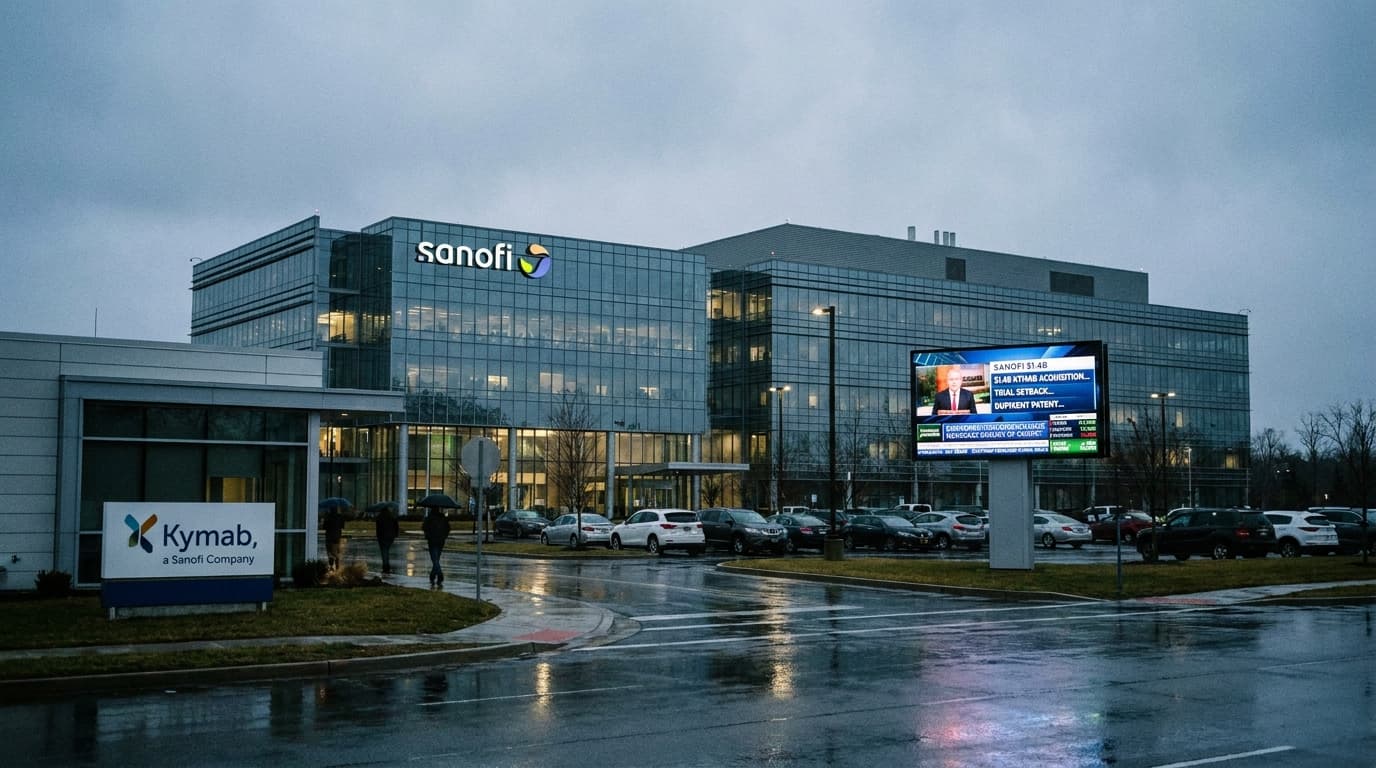
Sanofi’s $1.4B Kymab Acquisition Faces Further Setbacks as Atopic Dermatitis Trials Halted

Sanofi's ambitious $1.4 billion acquisition of Kymab was expected to reinforce its portfolio in anticipation of the Dupixent patent cliff. However, another Kymab-developed therapy has failed clinical expectations for atopic dermatitis, renewing concerns over the success of recent M&A moves and raising critical questions about the future of Sanofi's immunology strategy.
Introduction
In the dynamic world of pharmaceutical mergers and acquisitions, strategic bets can define or undermine the trajectory of a company’s growth. Sanofi, a major player in the global biopharmaceutical industry, learned this lesson yet again when it announced the discontinuation of late-stage trials for a Kymab-developed therapy targeting atopic dermatitis. This decision comes in the context of Sanofi’s $1.4 billion acquisition of Kymab, undertaken with the intention of shoring up the company’s immune-related drug pipeline ahead of looming intellectual property challenges, most notably the anticipated expiration of market exclusivity for the multi-billion-dollar blockbuster Dupixent. As another therapy falls short of expectations, the move underscores the inherent risks of large-scale biotech investments and raises new questions about Sanofi’s long-term strategy in immunology.
Background: Sanofi’s Acquisition of Kymab
Sanofi’s purchase of U.K.-based Kymab in early 2021 for $1.4 billion was a calculated effort to diversify and strengthen its portfolio of assets targeting autoimmune and inflammatory conditions. Kymab’s pipeline featured several promising monoclonal antibodies, many advancing through clinical development with indications spanning from rare diseases to common chronic conditions such as atopic dermatitis. This acquisition was particularly significant in the context of Dupixent—Sanofi’s flagship autoimmune therapy—approaching a so-called "patent cliff,” where the loss of exclusivity opens the door to generic competition and potentially erodes the company’s revenue base.
Latest Developments: Atopic Dermatitis Trial Failure
The latest news—that Kymab’s atopic dermatitis therapy has failed to meet key clinical endpoints—poses a substantial blow to Sanofi’s ambitions. The halted trials signal that the candidate did not demonstrate adequate efficacy or safety to warrant further development, at least within the tested population and protocol. This outcome not only diminishes Kymab’s contribution to Sanofi’s pipeline but also raises the specter of additional challenges as the company seeks to fill the “hole” that Dupixent’s patent expiration will create.
Implications for Sanofi’s Immunology Strategy
Sanofi’s strategy of acquiring promising assets to stave off revenue erosion post-Dupixent is a common one among large biopharma firms; however, it is inherently risky. Late-stage clinical failures are costly, and they can erode investor confidence, particularly when associated with high-profile, high-cost acquisitions. With the atopic dermatitis program now scrapped, attention will likely shift to other Kymab-derived assets and to the company’s broader immunology pipeline. Will other candidates fare better? Can Sanofi cultivate enough innovative products to ensure continued growth and weather upcoming competitive and patent pressures?
The Broader Market Context: Atopic Dermatitis and Autoimmune Therapies
Atopic dermatitis represents a crowded and competitive marketplace, with multiple pharmaceutical companies vying for leadership positions. Dupixent, co-developed by Sanofi and Regeneron, has set a high benchmark for efficacy and commercial success. New entrants must not only demonstrate comparable or superior outcomes but also distinguish themselves on safety, dosing, or price. The failure of Kymab’s atopic dermatitis candidate may highlight not just scientific challenges but the market difficulties of breaking into a space dominated by an established therapy—from the same parent company, no less.
Development hurdles remain high in immunology, and patient populations—though substantial—require careful segmentation for new products to win approval and market share. The decision to discontinue a program can stem from efficacy concerns, safety signals, or strategic resource reallocation, all of which are critical in the calculation of development priorities.
Patent Cliffs and the Risk of Large-Scale Acquisitions
The pharmaceutical industry’s reliance on patent-protected revenues makes “cliff” planning a matter of existential importance. Companies must anticipate when key products will lose exclusivity and invest accordingly to replenish their pipelines. Acquisitions like Sanofi’s Kymab deal are as much about future-proofing as about present value. However, the costs are substantial, and the rewards uncertain: if cornerstone assets underperform in development or fail to navigate regulatory scrutiny, the anticipated return on investment can evaporate.
Sanofi is not alone in facing this conundrum. Across the sector, large acquisitions of biotechnology startups and pipeline-rich small biotechs have proven both fruitful and fraught with risk. The desire to absorb innovation and expand therapeutic reach has to be balanced against the historical reality that the majority of drug programs do not make it to market, and the ones that succeed must do so in a highly scrutinized clinical and commercial environment.
What’s Next for Sanofi?
With the discontinuation of this atopic dermatitis program, Sanofi will likely need to consider alternative strategies to buttress its immunology business. Options may include accelerated development of other Kymab assets, additional licensing or partnership deals, or new investments in early-stage platforms that could address future market gaps. Investors and industry observers will be watching closely to see how the company reallocates resources and rearticulates its approach in the wake of this setback.
At the same time, Sanofi’s ongoing collaboration with Regeneron and other biotech innovators leaves the company with multiple shots on goal. The pressure to deliver, however, is amplified as the clock ticks down on Dupixent’s exclusivity. How Sanofi navigates this transition period will ultimately determine its position in the competitive landscape of immunology and autoimmune therapies.
Conclusion
Sanofi’s $1.4 billion bet on Kymab signaled strong confidence in the company’s ability to deliver next-generation immunology therapies and to serve as a bulwark against impending revenue challenges. With the failure of another atopic dermatitis candidate and the trials now discontinued, Sanofi faces a period of strategic uncertainty. Will the company’s remaining pipeline assets—whether from Kymab or other sources—be able to compensate for these disappointments and power the next phase of growth?
The pharmaceutical industry will be watching as Sanofi redefines its innovation roadmap, evaluates new partnerships, and considers how best to deploy its resources in a rapidly evolving therapeutic landscape. This development underscores both the high stakes of strategic M&A in biopharma and the relentless pressure to translate pipeline promise into clinical and commercial reality.
Join the BioIntel newsletter
Get curated biotech intelligence across AI, industry, innovation, investment, medtech, and policy delivered to your inbox.