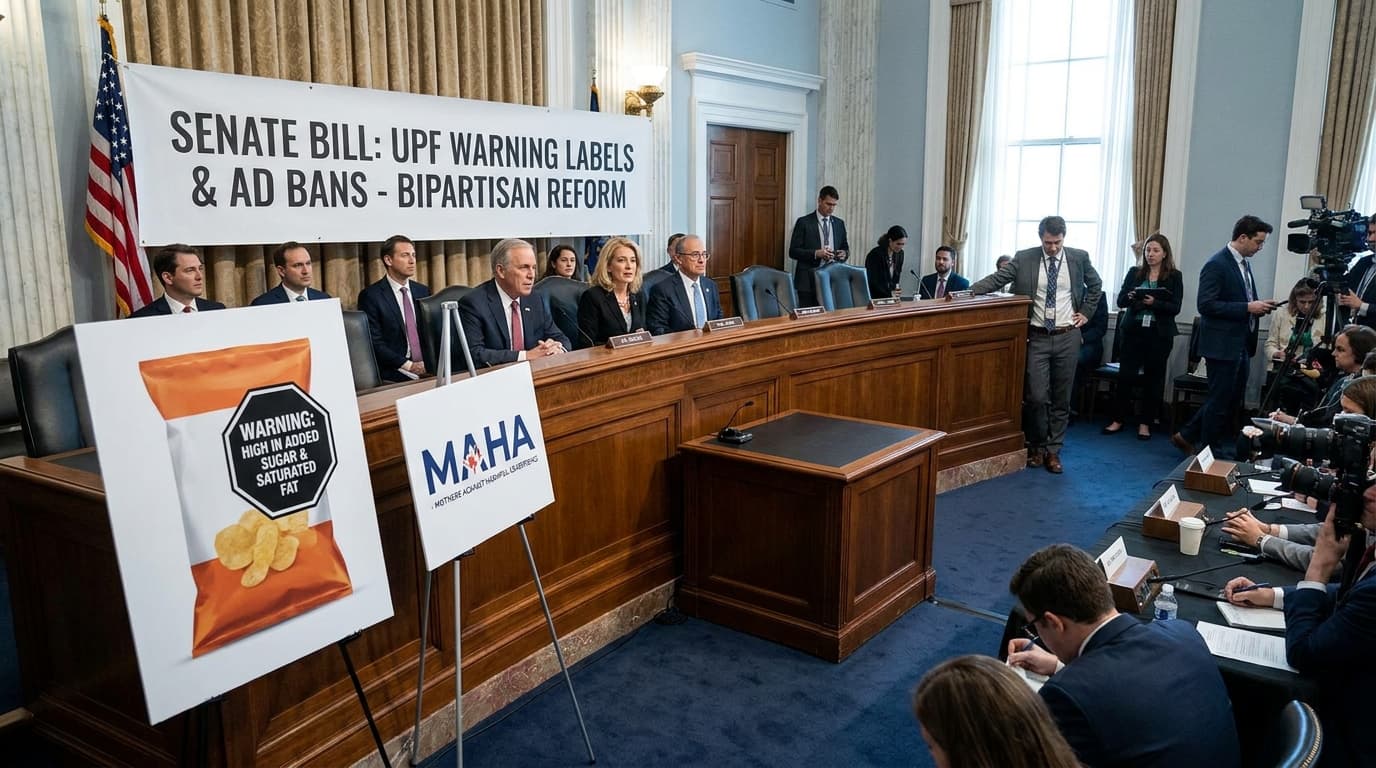
Senate Advances MAHA-Friendly Bill for Food Warning Labels and Junk Food Ad Bans

Unexpected alliances in the U.S. Senate have advanced a bill mandating warning labels for ultra-processed foods and restrictions on junk food advertising—a response to mounting concerns over diet-related diseases and food industry influences. This in-depth report explores the origins, political dynamics, scientific rationale, industry reactions, and the global context driving this major proposed regulation.
Introduction
Food policy in the United States is on the verge of a dramatic transformation. This week, in a rare display of bipartisan cooperation, a Senate committee advanced a landmark bill that would require prominent health warning labels on ultra-processed foods (UPFs) and impose significant restrictions on junk food advertising. The measure, supported by both Republicans and Democrats, is considered one of the most aggressive steps in recent years to address the public health toll of highly processed, nutritionally poor foods.
With rising rates of chronic diseases such as obesity, diabetes, and cardiovascular illness, and increased focus on health disparities, the new legislative effort embodies the growing urgency to address dietary risk factors through regulatory reform. The bill is aligned with MAHA (Mothers Against Harmful Advertising), an advocacy group that has long championed more transparent labeling and tighter advertising restrictions for products targeted at children and vulnerable populations.
This comprehensive analysis examines the origins of the Senate’s current move, the scientific and policy justifications for targeting ultra-processed foods, the controversies surrounding such regulation, industry and public health stakeholder responses, and lessons from international efforts.
Background: Why Focus on Ultra-Processed Foods?
Ultra-processed foods, as defined by nutrition science, include products whose manufacturing involves industrial ingredients and additives not typically found in a home kitchen—such as high-fructose corn syrup, hydrogenated oils, artificial colors, flavors, emulsifiers, and preservatives. Common UPFs include sugary cereals, soda, packaged snacks, instant noodles, and many frozen meals.
Epidemiological evidence has consistently linked high UPF consumption with increased risks of obesity, metabolic syndrome, heart disease, certain cancers, and mortality. As American diets have become ever more reliant on these foods, research has highlighted the challenges of individual choice in the face of aggressive marketing, food deserts, price disparities, and limited health literacy.
Recent Scientific Consensus
Public health experts now view the ubiquity of ultra-processed foods as a structural driver of America’s chronic disease burden. Yet regulatory policies in the U.S. have lagged those of other countries—such as Chile and Mexico—where warning labels and stricter food marketing codes have been in place for several years. Proponents of a labeling approach liken the move to earlier efforts around tobacco warning labels and sugar-sweetened beverage taxes, arguing that public disclosure and marketing curbs can nudge both consumer and industry behavior.
The Bill: Provisions and Political Dynamics
The Senate bill, cleared by the committee in late July 2026, contains several key measures:
- Mandatory front-of-package warning labels for foods containing high levels of added sugar, saturated fat, sodium, or specific ultra-processed ingredients.
- Restrictions on advertising of UPFs during programming and digital platforms frequented by children and adolescents.
- Authority for the FDA and USDA to regularly review and update criteria, keeping pace with evolving nutrition science.
- Incentives and support for industry reformulation to reduce the marketing and sale of unhealthy products.
What makes this legislative effort unique is the cross-party coalition behind it. Traditionally, food labeling and marketing regulations have faced opposition from industry-aligned lawmakers concerned with government overreach and economic implications. The current bill’s progress reflects shifting political calculations, as both conservative and progressive senators recognize the scale of the diet-related health crisis and growing voter concern about child health and food advertising.
Arguments For and Against: Examining the Debate
Proponents argue that mandatory warning labels and marketing restrictions are necessary public health measures—especially given evidence that voluntary initiatives have delivered only modest improvements. They point to research from Chile, where warning symbols on foods high in sugar, salt, or fat led to measurable reductions in consumption and prompted manufacturers to reformulate products.
Critics, including several major food industry organizations, have argued that the bill will unfairly stigmatize certain foods, confuse consumers, and impose costly regulatory burdens on manufacturers. Some lawmakers have voiced concerns about government overreach and the risk of unintended consequences, arguing in favor of educational campaigns rather than outright mandates. There is also debate over how "ultra-processed" is defined, and whether certain reformulated foods deserve nuanced labeling.
Notably, there is strong advocacy coalition support (including MAHA and public health NGOs), as well as a growing body of scientific evidence and international precedent that lends weight to supporters’ claims.
Industry Reaction and Potential Impacts
Food and beverage manufacturers, whose revenues depend heavily on UPF sales, are closely watching the bill’s trajectory. Some large companies have announced plans to accelerate reformulation efforts, while trade groups warn of negative economic fallout, supply chain disruptions, and potentially higher prices for consumers. Marketing and advertising firms are also bracing for shifts in allowable content and campaign strategies.
From a clinical and payer perspective, there is considerable interest in whether the policy shift could eventually help lower health care costs by reducing the incidence of chronic diet-related conditions. However, these outcomes will depend on effective rulemaking, robust enforcement, and ongoing surveillance of consumption and health trends.
Comparing International Models
Chile, Mexico, the United Kingdom, and several other countries have implemented front-of-package warning labels and restrictions on unhealthy food marketing in recent years. Results show varying levels of success, often depending on the strength of enforcement, public awareness campaigns, and industry compliance.
Early data from Chile indicates a decrease in purchases of high-sugar drinks and snacks, with concurrent increases in reformulation and new product development targeting health-conscious consumers. Public education has been key in supporting label effectiveness, suggesting that U.S. policymakers may need to pair regulations with robust outreach and behavior-change initiatives.
Looking Ahead: What Comes Next?
If enacted, the Senate bill could serve as the most consequential update to U.S. food labeling and marketing policy in decades—potentially setting a global benchmark for regulating ultra-processed foods. While passage is by no means certain, the strong bipartisan support and rising public demand for action suggest that momentum is building. Further debate is likely as the bill advances to the full Senate and House, with important amendments and stakeholder negotiations to come.
For now, public health experts are cautiously optimistic that a new era of food policy—one that prioritizes transparency, consumer awareness, and the reduction of preventable disease—is within reach.
Join the BioIntel newsletter
Get curated biotech intelligence across AI, industry, innovation, investment, medtech, and policy delivered to your inbox.