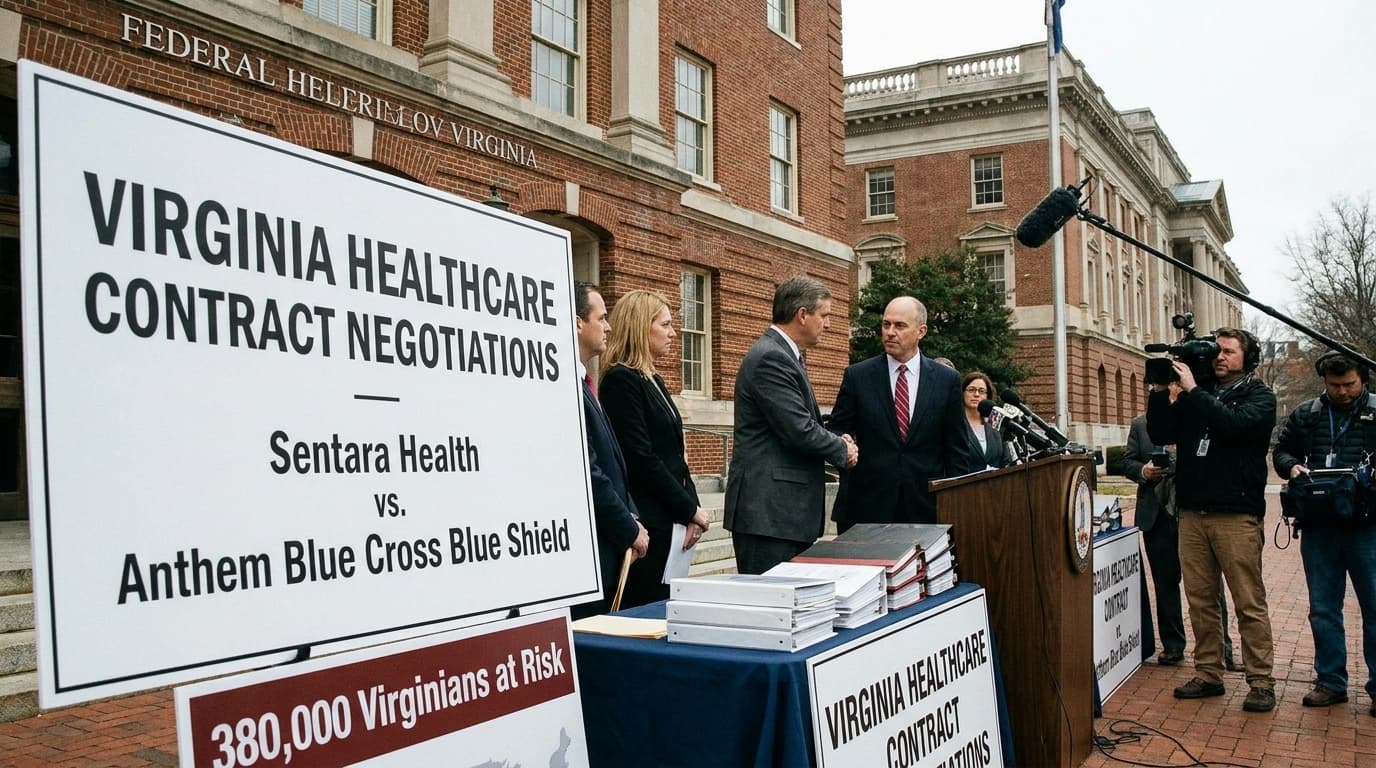
Sentara vs Anthem: A Contract Standoff and Its Risks for Virginia Healthcare

A simmering contract dispute between Sentara Health and Anthem threatens to upend insurance coverage for hundreds of thousands of Virginians. The standoff, centered on rate renegotiations, highlights the stakes involved in payer-provider dynamics and the potential consequences for patients, providers, and the regional health ecosystem.
Background: The Sentara-Anthem Conflict
The friction between Sentara Health and Anthem, one of the region’s most significant payer-provider relationships, reached a public tipping point in August 2026. Sentara notified Anthem that unless a new rate agreement is reached, it will let its contracts covering commercial, Medicare, and Medicaid plans expire at the end of the year. If negotiations fail, health coverage for approximately 380,000 Virginians could be at risk—an upheaval that would destabilize care continuity, strain provider networks, and introduce new uncertainty into an already volatile healthcare landscape.
Understanding the Negotiation Breakdown
While contract disputes between providers and insurers are not uncommon, the scale, visibility, and timing of this threat has sparked a wave of attention from industry observers, consumers, and regulatory bodies. At the heart of such standoffs are disagreements over reimbursement rates and related contractual terms that govern everything from in-network patient access to claims adjudication and provider payment schedules.
Sentara, a major health system with broad clinical reach across Virginia, has framed the dispute as a stand for fair compensation. In its communications, the system insists it will not be “bullied” into accepting financial arrangements it considers unsustainable—hence the dramatic declaration it is prepared to allow contracts to lapse. This approach signals firm resolve to its negotiating partner but creates elevated anxiety for the patients, many of whom rely on Sentara’s facilities, clinicians, and support services.
For Anthem, likewise a large and influential insurance player, the imperative is to control expense growth, secure terms favorable to its membership base, and ensure contractual flexibility in a highly fluid payer-provider market.
Immediate and Long-Term Implications for Patients
The immediate threat posed by contract termination is a potential loss of in-network access to Sentara providers for Anthem-covered patients. Should negotiations ultimately fail, these patients may have to seek alternative providers or face the prospect of higher out-of-pocket costs, disruption in established care routines, and an uncertain transition to new specialists or care teams.
Affected Virginians span all insurance segments: commercial plans, many of which are provided through employer groups; seniors and other beneficiaries enrolled in Medicare Advantage plans; and more vulnerable populations covered under Medicaid. The sheer size of the potentially impacted population—about 380,000 individuals—means that fallout could ripple through the state’s health infrastructure, straining both Sentara’s and Anthem’s operational resources as contingency plans are developed and communicated.
Broader Public Health Risks
In any major payer-provider dispute, the uncertainty generated may deter patients from seeking timely care, disrupt ongoing treatment, or complicate the management of chronic illnesses. These consequences risk undermining health outcomes and increasing longer-term system costs, even before considering the strain on patient relations and brand reputation for both organizations involved.
Negotiation Dynamics: Common Patterns and Unique Features
Such standoffs are typically the result of cyclical contract negotiations conducted behind closed doors. Increasingly, though, these disputes have spilled into the public eye as stakeholders seek to leverage media coverage, advocacy groups, and consumer sentiment to strengthen their negotiating positions. Sentara’s public declaration that it “won’t be bullied” reflects this shift toward greater transparency and assertiveness by providers—paralleling national trends in negotiations between large, integrated health systems and insurance giants.
Other notable features of this conflict include:
- The simultaneous threat to multiple lines of business (commercial, Medicare, Medicaid)
- The looming year-end deadline, which puts pressure on both parties to resolve differences before large-scale patient disruption occurs
- The possibility of regulatory or legislative intervention should no resolution be found
Possible Outcomes and Industry Precedent
Several paths remain open:
- Negotiated Agreement—Historically, most contract standoffs end with a last-minute compromise, often brokered with concessions from both sides to avoid large-scale patient disruptions.
- Contract Lapse with Transitional Provisions—Should an agreement not materialize in time, parties may negotiate temporary extensions or special transition provisions to mitigate patient impact while talks continue.
- Full Disruption—If relations deteriorate irreparably, Anthem members could lose in-network access to Sentara, requiring them to switch providers, seek individual out-of-network arrangements, or even lobby for state-level intervention.
Cases like this can also spur public and legislative debate about the broader structure of U.S. healthcare—its reliance on fragmented contracts, cost escalation, and the leverage wielded by both payers and providers.
Larger Policy and Market Forces
Behind the headlines, this dispute spotlights enduring tensions in the American health system:
- Payment Pressures: Systems face inflation in labor, supplies, and technology—prompting more aggressive demands at the bargaining table.
- Consolidation: Both hospital systems and insurance carriers continue to merge and consolidate, seeking greater scale and negotiating power. This dynamic increases the frequency and impact of disputes like Sentara vs Anthem.
- Regulatory Ambiguity: State and federal lawmakers often face calls to intervene—but tend to avoid direct action unless patient harm is evident or negotiations irreparably break down.
- Communication Crisis: As public awareness of such disputes rises, managing the messaging while avoiding mass panic or political fallout becomes an essential part of payer-provider strategy.
Outlook: What Is at Stake for Virginia?
For all involved, the coming months will be crucial. Patients will look for clarity on coverage guarantees, while local providers prepare for the logistical challenge of possible patient transfers or increased churn. State officials may be pressed to offer mediation or regulatory oversight, especially if the public weighs in through media campaigns or grassroots advocacy.
In the meantime, this standoff serves as a case study in the high-stakes, often contentious business of American healthcare contracting.
Source: MedCity News – ‘We’re Not Going to Be Bullied’: Sentara Digs in on Anthem Contract Fight
Join the BioIntel newsletter
Get curated biotech intelligence across AI, industry, innovation, investment, medtech, and policy delivered to your inbox.