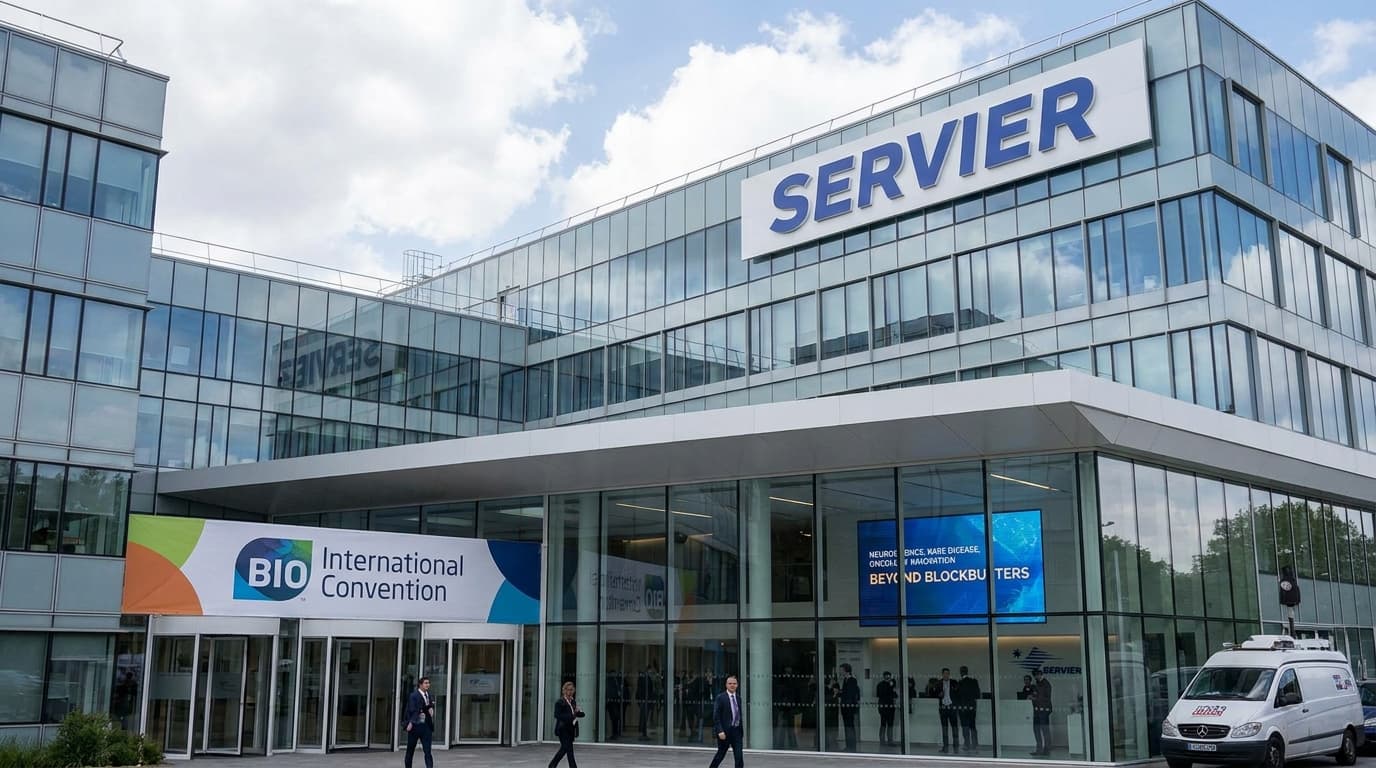
Servier's Expanding Horizon: Why Innovation, Not Blockbusters, Drives Its Pharma Acquisitions

Servier’s leadership has outlined a clear strategy focused on bold and innovative science rather than blockbuster drugs. At the BIO International Convention, the company shared its rationale for the high-profile acquisitions of Day One Biopharmaceuticals and Edgewise Therapeutics’ neuromuscular business, suggesting a seismic shift in priorities for big pharma.
Introduction
In a rapidly evolving biopharmaceutical landscape, the traditional pursuit of so-called 'blockbuster' drugs—those with annual sales exceeding a billion dollars—has defined industry success for decades. However, Servier, the French multinational pharmaceutical company, has made headlines by distinctly pivoting away from this conventional approach. Instead, its leadership is vocally prioritizing novel science and innovative therapies as core drivers for future growth and value. Servier’s recent acquisition of Day One Biopharmaceuticals and its announced buyout of Edgewise Therapeutics’ neuromuscular business, discussed at the prestigious BIO International Convention, offer a window into a new strategic direction that could reshape the industry’s trajectory.
Servier's Changing Philosophy: A New Path for Pharma
Servier’s top business development executive, speaking at the convention, underscored a profound shift in the company's acquisition criteria and broader organizational philosophy. Rather than casting a net for the next big-earning drug regardless of therapeutic area, Servier has homed in on areas where unmet medical need is high and the science is on the cutting edge. For Servier, the allure no longer lies in the pursuit of the highest revenue streams, but in the challenge of developing therapies that address the most daunting questions in rare disease, neuroscience, and oncology.
This approach inevitably deviates from the patterns set by many of its global competitors. For years, leading pharma companies have operated under intense market pressures to deliver blockbusters—leading to risk aversion, resource concentration in crowded disease spaces, and sometimes even the neglect of conditions affecting smaller patient communities. By contrast, Servier’s evolving acquisition playbook leverages a more distributed and innovation-centric value model: investing in highly specialized assets, nurturing emerging science, and banking on the societal and long-term financial rewards of being a first mover in high-risk, high-reward therapeutic areas.
Recent Acquisitions: Day One Biopharmaceuticals and Edgewise Therapeutics
Servier’s acquisition of Day One Biopharmaceuticals is emblematic of this vision. Day One, with its dedication to developing therapies for pediatric and rare cancers, represents precisely the type of science-driven, patient-centric startup that Servier hopes to complement and accelerate. The pending buyout of Edgewise Therapeutics’ neuromuscular business further expands Servier’s portfolio into neurology, a field where traditional pharma investment has often lagged due to clinical and commercial risk.
While many in the industry view rare disease and neuroscience as financial gambles with uncertain near-term profit, Servier appears confident in a future defined by medical breakthroughs and long-term leadership. The company’s willingness to place calculated bets on innovation could help provide new hope in therapeutic areas where few options exist and set an example for others weighing a similar strategic redirection.
Rationale and Strategic Fit
During the BIO International Convention, Servier shared in-depth thinking about why these deals made sense. The executive explained that the acquisitions support the company’s overall strategy by filling critical pipeline gaps and by leveraging Servier’s internal R&D and global commercial infrastructure. By targeting businesses with highly differentiated science, Servier insulates itself from intense, price-driven competition in saturated markets, and instead positions itself as a leader where scientific advances are driving the next wave of therapeutic options.
The explicit move away from blockbusters also helps Servier avoid the pitfalls of drug commoditization, me-too innovation, and narrow incrementalism. Rather than chasing the same handful of mega-markets as its competitors, the company can carve out unique and defensible positions—and potentially scale clinical and commercial wins that fly under the radar, but produce substantial cumulative impact on public health.
The Industry Impact: Can Others Follow?
Servier’s innovation-first strategy comes at a time of mounting frustration with the blockbuster-driven business model. R&D productivity is plateauing. Regulatory hurdles are growing more onerous. Payers and health systems are demanding demonstrable value for money. In this context, emboldened moves toward rare, specialty, and transformative therapies illustrate a willingness to pivot and take risks. As other major companies face similar pressures, the possibility grows that Servier’s path will offer a working model for a more dynamic, inventive, and responsible industry.
However, this approach is not without risks. Developing therapies for small patient populations in rare disease or highly complex neuroscience indications means that Servier must be comfortable with scientific and clinical uncertainty, higher trial failure rates, and more difficult reimbursement landscapes. But it is equally true that an early-mover advantage—in both regulatory and scientific domains—could cement the company’s reputation as a leader in innovation.
Scientific and Patient Implications
For the scientific community, Servier’s pivot could stimulate greater investment in underfunded fields, promoting exploration of mechanisms, pathways, and therapies that otherwise might struggle to secure mainstream attention. For patients, especially those living with rare or hard-to-treat conditions, the company’s new focus offers hope for accelerated progress and expanded choice in areas long neglected by industry.
At the convention, Servier’s executive referenced these implications directly, emphasizing a commitment to leveraging its deal-making and research capacity on behalf of both patients and front-line scientists striving to bring about medical breakthroughs. By foregrounding innovation—in place of mere blockbusters—Servier is visibly betting that scientific advances will drive value creation at all levels, from early discovery to the final product reaching clinics and hospitals worldwide.
Conclusion: Toward a New Pharma Paradigm?
The pharmaceutical industry is at an inflection point. Companies are being forced to reassess what kind of growth truly matters, and on what time scales. Servier’s recent acquisitions, and the bold rhetoric accompanying them, herald a future in which size alone no longer determines success. Instead, the winners could be those with the vision, flexibility, and intellectual curiosity to pursue answers to medicine’s hardest questions—no matter how narrow the market or daunting the problems.
If Servier’s innovation-driven approach delivers both clinical results and long-term commercial value, it could inspire broader systemic change throughout pharma. For now, the sector waits (and watches) as Servier’s newly acquired neuroscience, rare disease, and oncology platforms advance toward pivotal trials and, ultimately, the market.
Original source: MedCity News
Join the BioIntel newsletter
Get curated biotech intelligence across AI, industry, innovation, investment, medtech, and policy delivered to your inbox.