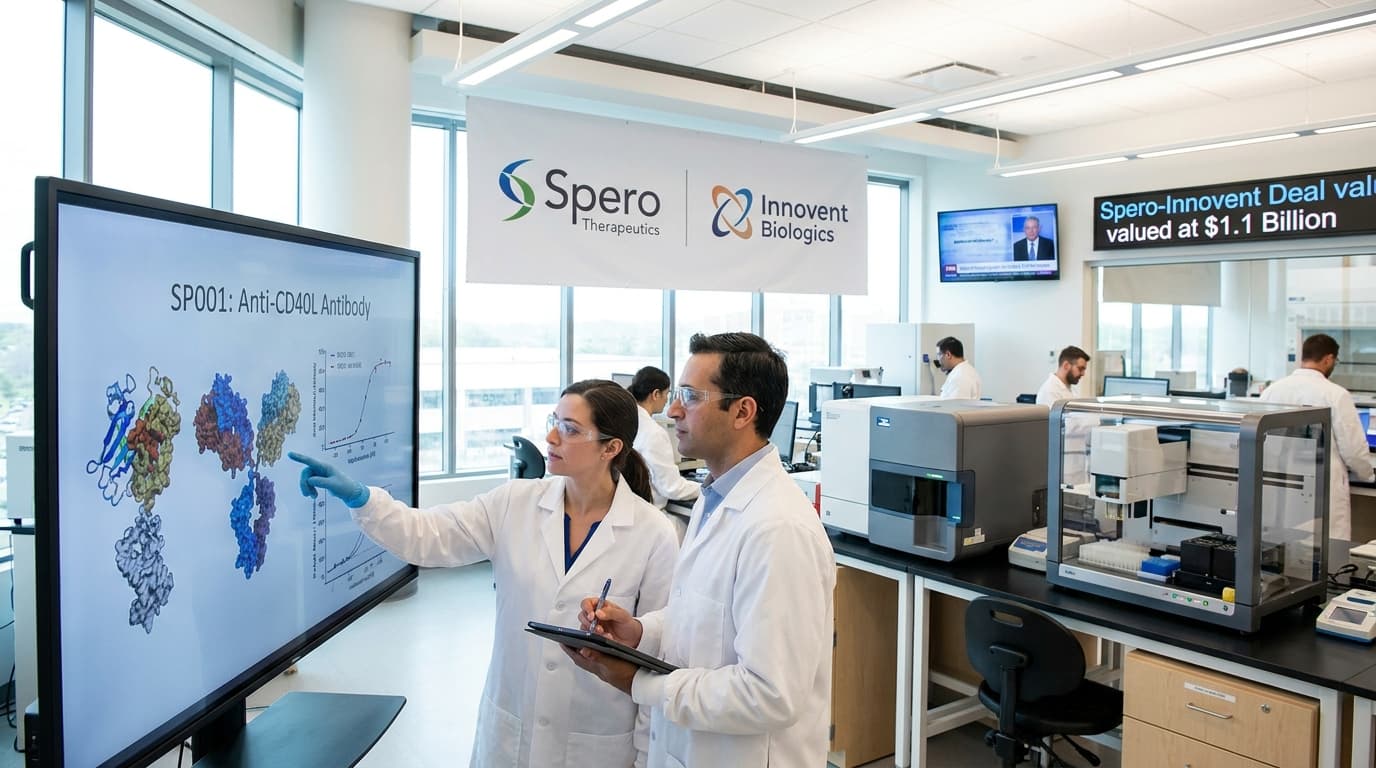
Spero Bets Up to $1.1 Billion on Innovent's Anti-CD40L Antibody for Autoimmune Diseases

Spero Therapeutics has committed over $1 billion to secure development rights for Innovent’s SP001, an investigational anti-CD40L antibody aimed at IgG4-related disease. With a Phase 2 study on the horizon for 2027, this deal highlights both the enduring value of innovative autoimmune therapies and the ongoing appetite for high-stakes biotech partnerships.
A Deep Dive into Spero’s Ambitious Licensing Move and the Future of Autoimmune Disease Therapeutics
On July 14, 2026, Spero Therapeutics made headlines by announcing a significant financial commitment to innovate within the autoimmune disease landscape. In a deal valued at up to $1.1 billion, Spero has secured development rights to SP001, Innovent Biologics’ promising anti-CD40L antibody for the treatment of IgG4-related disease. With plans to launch a Phase 2 study in the second quarter of 2027, this agreement exemplifies the fierce competition for next-generation biologics capable of reshaping standards of care in complex immune conditions.
The Science and Clinical Promise Behind SP001
SP001 is a monoclonal antibody targeting CD40 ligand (CD40L), a critical co-stimulatory molecule involved in the activation and regulation of the immune response. Overexpression and dysregulation of the CD40/CD40L pathway are strongly implicated in a variety of autoimmune and inflammatory disorders, making it a compelling target for therapeutic intervention. IgG4-related disease—a rare, chronic fibroinflammatory disorder affecting multiple organs—lacks optimal therapies and remains an area of high unmet clinical need.
By directing efforts toward this target, Spero and Innovent are positioning SP001 as a potential first- or best-in-class therapy for patients who currently have few options. The planned Phase 2 clinical trial, set for kickoff in 2027, will be closely watched by stakeholders across the immunology and rare disease arenas.
Deal Structure: High-Value Upfronts and Milestones
While the full financial breakdown of the agreement has not been made public, the headline figure of up to $1.1 billion speaks to the perceived promise and potential impact of SP001. Such deals typically include an upfront licensing fee, regulatory and clinical milestone payments, and royalties on future sales. For Spero, this investment is a substantial bet on an asset that, if successful, could deliver transformative value, not only for patients but also for shareholders looking for sustainable growth drivers.
For Innovent, the partnership provides non-dilutive capital, access to global clinical and commercial infrastructure, and potential for rapid acceleration of SP001’s development. This aligns with a broader biopharma trend: innovative biotech companies originating breakthrough science locally and then using cross-border licensing deals to maximize global reach while maintaining research momentum at home.
The Competitive Landscape in Autoimmune Therapeutics
IgG4-related disease is only one of several indications in which the CD40/CD40L axis may prove vital. The therapeutic area overall is seeing dramatic levels of investment, reflecting both the high burden of autoimmune disease and the expanding understanding of disease mechanisms at a molecular level. Blockbuster biologics in rheumatology, gastroenterology, and dermatology have paved the way for continued innovation and revalidation of immune targets seen as ‘druggable.'
SP001’s clinical trajectory will take place in a landscape featuring both entrenched therapies and an evolving slate of next-generation assets. Success in IgG4-related disease will depend not only on efficacy outcomes but also on the potential to differentiate in terms of safety, convenience, and value to healthcare systems.
Strategic Rationale: Why Spero Is Betting Big
Spero’s strategy appears driven by several key industry dynamics:
- Unmet Clinical Need: IgG4-related disease is an area of high unmet need with limited effective therapies and significant morbidity.
- Scientific Validation: Targeting the CD40L pathway has shown promise in a variety of early stage studies, supporting further investment.
- Portfolio Diversification: By in-licensing late preclinical or early clinical assets, Spero can de-risk R&D, diversify its pipeline, and potentially deliver meaningful near- or mid-term product launches.
- Financial Leverage: Such deals often balance upfront financial risk with milestone-based payouts, allowing flexibility as development risk ebbs or flows.
Partnership Synergy and Sector Implications
For both Spero and Innovent, the partnership offers synergies in clinical development, regulatory know-how, and future commercialization. For the biotech and pharmaceutical industry, the deal highlights the continued robust appetite for high-value, high-risk licensing agreements—especially in immune-mediated and rare disease segments where clinical needs are acute and financial upside, if achieved, is substantial.
This trend is likely to persist as companies seek new ways to accelerate innovation without the time and expense of wholly owned research from bench to bedside. Cross-border deals, particularly between North America, Europe, and Asia, are also set to remain at the forefront of biopharma deal-making strategy.
Outlook: What Comes Next for Spero and SP001?
The most immediate focus will be on preparations for the planned Phase 2 clinical trial in 2027. Stakeholders will monitor progress on patient enrollment, primary and secondary endpoints, and early safety readouts. Positive momentum could accelerate further investments, while setbacks will test the risk-sharing structure inherent in milestone-based licensing agreements.
From a wider viewpoint, the deal reaffirms the central role of immune modulation in 21st-century medicine and the continued push to address diseases lying at the interface of immunology, inflammation, and rare disorders.
Conclusion
The collaboration between Spero Therapeutics and Innovent Biologics around SP001 underscores the persistent drive toward innovative, high-impact science in pharmaceutical R&D. Through this massive licensing agreement, both companies are positioning themselves for leadership in the advancing field of autoimmune disease therapy. As research advances—and if SP001 delivers on its promise—the landscape for patients with IgG4-related disease and similar conditions could see genuine transformation.
Source: BioSpace – Spero bets up to $1.1B for Innovent’s autoimmune antibody
Join the BioIntel newsletter
Get curated biotech intelligence across AI, industry, innovation, investment, medtech, and policy delivered to your inbox.