STAT Details Focal Therapy’s Rise In Prostate Cancer As Guidelines Still Limit Use

New long-term U.K. data gave focal therapy supporters fresh evidence, including a reported 0.1% prostate cancer mortality rate 10 years after treatment. Even so, debate persists because randomized comparisons with standard treatment remain limited and real-world use extends beyond the patients guidelines say should receive it.
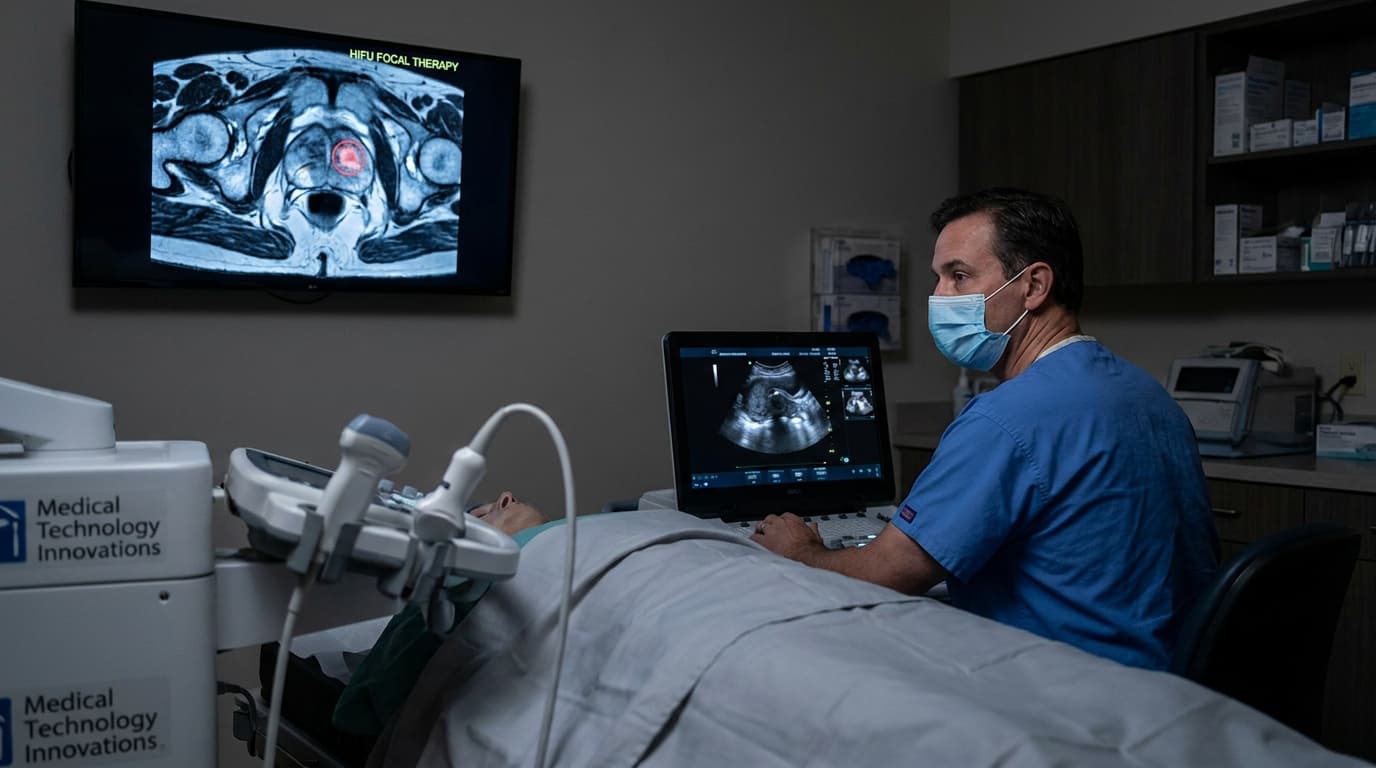
Focal therapy is gaining traction in localized prostate cancer because it offers a middle ground between active surveillance and whole-gland treatment, but the commercial and clinical case remains constrained by evidence gaps and guideline resistance. The approach targets MRI-visible lesions with technologies that heat and destroy, freeze, burn or electrocute cancer cells, often in a single session and sometimes in a doctor’s office.
Its appeal is tied to the side effects of the standard alternatives. For patients who do not remain on active surveillance, treatment usually means removing or irradiating the whole prostate gland. The long-term consequences can include incontinence and erectile dysfunction, which has pushed patients and some physicians toward a more localized option even though treatment guidelines still consider focal therapy experimental.
The Data
Supporters gained a boost last month from a U.K. study showing that 10 years after treatment, only 0.1% of patients treated with focal therapy had died of prostate cancer, a result STAT reported as comparable to survival outcomes for standard treatments. Those patients also had higher satisfaction rates and lower levels of side effects compared with other treatments.
That still has not settled the argument. Many specialists want more long-term evidence and clearer randomized data directly comparing focal therapies with surgery or radiation. The American Urological Association says focal therapy should be performed only as part of studies and in prospective registries, while acknowledging it as an option for intermediate-risk cancer.
A paper published last week added another complication by finding that half the patients receiving focal therapy had either higher-risk or lower-risk cancers, including patients that guidelines say require no immediate treatment and should instead be followed with active surveillance. That mismatch between guidance and practice helps explain why the field remains divided even as patient interest grows.
The Commercial Picture
Focal therapy is not a single product category but a group of Food and Drug Administration-authorized technologies. The main approaches cited by STAT are cryotherapy, laser ablation and high intensity focused ultrasound, or HIFU. Choice usually depends on the shape and location of the lesion.
Use patterns have shifted. Cryotherapy accounted for nearly 80% of focal therapy procedures in 2010, but by 2023 had fallen to 20%. Laser ablation represented about 45% of procedures, while HIFU grew to 35% in 2023 as the fastest-growing modality.
Even with that growth, uptake remains modest. Recent data show that 1.3% of prostate cancer patients in the U.S. received focal therapy. Under AUA guidelines, about 10% to 20% of prostate cancer cases would qualify for focal therapy as part of studies, specifically patients with intermediate-risk cancer who could choose active surveillance as well as surgery or radiation therapy.
Coverage is another limiting factor. STAT reported that many commercial insurers do not cover focal therapy, though Medicare does. One patient interviewed by STAT said he paid about $17,000 out of pocket. That reimbursement pattern creates a market where demand exists, but access can depend on a patient’s ability to self-fund a treatment that remains outside routine guideline-backed care.
Why Physicians Remain Split
The attraction is clear. Surgery has a longer recovery time and causes initial incontinence in nearly all patients; while most regain bladder control within a year, 5% to 10% can experience permanent incontinence. More than half of men who undergo surgery lose sexual function in the medium to long term. Radiation therapy has fewer long-term side effects, but it can still lead to temporary incontinence and erectile dysfunction and typically requires several weeks of daily treatment.
Focal therapy, by contrast, is typically delivered once and can take from 40 minutes to a couple of hours. Some patients need a catheter for a period after treatment, but the side effect profile is usually limited unless the mass sits in a sensitive location for erectile dysfunction.
The signal for device makers and providers is that focal therapy has moved beyond novelty but not beyond proof pressure. Better MRI identification of lesions and favorable long-term observational data are expanding interest, yet adoption will likely remain constrained until evidence, guidelines and reimbursement align more closely than they do now.
Join the BioIntel newsletter
Get curated biotech intelligence across AI, industry, innovation, investment, medtech, and policy delivered to your inbox.