Super-Potent Synthetic Opioids Called Nitazenes Are Spreading Across the U.S.

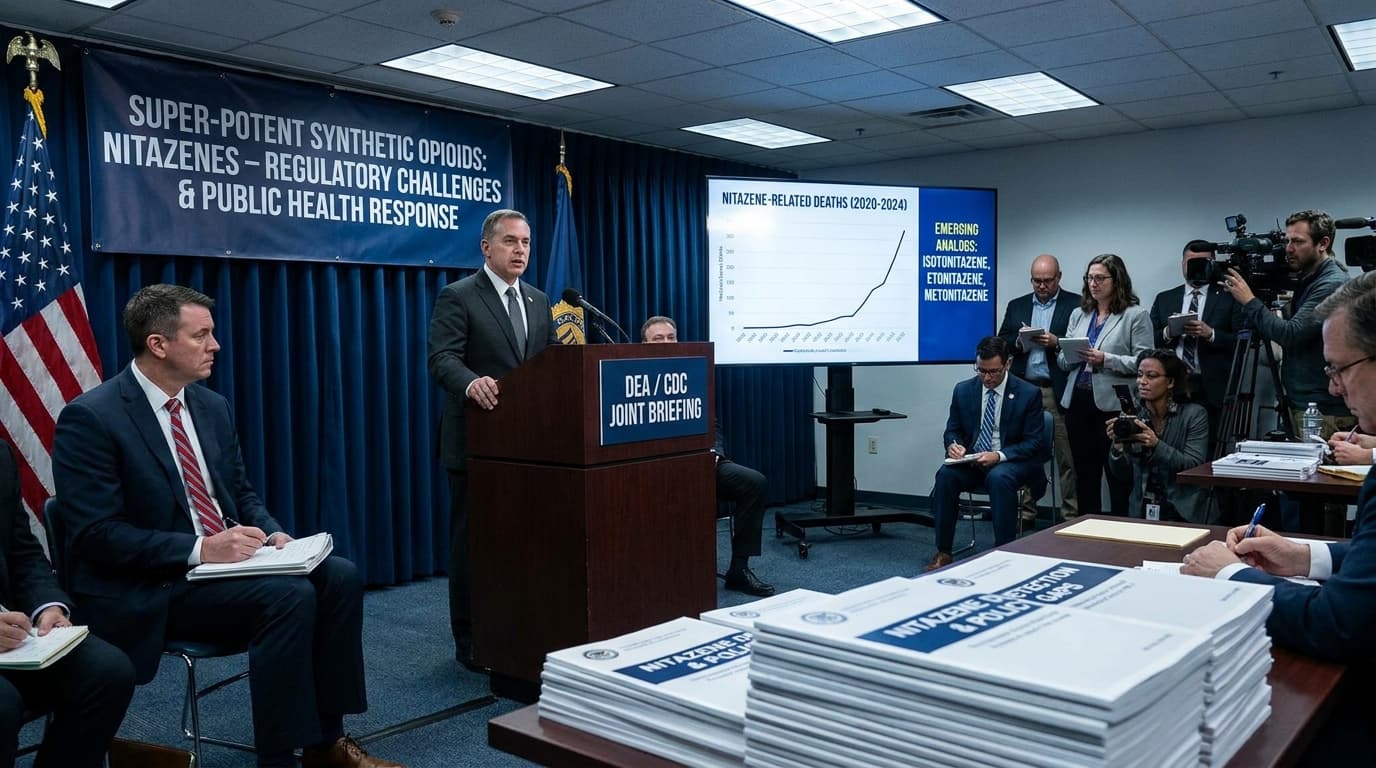
Confirmed overdose deaths involving nitazene-class synthetic opioids have surged over the past four years. This trend is alarming addiction medicine experts and policymakers and highlights the urgent need for comprehensive surveillance and adaptive public health strategies.
Introduction
The opioid crisis in the United States continues to evolve, with new and more potent synthetic drugs presenting major challenges for public health officials, policymakers, and communities alike. One of the most troubling recent developments is the rise of nitazenes—a class of synthetic opioids that are substantially more potent than fentanyl. According to statistics compiled by the Centers for Disease Control and Prevention (CDC), overdose deaths involving nitazenes have increased sharply, from just 27 confirmed cases in 2020 to over 400 in 2024. As these substances proliferate, experts and health agencies are being forced to rethink their approach to detection, messaging, and regulation.
This in-depth report analyzes the chemical nature of nitazenes, their pathway onto the streets, why they are so dangerous, and what regulatory and clinical strategies may be required to confront the crisis. At more than 2,000 words, we surface the facts, contextualize the rise of synthetic opioids, and consider the public health response underway and still needed.
What Are Nitazenes?
Nitazenes are a group of synthetic opioids developed in the 1950s but never approved for clinical use in the United States. Unlike naturally derived opioids, such as morphine or heroin, nitazenes are man-made molecules designed in a laboratory, with structures that can be varied slightly to yield new analogs. Known members of the nitazene family include isotonitazene, etonitazene, metonitazene, and protonitazene, among others.
At the molecular level, these drugs are classified as benzimidazole opioids. Their high potency—many times greater than heroin or even fentanyl—makes them attractive to illicit producers. Their structures are often tweaked to evade standard drug checks and scheduling laws.
The Emergence and Spread of Nitazenes
Initial Detection
Reports of nitazene-class opioids in the illicit drug supply began emerging around 2019. Initial detections were sporadic, but laboratory analyses from poison control centers and drug seizure units have confirmed a steady growth in their appearance. Over time, nitazenes have been identified in overdose deaths, seized powders, counterfeit prescription pills, and even mixtures with other street drugs like heroin and cocaine.
Geographic Patterns
While originally identified in the Midwest and Eastern U.S., recent data suggest nitazenes are surfacing in nearly every region of the country. Certain states, such as Tennessee and Ohio, have documented concentrated outbreaks, while urban centers and rural areas alike now report these drugs appearing in toxicology screens from overdose fatalities.
How Nitazenes Enter the Market
Unlike prescription opioids, which are diverted from legitimate sources, nitazenes are typically synthesized in illicit, often overseas laboratories before being shipped to the U.S. Drug traffickers may adjust formulations in clandestine labs to skirt regulatory detection. Small chemical modifications to a parent compound can result in a new analog not yet controlled under law, producing a rapidly moving target for law enforcement and regulators.
Why Are Nitazenes So Dangerous?
Extreme Potency and Overdose Risk
Perhaps the greatest threat posed by nitazenes is their extraordinary potency. Some are estimated to be up to 20 times as strong as fentanyl, a substance already many times more potent than heroin. Because only a fraction of a milligram can produce intense effects, dosing errors are common. Users are often unaware they are even ingesting nitazenes, as these drugs are frequently mixed (often without warning) into batches of heroin or pressed into counterfeit pills resembling pharmaceuticals.
Limited Awareness and Testing Gaps
Another factor intensifying the risk is that conventional drug testing kits often cannot detect nitazenes. Medical professionals, emergency responders, and harm reduction workers may overlook their presence, leading to undiagnosed cases and inappropriate emergency treatment strategies. The rapidly changing nature of synthetic opioid chemistry complicates detection further.
Lack of Regulatory Controls
While fentanyl and its analogs have been a focus of state and federal bans, nitazenes have often slipped through gaps in regulatory structures. Whenever a law schedules one analog, illicit chemists will tweak a molecule to create another not explicitly banned, taking advantage of the letter (if not the spirit) of existing drug laws.
Public Health Challenges and Policy Gaps
Surveillance Deficits
The rapid rise in nitazene-related deaths underscores a persistent problem: existing surveillance systems are struggling to keep pace with the ever-shifting opioid landscape. Forensic toxicology labs may not have the resources to perform regular screening for new synthetic analogs. When a new substance like a nitazene is detected, it may take months—if not years—before widespread reporting is feasible.
Messaging and Education
The unpredictable and extreme potency of nitazenes presents unique challenges for public health messaging. Campaigns must emphasize that even seemingly familiar street drugs can contain lethal doses of these new substances. Emergency responders and harm reduction agencies now face the urgent need to update their awareness and response protocols.
Naloxone Effectiveness
Standard opioid overdose treatment protocols rely on naloxone, but some reports suggest that reversing a nitazene overdose may require larger or repeated doses of naloxone. This places additional stress on access programs and the supply of overdose reversal agents.
Law Enforcement and Regulation
Legal frameworks are being tested by the ability of illicit producers to stay one step ahead through molecular innovation. Prosecutors and lawmakers may find that once one analog is banned, another emerges, demonstrating an ongoing cat-and-mouse dynamic. The result is a constant urgency for regulatory flexibility and international cooperation.
Addressing the Challenge: Next Steps in Combating Nitazenes
Enhancing Detection and Lab Capacity
Investing in forensic toxicology infrastructure is vital. Improving laboratory capacity to test for a wide array of synthetic opioids allows health officials to track trends in real-time and respond with targeted messages and interventions. One promising approach is “expanded panel” routine screening in suspected overdose deaths.
Collaboration and Data Sharing
Better coordination between local, state, and federal agencies is critical. Data on overdose clusters, new synthetic analogs, and regional outbreaks must be shared rapidly and efficiently. Learning from adverse drug events in one jurisdiction can allow others to ramp up preventive efforts before trends gain a foothold nationwide.
Regulation Through Analog Laws
Some experts have suggested broad analog laws allowing for the automatic scheduling of newly identified synthetic opioids, thus closing the loophole exploited by minor molecular tweaks. However, such measures raise due process and scientific classification concerns, making the regulatory debate ongoing and highly nuanced.
Bolstering Public Education and Harm Reduction
Aggressive public awareness campaigns—aimed at drug users, medical professionals, and the public—are needed. This includes updating EMS and healthcare provider training to recognize nitazene symptoms and to use appropriate reversal strategies. Harm reduction organizations are key partners, as they are often the first to recognize changes in local drug supplies.
Ensuring Robust Naloxone Access
Ensuring that both the general public and first responders have access to ample supplies of naloxone is essential, given that nitazene overdoses can be swift and severe. Wider distribution, training, and potential increases in dosage recommendations may be called for.
Broader Implications for the Opioid Crisis
The rise of nitazenes is emblematic of a broader shift in the U.S. opioid market: the move away from plant-derived opioids toward a marketplace dominated by synthetic substances. Such drugs are easier to manufacture illicitly, evade detection, and update chemically. This carries far-reaching implications for law enforcement, public health, and communities at large.
Combined with continuing issues around substance use disorder treatment, social determinants of health, and criminal justice policy, synthetic opioids like nitazenes will likely keep pushing the boundaries of what traditional public health and law enforcement approaches can handle.
Conclusion
The spread of nitazenes across the United States represents a new and deeply concerning phase of the opioid epidemic. These powerful synthetic drugs threaten lives both through their potency and their ability to evade established detection and regulatory systems. Responding to this crisis demands flexibility, investment in laboratory infrastructure, robust surveillance, and the rapid adaptation of harm reduction practices.
For physicians, policymakers, and the wider public, the rise of nitazenes is a stark reminder that the opioid landscape remains highly dynamic. Meeting these threats will require nimble regulatory action, enhanced frontline awareness, and a renewed commitment to prevention and treatment resources that can keep pace with innovation on the street.
Further information and the original report can be found at STAT News.
Join the BioIntel newsletter
Get curated biotech intelligence across AI, industry, innovation, investment, medtech, and policy delivered to your inbox.