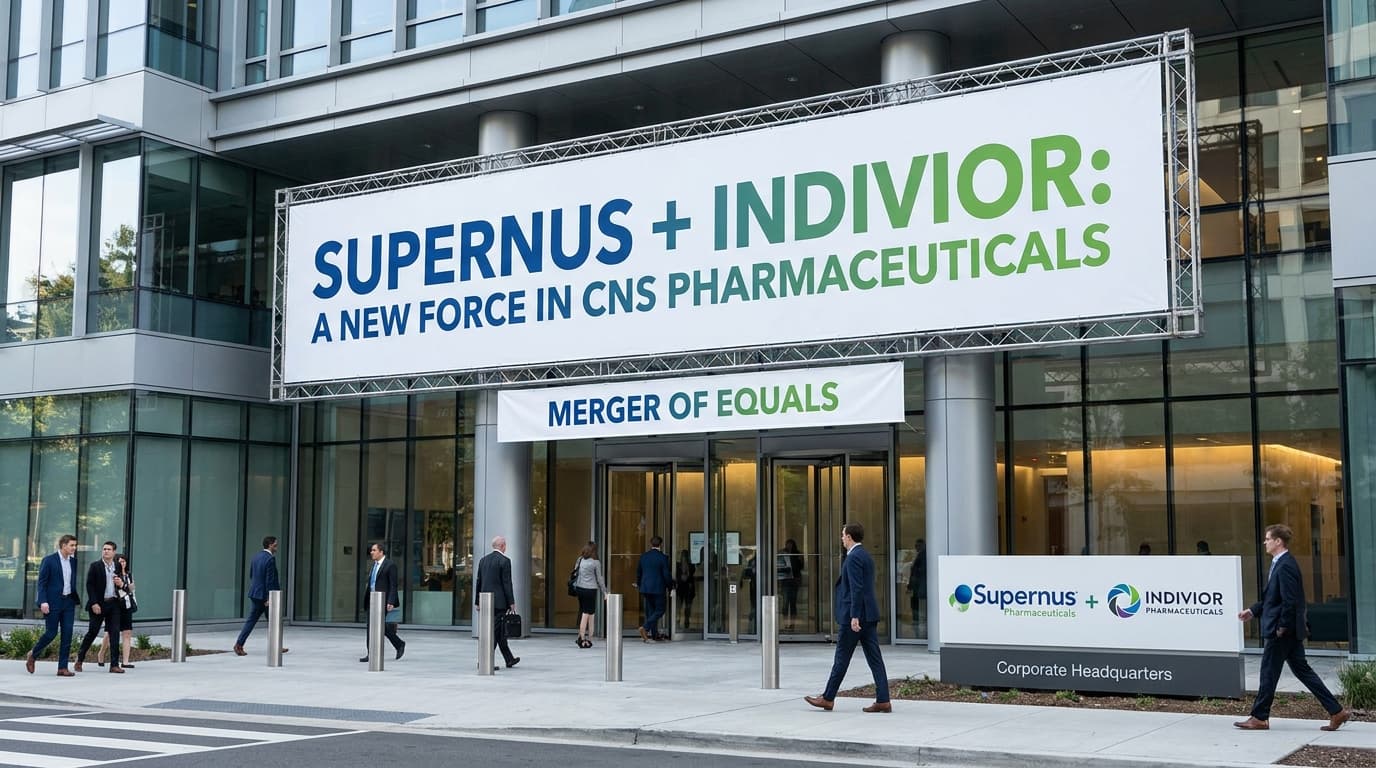
Supernus and Indivior to Merge, Forming a New CNS-Focused Pharma Company

A notable merger in the pharmaceutical industry signals further consolidation in the central nervous system (CNS) therapy area. Supernus and Indivior press forward with a combined portfolio that touches on addiction, ADHD, depression, and Parkinson’s disease, reflecting ongoing trends in biopharma dealmaking and market reshaping.
The biopharmaceutical sector is witnessing a significant event, as Supernus Pharmaceuticals and Indivior Pharmaceuticals have announced a merger that both companies describe as a 'merger of equals.' The press releases and early market analysis around this transaction underscore the continuing shift in the central nervous system (CNS) drug market—a field marked by both scientific complexity and considerable unmet medical need.
Background: A Merger Reflecting Industry Momentum
The agreement between Supernus and Indivior marks a major move beyond the realm of big pharma megadeals into what many analysts see as the new normal for public biopharma companies: strategic mergers aimed at immediate portfolio expansion and increased operational efficiency. Both firms have extensive CNS-related pipelines, with commercial and near-commercial drugs targeting addiction, attention-deficit hyperactivity disorder (ADHD), depression, and Parkinson’s disease.
The transaction comes at a time when the CNS market continues to display robust growth prospects. With neuropsychiatric and neurodegenerative diseases impacting millions globally—and few truly innovative therapies approved over the last decade—companies are seeking scale and capabilities in both R&D and commercialization under a combined entity.
The Details of the Deal
According to statements from both Supernus and Indivior, this is a stock-for-stock transaction that unites two companies of similar scale in terms of commercial reach, R&D investment, and product breadth. Although financial terms have not been disclosed in detail in the announcement, the combined portfolio is expected to reach 11 marketed products covering multiple CNS indications.
This robust product lineup is anticipated to deliver a significant presence in markets for addiction treatment, ADHD medications, antidepressants, and Parkinson’s management. While post-merger integration will inevitably raise questions about cost management and potential layoffs, the merger is a strategic play to achieve a more flexible and resilient business in a challenging reimbursement and regulatory environment.
CNS Market: Why This Merger Matters
The central nervous system drug market has witnessed both clinical setbacks and moments of regulatory breakthrough in recent quarters. M&A activity of this kind is often driven by the need for portfolio breadth, risk diversification, and a sharper competitive edge. For example, addiction treatments—one of the shared focuses of Supernus and Indivior—are under increasing scrutiny from public health authorities and payors, while the ADHD therapeutic space continues to be reshaped by both changing prescribing patterns and regulatory requirements.
The decision to merge can be viewed as a reflection of both pragmatic operational strategy and the evolving business logic of mid-cap pharmaceutical companies. By pooling R&D, medical affairs, and commercial resources, Supernus and Indivior hope to push more candidates down the pipeline at reduced per-program cost, growing their combined critical mass in highly competitive therapeutic areas where both commercial success and scientific innovation are required.
Pipeline and Portfolio Synergies
The newly formed company will house 11 commercial products, with overlapping and complementary assets in addiction, ADHD, depression, and Parkinson’s disease. Addiction remains an area of broad unmet need, particularly as opioid and other substance use disorders continue to dominate headlines and public health priorities. Meanwhile, ADHD is a global concern, with both pediatric and adult prevalence on the rise and limited innovation in first-line therapies over recent years. Depression and Parkinson’s disease add further therapeutic depth—and complexity—to the new company’s combined offerings.
With multiple drugs in each indication, the merger supports ongoing innovation while creating operational efficiencies that mid-cap firms often struggle to achieve independently. In the context of payer consolidation and downward reimbursement pressure, scale is increasingly seen as critical for negotiating access and maintaining profitability.
Operational and Financial Opportunities
Beyond clinical and portfolio considerations, this transaction is expected to yield operational and financial synergies. By streamlining overlapping functions, harmonizing salesforces, and integrating supply chains, the merger could generate cost savings and allow increased investment in late-stage R&D and postmarketing support. The companies suggest that this merger will create a more resilient business model capable of weathering industry headwinds and capturing greater share across CNS markets.
While specifics on workforce integration, R&D restructuring, and facility rationalization have not been made public at this moment, history suggests that the transition phase of such mergers brings a blend of challenge and opportunity. Investors and analysts will be looking for clear plans to maintain continuity in patient access and ensure smooth regulatory and commercial operations as the two organizations come together.
Market and Competitive Impacts
The merger arrives at a time of considerable activity in the biopharmaceutical sector, with increased interest in CNS from both startups and larger players. Competition remains fierce in all of the indications referenced by the companies—particularly addiction, where regulatory scrutiny and shifting reimbursement dynamics present commercial hurdles as well as opportunities.
For payors, patients, and prescribers, consolidation among key players may unlock increased access to certain therapies but can also reduce competition and choice in select market segments. The regulatory response to this and similar deals will be closely watched, as authorities continue to weigh the benefits of scale against the risks of market power consolidation.
Looking Ahead: The Road to Integration
Moving forward, the combined company faces a critical period of integration, requiring careful alignment of cultures, R&D priorities, and commercial strategies. Existing Supernus and Indivior customers and partners will be closely monitoring transition plans for signals of changes in pricing, supply, or support.
This strategic move positions the combined company to be a more significant competitor in CNS, with scale, breadth, and depth that could spur both innovation and market advancement. Analysts will be keen to monitor subsequent regulatory approvals, pipeline progression, and commercial milestones as indicators of the deal’s ultimate success.
In summary, the Supernus-Indivior merger underscores ongoing consolidation trends in the biopharma industry—with special resonance for CNS, a complex and high-need therapeutic area. The success of this integration will depend on effective execution, responsible stewardship of both legacy portfolios, and a clear vision for sustained R&D innovation and market leadership.
Source: MedCity News
Join the BioIntel newsletter
Get curated biotech intelligence across AI, industry, innovation, investment, medtech, and policy delivered to your inbox.