It’s Time for Technology to Lift Maternal Care

Maternal health outcomes are under the microscope as health systems seek to improve safety. Technology offers promise, but its value hinges on early risk identification, fostering effective communication among caregivers, and catalyzing timely intervention, according to experts cited by MedCity News.
Maternal health and safety have long been central goals for healthcare providers, policymakers, and technology innovators alike. Despite advances in medicine, maternal morbidity and mortality rates in many developed nations—and especially in the United States—have remained disturbingly high compared to peer countries. Common approaches have focused on gathering more data, deploying new monitoring devices, or delivering vast quantities of information to clinicians. However, according to MedCity News, "improving maternal safety will not come from adding more data or more devices. It will come from building systems that help clinicians recognize risk earlier and communicate and act with confidence in the moment."
The Challenges in Maternal Health Today
With rising awareness and advocacy around maternal health disparities, many healthcare systems are actively seeking solutions. Yet, persistent problems such as delayed diagnosis of pre-eclampsia, insufficient response to hemorrhage, and lack of timely escalation in care frequently contribute to adverse maternal outcomes. Additionally, communication breakdowns between various members of the obstetric care team—nurses, midwives, physicians, and specialists—too often result in missed warning signs and sub-optimal interventions.
The Gap Between Data and Action
Modern hospitals and birthing centers are equipped with sophisticated monitoring equipment, from electronic fetal monitoring to advanced lab diagnostics. Every day, these systems collect enormous amounts of data about mothers and their babies. The challenge, however, is not shortage of data, but how to meaningfully process, interpret, and act upon it:
- Cognitive Overload: Clinicians are overwhelmed by alarms, notifications, and streams of information, often with little guidance on prioritization.
- Fragmented Systems: Patient data may reside in disparate platforms, requiring manual synthesis at critical moments.
- Lack of Contextual Decision Support: Without integrated decision support, clinicians must make judgment calls quickly, sometimes under pressure or with incomplete information.
Technology as a Partner in Early Risk Recognition
True technological advancement in maternal care lies in augmenting the clinical judgment of frontline providers. Innovative solutions must focus on:
- Continuous, Context-Aware Monitoring: Rather than merely collecting vital signs and lab results, smart systems can flag subtle trends, deviations from baseline, or clustering of risk factors that signal maternal decline or impending complications.
- Real-Time Communication Tools: Secure messaging, decision notifications, and escalation protocols can bring the right team members together when risk is detected, ensuring shared awareness and shared response.
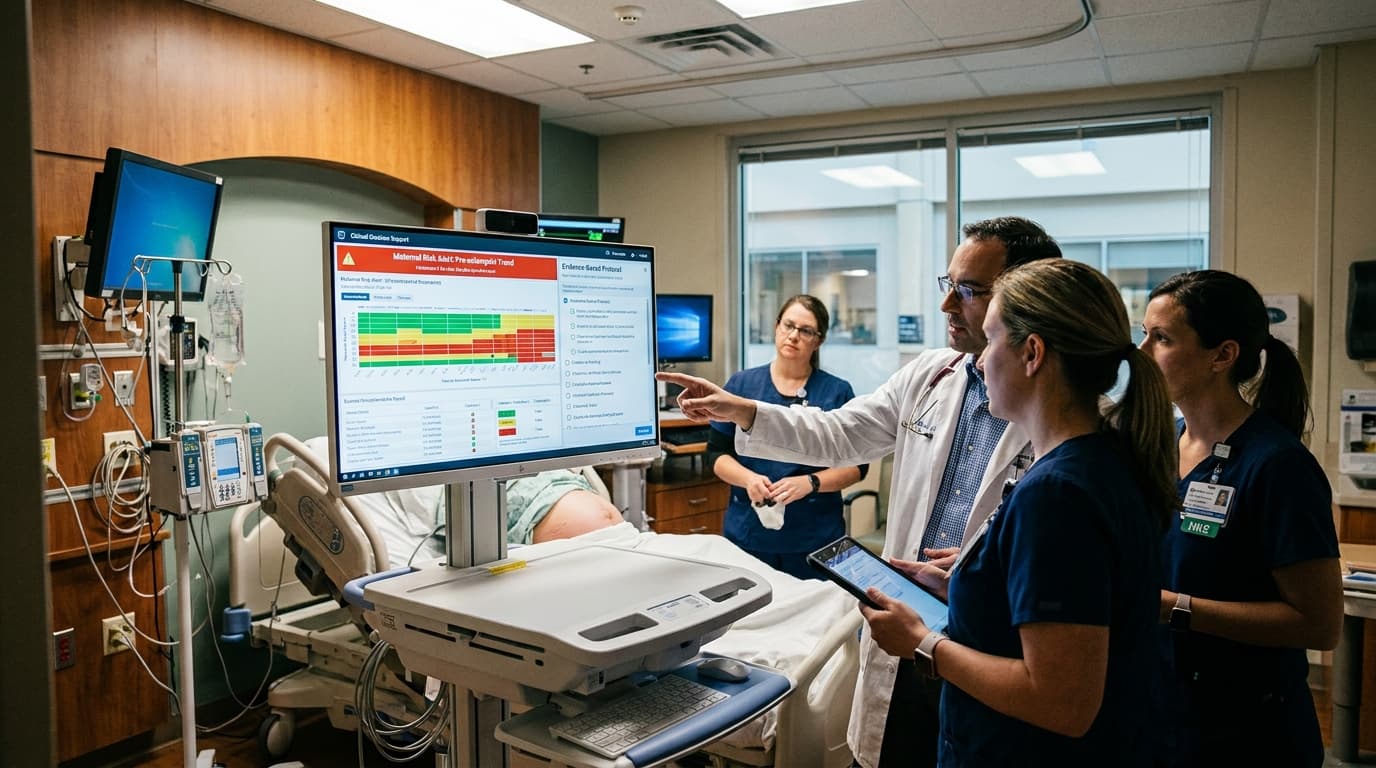
- Standardized Protocols Embedded in Workflow: Clinical pathways for high-risk conditions, such as severe hypertension or postpartum hemorrhage, should be built into bedside technology so that evidence-based interventions are prompted at the moment they are needed.
Overcoming Barriers to Adoption
To realize the promise of tech-enabled maternal safety, healthcare organizations must overcome both cultural and operational barriers:
- Reducing Alert Fatigue: Intelligent algorithms that suppress nuisance alarms and elevate genuine risk signals are critical for user adoption.
- Provider Trust: Clinicians must trust that systems will enhance, not override, their expertise. This requires transparent algorithms and robust clinical validation.
- Interoperability: Systems must integrate seamlessly across EHRs, monitoring equipment, and mobile platforms to deliver unified, actionable information.
Beyond the Bedside: Population Health and Equity
Technology also has a role to play beyond the walls of the hospital or birthing center. Digital tools that screen for social determinants of health, track prenatal care attendance, and connect patients to social support networks can proactively identify women at risk for poor outcomes, particularly in communities facing systemic inequities.
- Remote Monitoring: For women with chronic conditions (such as hypertension, diabetes, or heart disease), remote monitoring coupled with telehealth follow-up can catch problems before they escalate.
- Data-Driven Quality Measurement: Health systems can use aggregated data to identify disparities, measure progress toward equity goals, and guide resource allocation where it is needed most.
The Ethical Imperative for Technology in Maternal Care
Maternal mortality is both a clinical and a social justice challenge. To address it effectively, technological innovation must be guided by ethical principles that elevate patient dignity, informed consent, and cultural competence. Developers should involve patients, families, and frontline providers in the design and implementation of every system.
Looking to the Future: Toward Collaborative, Reliable Care
The path forward for maternal safety is not paved with more devices or isolated applications. It is shaped by an ecosystem approach, where every element—data, human expertise, institutional support, and patient engagement—works in concert to protect mothers and infants. Technology must adapt to the high-stakes, time-sensitive world of obstetric care, delivering support at the right moment, without overwhelming or distracting the care team.
Conclusion
As technology continues to permeate every facet of healthcare, its greatest impact on maternal safety will be found in solutions that empower clinicians to recognize risk early, foster clear communication, and support confident, evidence-based action. Only through this holistic approach can we hope to make measurable, lasting improvements in maternal outcomes, bridging the disparity gap and safeguarding the future for mothers and their children.
Source: MedCity News
Join the BioIntel newsletter
Get curated biotech intelligence across AI, industry, innovation, investment, medtech, and policy delivered to your inbox.