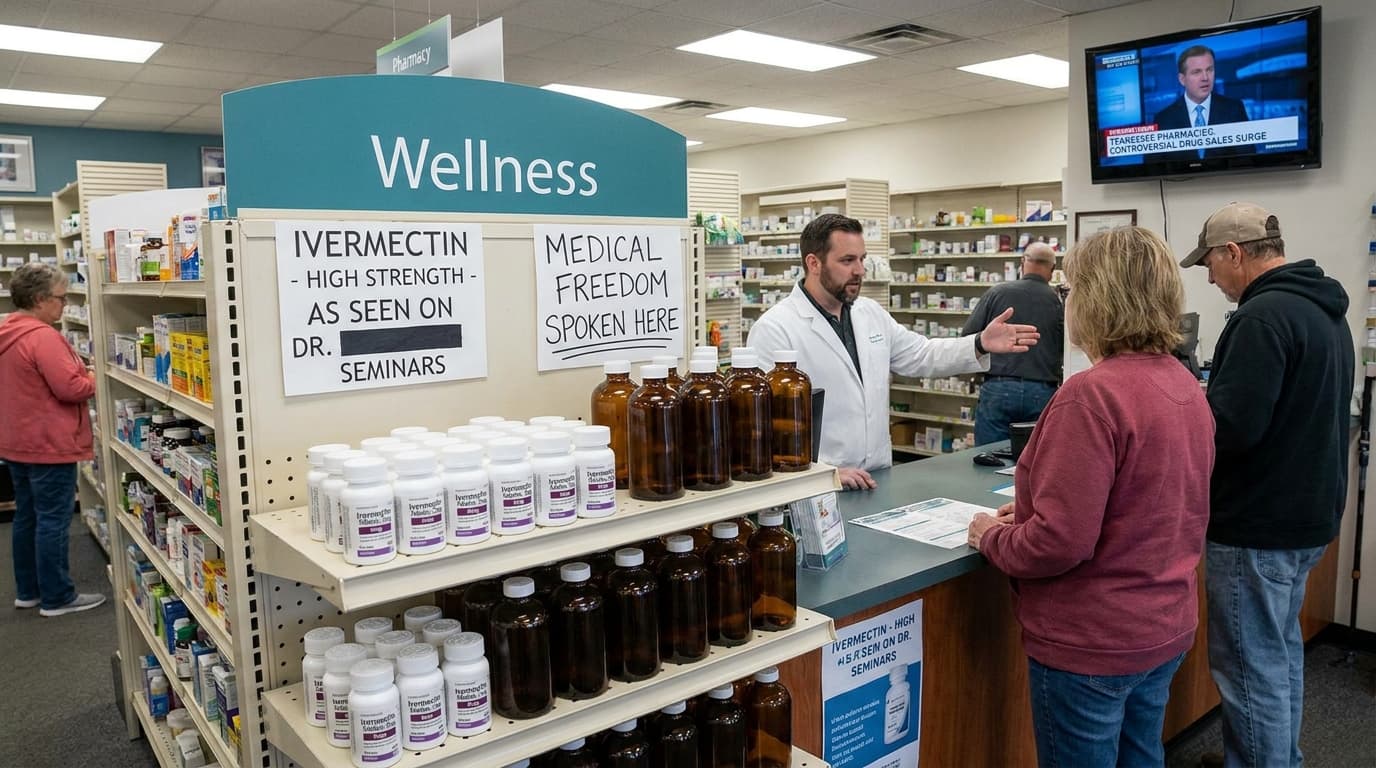
Tennessee Pharmacies See Rising Sales of Potent Ivermectin Led by Controversial Doctor

In Tennessee, pharmacies have experienced a remarkable increase in sales of potent formulations of the antiparasitic drug ivermectin. This market growth is largely driven by an anti-vaccine doctor who has publicized his use of the drug and actively encourages others to follow suit. The expansion of this controversial market underscores persistent challenges for regulators, the medical community, and public health officials as they confront misinformation and lax pharmacy oversight.
In the latest development of America's ongoing battle with misinformation and unconventional drug use, pharmacies across Tennessee are witnessing a marked surge in sales of potent ivermectin formulations. Propelled in large part by the endorsement and advocacy of a prominent anti-vaccine physician—who notably claims to have taken significant quantities himself—this phenomenon has reignited intense scrutiny of the intersection between medical freedom, regulatory oversight, and public health responsibility.
A Background on Ivermectin
Ivermectin is an antiparasitic medication widely approved for the treatment of several parasitic infections in both humans and animals. Historically, it has been a mainstay in global health campaigns against onchocerciasis (river blindness) and strongyloidiasis, among other conditions. In recent years, however, ivermectin’s reputation in the United States has become controversial, especially following its highly publicized—and scientifically unsupported—promotion as a potential prophylactic and therapeutic agent against COVID-19.
Multiple high-profile studies have found no convincing evidence of ivermectin’s efficacy against viral illnesses like COVID-19, yet the drug retains a cult following on social media, in populist political discourse, and among certain segments of the alternative medicine community. Warnings from the Food and Drug Administration (FDA) and leading medical organizations have advised against its use for any purpose other than its established antiparasitic indications.
How Tennessee Became a Hotbed for Potent Ivermectin
According to recent investigative reporting, pharmacies across Tennessee have witnessed a boom in sales of potent ivermectin formulations. Central to this surge is the influence of an anti-vaccine physician who publicly claims to have ingested “bucketloads” of the drug. This medical professional—well known in anti-mandate and vaccine skeptical circles—has leveraged his public profile and reach to normalize and even sensationalize the use of high-dose ivermectin among segments of the population wary of mainstream guidance.
Moreover, unlike in many other states, Tennessee law does not strictly prohibit the dispensing of ivermectin without a prescription. This legal gap has enabled physicians and pharmacies to market the drug directly to consumers, bypassing the usual medical oversight typically required for prescription medications. Critics argue this regulatory vacuum has fostered an environment in which misinformation and unproven therapies can flourish, while proponents frame it as a victory for medical autonomy and personal liberty.
The Mechanics: How Pharmacies Stock and Sell Potent Ivermectin
At the retail level, pharmacies in Tennessee appear to be capitalizing on demand by stocking high-strength, human-grade ivermectin. Some outlets have gone so far as to market ivermectin as a “wellness” supplement, complete with over-the-counter displays, wellness pamphlets, and endorsements from non-traditional health practitioners.
Furthermore, advocacy by the anti-vaccine physician has included seminars, website articles, and media interviews highlighting the purported benefits of high-dose ivermectin for a host of conditions beyond its FDA-approved uses. This marketing strategy has not only amplified public curiosity but has also triggered a steady flow of customers seeking to purchase or self-administer the drug.
Of additional concern is the apparent willingness by some prescribers and pharmacy operators to fulfill large and repeated orders without significant patient screening or medical justification—a practice at odds with professional standards elsewhere.
Medical Risks and Regulatory Concerns
The mounting sales of potent ivermectin raise serious issues around safety, efficacy, and the broader implications of unregulated drug dispensing.
Adverse Effects and Overdose Risk
While ivermectin is generally well-tolerated when used as prescribed for parasitic infections, higher doses—particularly those designed for livestock—have been linked to serious health risks, including:
- Neurological complications (e.g., confusion, tremor, seizures)
- Episodes of severe hypotension
- Gastrointestinal distress
- Risk of potentially fatal toxicity at very high doses
Given these dangers, the American Medical Association (AMA), FDA, and other health bodies have emphasized the importance of medical supervision in all human uses of ivermectin.
Regulatory Oversight (or Lack Thereof)
Tennessee’s comparatively relaxed approach to ivermectin sales leaves pharmacists and medical boards with limited authority to intervene. Pharmacies can, in many cases, claim that they are responding to market demand and exercising legitimate professional judgment. Meanwhile, broader efforts to curtail off-label promotion have proven difficult to enforce, particularly in the face of legislative support for “medical freedom” statutes in certain states.
Critics assert that without stronger regulation, the unchecked sale of potent and unnecessary medications—driven by fringe medical opinions—poses a public health threat not just to those taking the drugs but also in the wider context of promoting distrust in evidence-based medicine.
The Influence of Social Media and Fringe Figures
The rise of high-dose ivermectin sales in Tennessee cannot be divorced from digital media dynamics. The anti-vaccine physician at the center of this movement boasts a sizable online following. Social platforms facilitate the rapid spread of testimonials, “unpublished studies,” and anecdotal success stories, which are often leveraged to drive pharmacy traffic and justify non-evidence-based medical choices.
The echo chamber effect is particularly pronounced when established authority figures—such as licensed doctors—lend credibility to unproven therapies, regardless of the prevailing scientific consensus. This complicates the task facing regulators and reputable medical providers, who must counteract misinformation while respecting legitimate patient autonomy.
Legal and Ethical Implications
From a legal standpoint, the dispersion of high-dose ivermectin exists in a gray area in Tennessee. While no specific statutes preclude its sale, and physicians are generally free to prescribe FDA-approved drugs off-label, concerns arise when such practices actively contradict medical evidence and could endanger patients.
Furthermore, pharmacies are traditionally expected to exercise professional discretion, including counseling patients about medication risks and flagging inappropriate prescriptions. When business or ideological incentives override this duty, the boundary between ethical practice and commercial exploitation grows increasingly blurred.
National Attention and Future Developments
The Tennessee example is now being examined nationally as a case study in the challenges of medical regulation, evolving pharmacy practice, and the societal effects of politicized health information. Public health experts are calling for:
- Enhanced reporting requirements for pharmacists dispensing high-risk medications
- Renewed investment in public health education to combat misinformation
- Stronger inter-agency partnerships between licensure boards, medical societies, and law enforcement
At the same time, some legislators and medical freedom advocates defend Tennessee’s approach as a bulwark against federal overreach and a way to protect individual choice in personal healthcare decisions.
The Broader Context: Beyond Tennessee
The growth of an ivermectin market led by outspoken figures highlights a larger problem facing the American healthcare system—the proliferation of non-evidence-based therapies, sometimes with state-sponsored legal cover, at a moment of pandemic-driven uncertainty and declining trust in institutions.
For pharmacists, physicians, and policymakers, the question is not only how to regulate specific drugs like ivermectin, but how to restore public faith in science without stifling legitimate clinical discourse or autonomy. The tension between patient rights and the imperative to ensure safety and efficacy in all medical decisions remains as acute as ever.
Conclusion
Tennessee’s booming market for potent ivermectin represents a microcosm of the national challenges in balancing drug access, public health safety, and responsible pharmacy practice. It also exposes the enduring impact that highly visible, contrarian voices can have on medication trends—regardless of, or even in defiance of, scientific consensus.
How regulators, professional organizations, and communities choose to address these complexities will likely shape not only the future of ivermectin use, but also the trajectory of other unconventional, controversial, or politicized health products in years to come.
Source: STAT News
Join the BioIntel newsletter
Get curated biotech intelligence across AI, industry, innovation, investment, medtech, and policy delivered to your inbox.