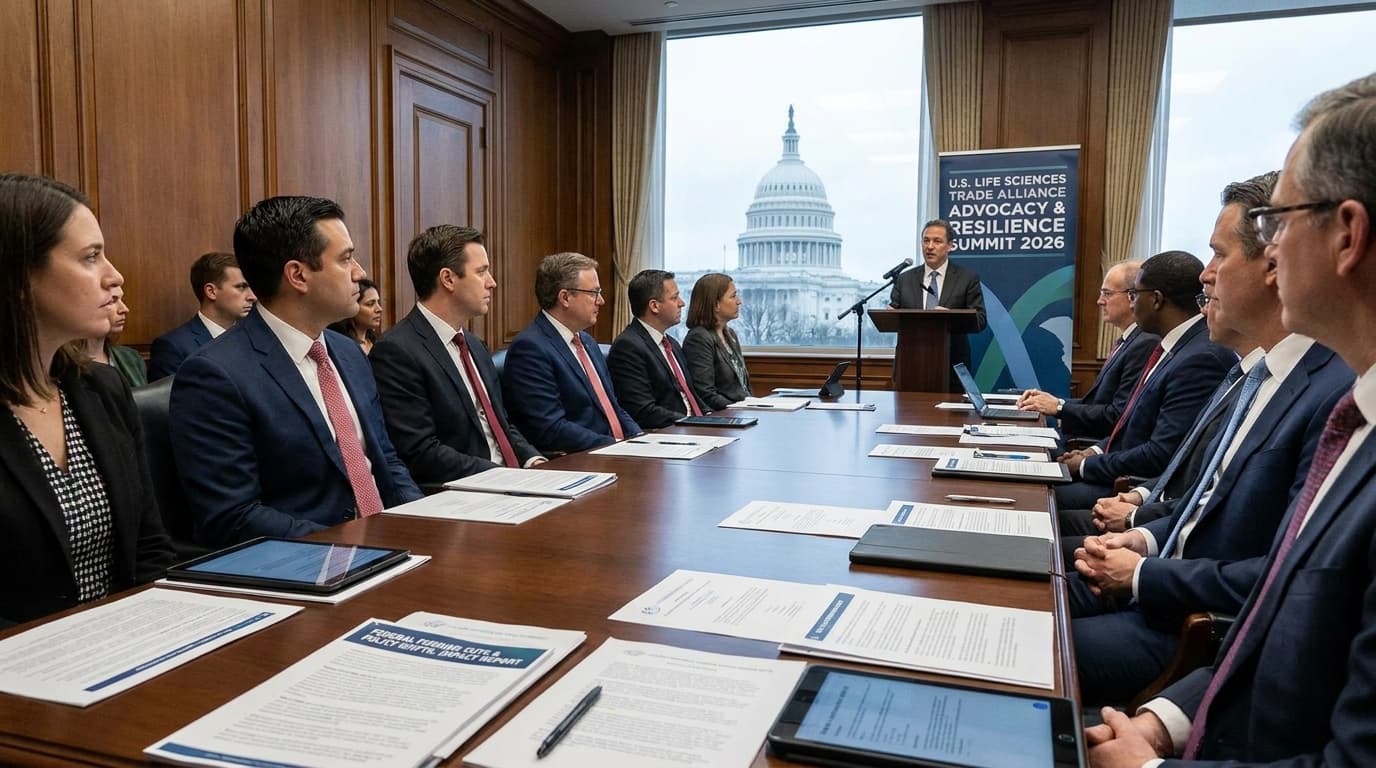
Trade Groups’ Critical Role in Sustaining U.S. Life Sciences During Policy Shifts and Funding Cuts

Policy volatility and reduced federal budgets are reshaping the U.S. life sciences landscape. This article explores how local trade organizations are taking on a pivotal support role, deploying resources and advocacy efforts to help companies weather the storm and preserve America’s leadership in biomedical innovation.
The U.S. biopharmaceutical and wider life sciences sector has long held a central position in global biomedical innovation, benefiting from robust federal investment and supportive policy frameworks. In 2026, however, the industry confronts unprecedented turbulence marked by major policy changes, significant reductions in federal funding, and growing uncertainty about the sustainability of the traditional innovation ecosystem. At the forefront of the response to these disruptive forces are local trade groups, whose resourcefulness and advocacy are proving instrumental in helping companies navigate the storm.
The Shifting Policy and Funding Landscape in U.S. Life Sciences
A recent commentary highlighted by BioSpace underscores the gravity of the situation: “As the industry faces policy changes and significant cuts to federal funding, local ecosystems can bolster companies through innovative resources to sustain growth and keep the U.S. at the center of biomedical innovation.” This succinct summary captures both the scale of the current challenge and the potential for targeted local action.
Federal funding cuts, especially in core research grants from agencies like the NIH, NSF, and BARDA, strike at the heart of the life sciences pipeline. These grants have historically played a critical role in enabling basic research, supporting translational science, and underpinning early-stage startup formation. Policy shifts—whether initiated by legislative, regulatory, or executive action—have introduced additional unpredictability, making planning more complex and elevating the risks for both established players and emerging innovators.
The Central Role of Local Trade Groups
Into this complicated, sometimes adversarial backdrop step local trade groups—regional consortia, professional associations, and chambers of commerce with a specific mandate to nurture life sciences enterprises within their localities. Their roles may include:
- Advocacy: Articulating the needs of their members to state and federal governments, pushing for favorable policy adjustments or, at minimum, seeking to mitigate the negative impacts of sudden policy shifts.
- Resource Aggregation: Pooling and disseminating information, expertise, and connections that can make a tangible difference for companies suddenly facing a funding or regulatory crunch.
- Facilitation of Ecosystem Networks: Fostering relationships among academia, investors, entrepreneurs, and government stakeholders to ensure knowledge-sharing and maintain momentum even as traditional funding sources constrict.
- Workforce Development: Organizing education, upskilling, and workforce retention programs tailored to the needs of the sector, especially when funding uncertainty threatens to drive professionals elsewhere.
Innovative Approaches to Sustain Growth
While trade groups are sometimes stereotyped as vehicles for networking and lobbying, this period of crisis has afforded an important opportunity for them to demonstrate their value as creative problem-solvers and catalysts for collective action. Examples of such innovation include:
- Shared Lab Facilities and Infrastructure Support: Pooling resources to create shared wet lab and office spaces makes it easier for small and medium enterprises to remain viable amid tightening credit and grant conditions.
- Emergency Grant Programs and Bridge Loans: In regions with especially acute funding shortfalls, trade associations have partnered with local governments and private institutions to offer stopgap financing, enabling promising ventures to bridge to the next institutional funding cycle.
- Mentorship and Market Access: By connecting early-stage companies with seasoned executives, investors, or legal advisors, trade groups can dramatically alter the odds of startup survival and growth—particularly in an unforgiving economic climate.
Preserving the U.S. Biomedical Edge
The context for all this activity is the imperative to keep the U.S. at the center of biomedical innovation. This is not merely a matter of national pride; it has concrete implications for public health, global competitiveness, and future economic prosperity. There is growing recognition that, in the absence of concerted local support, even a high-potential startup ecosystem can wither in the face of headwinds.
Risks and Cautions
Despite the positive momentum generated by robust local ecosystems and creative trade group initiatives, there are risks. With ongoing cuts to federal funding, there is a danger that the patchwork of regional resources may prove uneven—some areas thriving, while others slip further behind. Additionally, advocacy and support can only compensate so much for the loss of foundational research grants, which drive long-term discovery and innovation in ways that short-term commercial programs cannot.
The Road Ahead: Recommendations for the Life Sciences Sector
To ensure the ongoing vitality of the U.S. life sciences sector, it will be crucial for policymakers, investors, and business leaders to:
- Foster deeper collaboration between local and national stakeholders, ensuring communication channels remain open and responsive to rapidly changing conditions.
- Align advocacy strategies to both defend against cuts and articulate the value of life sciences research and innovation to broader social and economic objectives.
- Incentivize ecosystem-building activities that go beyond the redistribution of existing resources and focus on expanding opportunity for future generations of scientists, entrepreneurs, and clinicians.
Conclusion: Turning Crisis into Opportunity
There is little doubt that U.S. life sciences companies currently find themselves in a period of profound disruption. The reduction in federal funding and changes in policy have introduced new uncertainty and risks for even the most successful organizations. Yet this moment also offers opportunity—the chance for trade groups and regional clusters to reinforce the resilience of the industry, ensuring that breakthroughs in biomedical research and commercialization continue to emerge from American soil. By leaning into their advocacy, resourcefulness, and convening power, local trade organizations may well write the next chapter in the national—and global—life sciences innovation story.
Source: BioSpace
Join the BioIntel newsletter
Get curated biotech intelligence across AI, industry, innovation, investment, medtech, and policy delivered to your inbox.