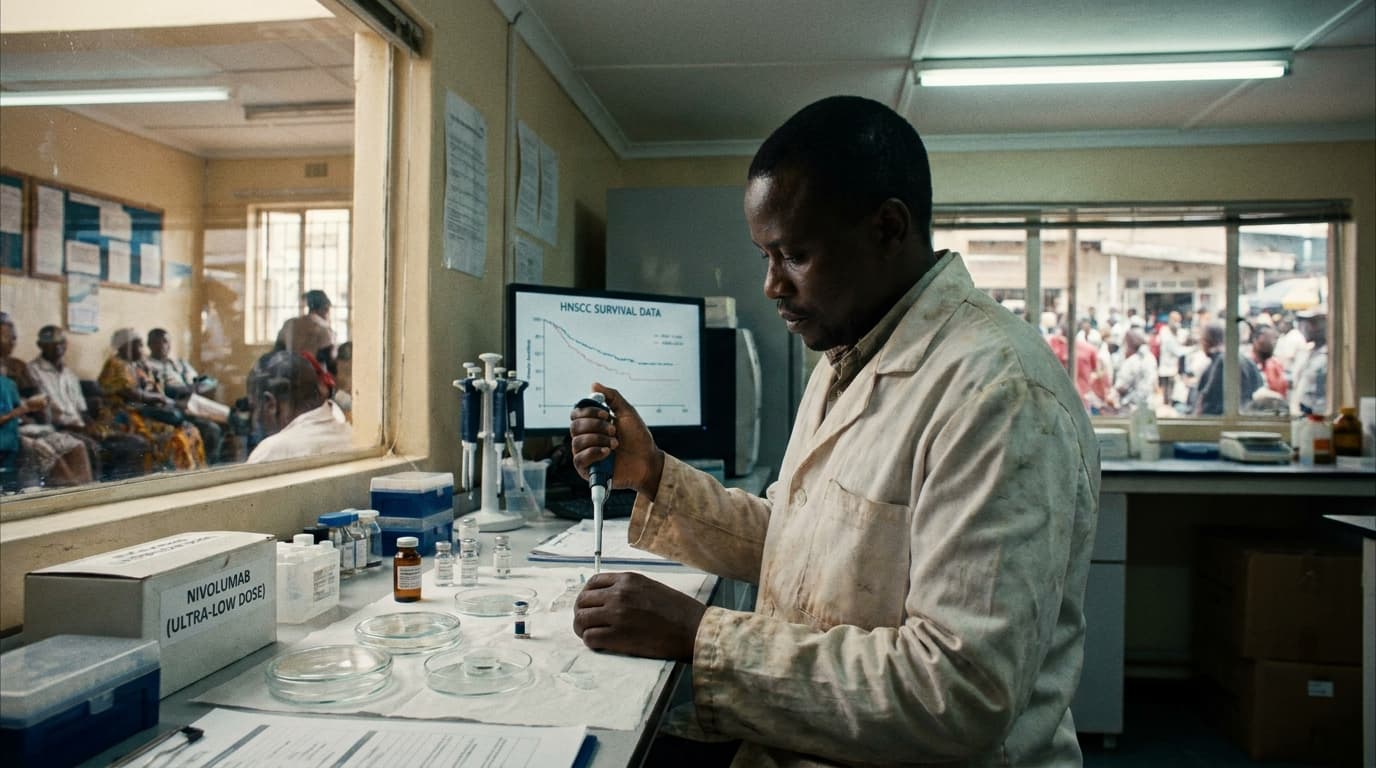
Ultra-Low Dose Immunotherapies: A New Frontier for Cancer Treatment Accessibility in Poorer Countries

Cancer immunotherapy has revolutionized oncology care, yet high costs limit access in low-income settings. Recent clinical trial results showcase the promise of ultra-low dose strategies to extend survival in head and neck squamous cell carcinoma, opening new possibilities for global cancer treatment equity.
Cancer remains a formidable global health challenge, disproportionately affecting patients in resource-limited countries where access to cutting-edge therapies is severely constrained. Among the most innovative modalities in oncology are immunotherapies, which harness the body's immune system to eradicate tumor cells. However, the substantial financial burden associated with these treatments often places them out of reach for many populations in poorer nations.
Recent research published via STAT News on May 31, 2026, highlights promising developments in the use of ultra-low doses of immunotherapies to treat head and neck squamous cell carcinoma (HNSCC). This approach could revolutionize care paradigms, making advanced treatments more affordable and accessible globally.
Immunotherapies such as nivolumab have been pivotal in improving survival outcomes in various cancers. Traditionally administered at full doses, these therapies are costly and logistically challenging to deliver in low-resource settings. The notion that significantly reduced doses could maintain efficacy while substantially lowering costs challenges conventional dosing frameworks and opens new avenues for equitable cancer care.
Clinical trial data indicate that ultra-low dose nivolumab extends survival in patients with head and neck squamous cell carcinoma, a cancer type with significant morbidity worldwide. The trial results, presented at ASCO 2026 and reported by STAT News, demonstrate that even at minimal doses, immunotherapy can stimulate a meaningful anti-tumor response. This paradigm shift has the potential to democratize access by making treatments economically viable in poorer countries.
The implications of this development extend beyond oncology. Ultra-low dosing could reduce adverse effects, improve patient tolerance, and lessen the infrastructural demands for drug storage and administration. By lowering treatment costs, healthcare systems burdened by limited budgets may integrate these therapies into standard care protocols, reducing disparities.
Public health experts emphasize that access alone is insufficient; comprehensive strategies including education, infrastructure, and follow-up care are vital to maximizing outcomes. Nevertheless, these findings represent a crucial step toward bridging the treatment gap and fulfilling global equity goals in cancer care.
In conclusion, the ultra-low dose immunotherapy model introduces a transformative opportunity to rethink cancer treatment delivery worldwide. As trial data mature and further validation occurs, this strategy promises to expand access to life-saving therapies for populations historically marginalized by economic barriers.
Source: STAT News
Join the BioIntel newsletter
Get curated biotech intelligence across AI, industry, innovation, investment, medtech, and policy delivered to your inbox.