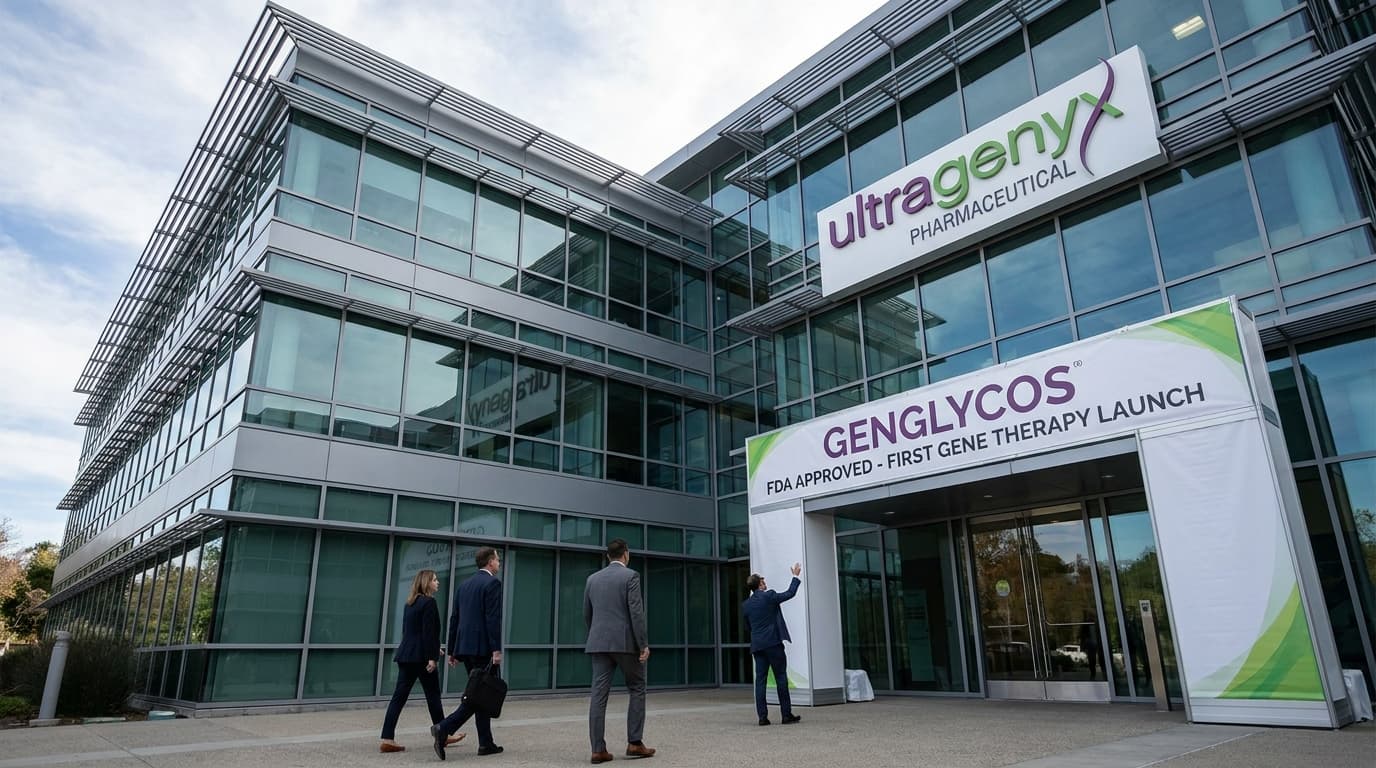
Ultragenyx Wins Genglycos Approval In GSDIa, Opening Its First Gene Therapy Launch

The approval covers adults and children age 8 and older with glycogen storage disease type Ia and positions Genglycos as an adjunct to nutritional management that can reduce daily cornstarch intake. For Ultragenyx, the decision is both a product launch and a platform validation point after years of investment in gene therapy.
Ultragenyx has secured accelerated FDA approval for Genglycos, its gene therapy for glycogen storage disease type Ia, giving an ultra-rare disease its first approved treatment after decades of management built around strict dietary control. The indication covers adults and children age 8 and older.
The decision matters on two levels. For patients, it introduces a one-time treatment aimed at the root cause of a disorder in which glucose-6-phosphatase deficiency disrupts blood sugar control and can trigger life-threatening hypoglycemia. For Ultragenyx, it is the company’s first gene therapy approval, moving its platform from development into commercial execution.
GSDIa has typically been managed with raw cornstarch, often mixed with water into a slurry and taken every few hours, including overnight, to help maintain blood glucose levels between meals. That regimen can reduce hypoglycemia risk, but the sources note that it does not address the underlying cause of disease and can still leave patients with large swings in glucose levels. Ultragenyx estimates there are about 1,500 to 2,500 patients in the U.S. with the disorder.
The data
Genglycos, previously known as DTX401, uses an adeno-associated virus vector to deliver the gene for the G6Pase enzyme implicated in GSDIa. BioSpace reported that in a Phase 3 trial, patients treated with DTX401 required less cornstarch than peers in the placebo group.
The FDA approval is specifically tied to reducing daily cornstarch intake as an adjunct to nutritional management, rather than replacing nutritional management altogether. That distinction is important commercially and clinically: the initial label positions the therapy inside existing care routines while giving Ultragenyx room to build evidence around how much disease burden can be reduced in practice.
The accelerated approval also carries a post-approval evidence requirement. BioSpace reported that Ultragenyx must provide two years of safety and efficacy data from an open-label study. That means the product has reached market, but the long-term package supporting its use is still being built.
The commercial picture
This is Ultragenyx’s first gene therapy launch, which makes operational follow-through almost as important as the approval itself. In rare disease, especially one with a small diagnosed population, commercialization depends less on broad physician marketing than on identifying eligible patients, working through specialist centers and showing that treatment logistics and reimbursement can support uptake.
The ultra-rare nature of GSDIa cuts both ways. A U.S. patient population estimated at 1,500 to 2,500 means the revenue opportunity is inherently limited compared with larger rare disease markets, but it also means a first approved therapy can occupy a highly concentrated niche if the company executes well. Because standard care has been burdensome and continuous, a one-time treatment has an unusually clear value proposition in terms the current care pathway already exposes: round-the-clock management, nighttime dosing and persistent metabolic instability.
The label language reported by BioSpace also suggests the launch case will be built around measurable reduction in cornstarch use, a practical endpoint that should resonate with physicians and families living with the disease’s daily management demands.
The road here
The approval arrived ahead of the Aug. 23 deadline cited by BioSpace. TD Cowen called the decision an important regulatory win that de-risks UX111, Ultragenyx’s previously rejected Sanfilippo gene therapy candidate. That interpretation stays specific to the company’s pipeline: one approval does not resolve the risks of another asset, but it does show the company can get a gene therapy through the FDA and into the market.
MedCity News framed the approval as the first FDA-approved therapy for an ultra-rare disease whose standard of care has long depended on uncooked cornstarch. That makes Genglycos more than another orphan-drug authorization. It is a case where gene therapy is entering a disease area defined not by competition from other advanced medicines, but by the absence of any approved pharmacologic alternative.
What to watch
Ultragenyx now has a second near-term gene therapy catalyst. BioSpace reported that the company’s previously rejected Sanfilippo gene therapy is set for a decision by Sept. 19.
Between now and then, the key signal from Genglycos is whether Ultragenyx can turn a scientifically important approval into a clean rare disease launch while generating the two years of safety and efficacy data required under accelerated approval. In strategic terms, the product does not just add revenue potential; it gives the company a live test of whether its gene therapy platform can support repeatable regulatory and commercial execution.
Join the BioIntel newsletter
Get curated biotech intelligence across AI, industry, innovation, investment, medtech, and policy delivered to your inbox.