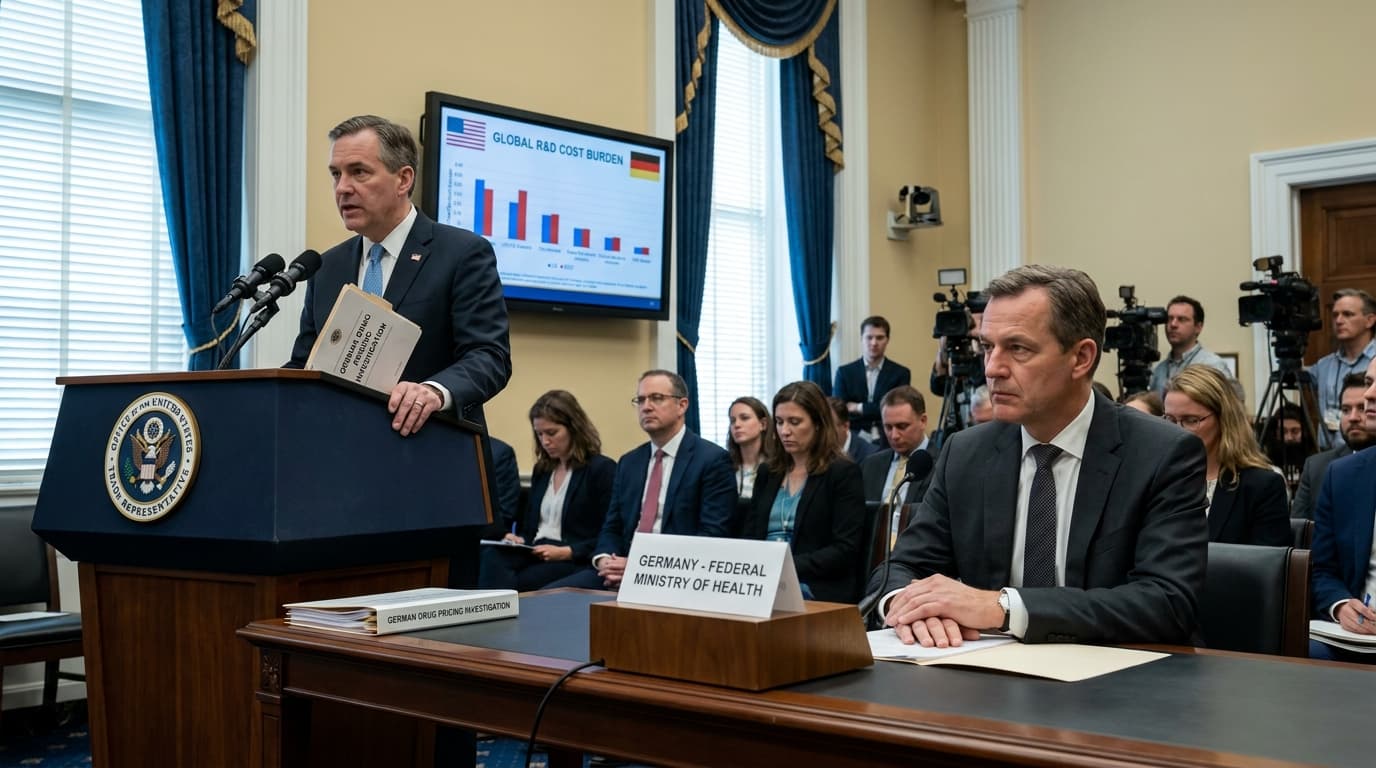
US Launches Investigation into German Drug Pricing, Elevating Transatlantic Tensions Over R&D Costs

Amid growing friction over pharmaceutical innovation funding, US officials allege that German drug price regulation leads to an unfair R&D burden for the US healthcare system. The investigation underscores wider disputes over global drug pricing, innovation incentives, and international trade in the life sciences.
The United States has ignited fresh global debate by officially launching an investigation into Germany's practices for drug pricing, with US government representatives claiming that Americans are footing an outsized proportion of biopharma research and development (R&D) costs. This high-stakes regulatory and diplomatic move highlights growing discord over the pricing of medicines, the true cost of pharmaceutical innovation, and which countries should bear the financial burden of drug discovery and development. This extensive analysis delves into the roots of this dispute, the context shaping US policy, the complex economics of drug pricing, and the broader consequences of heightened scrutiny on transatlantic biotech and pharmaceutical markets.
The Background: US Grievances Over Global R&D Burden
For decades, the US healthcare system has led global pharmaceutical spending—fueled by high levels of drug utilization, fewer price controls, and the world's largest biopharma innovation ecosystem. The US pays substantially more for prescription medicines than most other high-income countries, sometimes by a factor of two or three.
American pharmaceutical companies and policymakers have long claimed that these higher prices are essential to fund not only domestic R&D, but also the pipeline of global drug innovation. Central to this argument is the assertion that other countries, particularly those in Europe with strict drug price regulation, are "free-riding" on US scientific investment. In this framing, regulated pricing in Germany undermines the ability of pharma companies to recoup R&D costs globally, placing the brunt of the burden for new drug development on American shoulders.
German Drug Pricing System Explained
Germany is frequently cited as a model for rigorous, negotiated pricing of medicines. Under the country's system, new drugs undergo a comparability review, and manufacturers are required to demonstrate additional therapeutic benefit relative to existing therapies—a process known as "AMNOG." Based on these assessments, German payers negotiate prices that may be significantly lower than US list prices.
This approach is often held up by health policy experts as a successful form of evidence-based, value-driven negotiation. However, the US government perceives it as a barrier to fair cost-sharing, especially in an era when global pharmaceutical innovation is increasingly expensive and the US public sector provides large subsidies to basic research.
US Investigation: Timing and Potential Outcomes
The decision by US officials to initiate a formal investigation arrives amidst a period of pronounced debate over healthcare costs and the integrity of drug pricing mechanisms. According to the US government, the objective of this investigation is straightforward: examine whether German pricing policy exerts unfair pressure on American payers and taxpayers to support global biopharma R&D. The probe could have far-reaching implications for bilateral trade, future pricing negotiations, pharmaceutical market access, and possibly even World Trade Organization (WTO) dispute processes.
Although details of the process are still developing, the investigation could pave the way for a range of diplomatic and legislative responses, from pressure on Germany to relax drug price regulations to the imposition of trade penalties or the pursuit of broader international agreements on pharmaceutical pricing and R&D cost allocation.
International Innovation Ecosystem: Who Pays for New Drugs?
At the heart of this dispute is a fundamental debate about the economics of pharmaceutical innovation. While the US argues it safeguards the pipeline of biomedical breakthroughs by maintaining high prices, European nations counter that carefully regulated pricing ensures broad patient access and protects health system sustainability without harming innovation.
Empirical studies often show mixed results on the relationship between strict pricing policies and R&D output: while price controls may limit short-term profits and marginally alter the allocation of global R&D investment, they rarely halt innovation outright. The real questions are: Is the US truly subsidizing the world? How can countries fairly coordinate to support both innovation and affordable access?
Economic and Policy Repercussions
- For American Patients: High domestic drug costs continue to fuel political outcry, pressure for Medicare drug price negotiation, and calls for transparency around R&D spending.
- For German and European Policy Makers: The investigation places German policy under the international microscope, potentially compelling greater engagement with US officials and, in the long term, discouraging further price tightening across the EU.
- For the Global Pharma Industry: The investigation underscores persistent global uncertainty over the rules of the game. Companies may experience heightened risk in planning product launches, pricing strategies, and international expansion.
Recent Global Trends
The launch of this US investigation dovetails with a period of renewed activism among US payers and lawmakers seeking to rein in prescription drug costs. Over the last few years, policy levers such as the Inflation Reduction Act and the expansion of Medicare drug price negotiation provisions have sought to curb US drug spending growth. Yet, companies continue to price most novel medicines at a sharp premium in the US market, often doubling or tripling the price seen in markets like Germany or France.
Meanwhile, Germany’s health technology assessment-driven pricing model is under fresh scrutiny—not just from the US, but from international pharma investors who warn that strict regulation could drive investment and talent out of Europe.
Industry and Policy Responses
Representatives from the US pharmaceutical industry have welcomed the probe as an overdue assertion of American interests, arguing that the sustainability of biopharma innovation is impossible unless other high-income countries increase their contribution to the global R&D pool.
Conversely, European public health advocates stress that US-style deregulation could raise prices for German patients and limit access, while doing little to foster innovation. Advocacy groups on both sides of the Atlantic are likely to ramp up communications campaigns as the investigation unfolds, with patient organizations, payers, and advocacy groups clashing over the best path forward.
Looking Forward: The Stakes for 2026 and Beyond
In the short term, this investigation is likely to add new volatility to already tense US-EU negotiations on trade and intellectual property. The risk of escalation into public disputes, trade spats, or international pharma access restrictions is palpable.
Over the long term, the outcome could shape the landscape for drug pricing not only in the US and Germany, but across all developed nations. Will a new global framework for innovation incentives and cost-sharing arise, or will entrenched national models continue to dominate? The investigation signals that even as biotech innovation accelerates in 2026, the global rules for access, pricing, and incentives are not yet settled.
Conclusion: Global Drug Pricing at an Inflection Point
The US government's decision to probe German drug pricing for its alleged impact on American R&D costs is more than a technical regulatory dispute: it encapsulates the broader challenges of aligning global pharmaceutical innovation with affordable patient access, sustainable health system financing, and cross-border policy coordination. As nations compete and collaborate to define the boundaries of R&D investment, future policy decisions will have major implications for patients, payers, and drug developers worldwide.
For industry stakeholders, the outcome of this investigation could set precedents—both diplomatic and financial—that ripple through biopharma pricing, market entry strategies, licensing agreements, and R&D investment for years to come.
Join the BioIntel newsletter
Get curated biotech intelligence across AI, industry, innovation, investment, medtech, and policy delivered to your inbox.