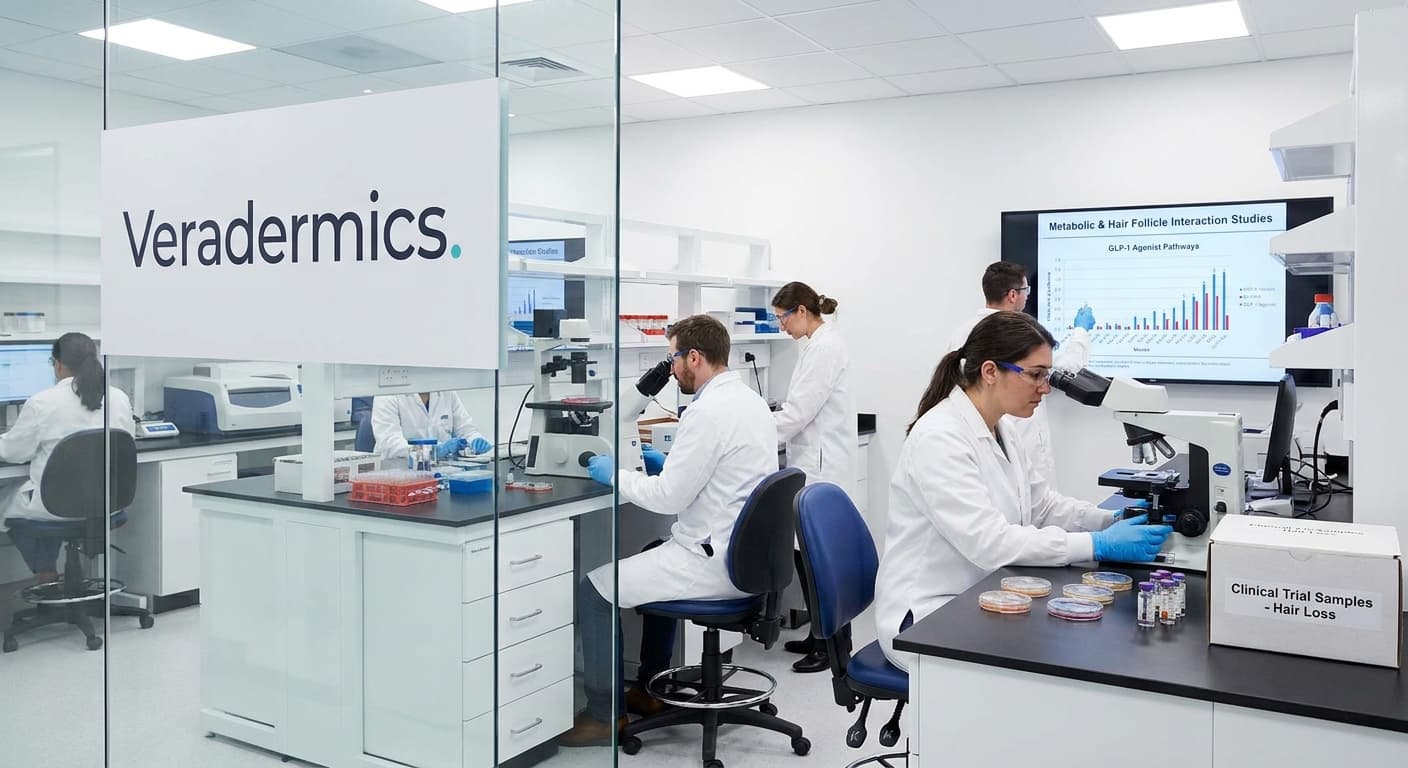
Veradermics’ Meteoric Rise: Hair Loss Biotech and the Obesity Drug Boom
Since its IPO, Veradermics has experienced exceptional gains, amassing market attention by aligning its hair loss research with the runaway success of the modern obesity drug market. CEO Reid Waldman’s acknowledgment of the consumer-driven 'weight loss craze' sheds light on shifting biotech priorities and the growing synergy between metabolic and dermatological health solutions.
Within the highly competitive world of biotechnology, rare is the company that achieves exponential post-IPO growth in the span of just a few years. Yet, Veradermics, a company initially focused on hair loss therapies, has emerged as one of the sector’s most celebrated outliers, boasting a 656% increase in stock price since its public offering. The company’s impressive ascent is notable not only for its magnitude but also for the underlying factors that have driven its success—a confluence of trends at the intersection of dermatology, metabolic health, and consumer-driven pharma.
This deep-dive explores the key ingredients in Veradermics’ breakout performance, analyzes the pivotal role played by the current obesity treatment wave, and discusses what the biotech industry can learn from this dynamic alignment of therapeutic areas and marketplace appetite.
From IPO to Industry Standout
When Veradermics debuted on the public markets raising $256.3 million—with a subsequent $472 million added shortly after—the market took modest notice. The biotech landscape, while awash with innovation, is frequently turbulent and unforgiving, and hair loss, though a major commercial niche, is often relegated to cosmetic or lifestyle medicine by institutional investors.
However, what set Veradermics apart was its ability to seize on a consumer trend of extraordinary momentum: the obesity drug boom, catalyzed by an avalanche of interest in GLP-1 agonists and other weight loss pharmaceuticals. Rather than compete head-on with deep-pocketed metabolic health giants, Veradermics positioned itself as an adjacent beneficiary—a move that would prove visionary in retrospect.
CEO Insight: The Hair Loss–Obesity Nexus
In interviews following the company’s meteoric market run, Veradermics CEO Reid Waldman specifically credited the “weight loss craze” for the firm’s expanded commercial footprint and rapid valuation gains. The logic is clear: as consumers pour into the healthcare system, incentivized by new drug options for weight reduction, their engagement with related health concerns—including hair loss—tends to increase as well. Companies like Veradermics have found ways to channel some of this volume in their direction.
The company’s consumer-oriented approach, in tandem with rising public interest in metabolic syndrome, created fertile ground for revenue growth, retail partnerships, and an expansion of research programs into the overlap between metabolic health and conditions like alopecia, telogen effluvium, and androgenetic hair loss.
How the Obesity Drug Boom Fuels Ancillary Biotech Sectors
The “knock-on” effects of the obesity drug surge are increasingly evident:
- Consumer Mindset Shifts: Patients attracted by GLP-1s and other weight loss drugs are also more likely to seek additional lifestyle and cosmetic interventions—hair restoration, skin rejuvenation, and nutrient therapies among them.
- Growth of Cross-Selling Channels: Companies that once relied on purely medical marketing are now exploiting direct-to-consumer and influencer-driven strategies, blurring the lines between chronic disease treatment and wellness optimization.
- Integrated Therapeutic Pathways: New research suggests that certain hair loss conditions may be exacerbated by the same metabolic dysfunctions targeted by obesity drugs, opening the door for therapeutic crossovers and combination protocols.
- Wider Insurance Coverage: As insurance plans begin to acknowledge obesity as a treatable medical condition—and as weight loss treatments become standard care—so too might they reevaluate coverage for connected conditions such as hair loss tied to rapid weight change or hormonal shifts.
The Science of It: What’s Changing?
While the article does not elaborate on Veradermics’ research portfolio, the broader trend is unmistakable: as metabolic health research uncovers new mechanisms underlying obesity, diabetes, and related conditions, biotechnology companies are revisiting once-stable categories like dermatology through a metabolic lens. Scientists are exploring how insulin resistance, inflammation, and rapid weight loss can trigger different types of alopecia, for instance, or modify the efficacy of known hair loss interventions.
For biotech R&D, this convergence offers multiple new pipelines: obesity drugs could help reduce, stabilize, or piece together pathways relevant to hair growth, while hair loss research can serve as an indicator of broader metabolic status, leading to more holistic patient management.
Strategic Takeaways for the Biotech Sector
Veradermics’ performance signals several important dynamics for the broader life sciences industry:
- Consumer Health Drivers Are Powerful: As healthcare consumerization intensifies, companies that stay agile and integrate retail or lifestyle medicine channels often find outsized success—especially when their products connect back to high-visibility trends like obesity management.
- Therapeutic Crossroads Create Opportunities: By embracing the overlap between metabolic disease and traditionally cosmetic health concerns, biotech firms can tap into growing patient populations and diversify their revenue streams.
- Investor Appetite Remains for High-Conviction Stories: Despite the sector’s overall volatility, Wall Street and private investors continue to reward companies that innovate at the intersection of medicine, wellness, and consumer demand.
The Road Ahead: Risks, Opportunities, and Market Sustainability
Like all speculative growth stories, Veradermics’ trajectory may face challenges. The obesity drug market is crowded, with regulatory scrutiny, competitive threats, and pricing pressures all on the horizon. The degree to which hair loss solutions can maintain commercial momentum as standalone products—rather than as adjuncts to broader metabolic care—remains to be seen.
Moreover, sustainability is a key question: will the market for lifestyle and adjunctive medical therapies remain heated if consumer sentiment shifts? Or, as more is learned about the physiology connecting weight, metabolism, and hair health, could we see a new standard of care emerging—one that integrates dermatology and endocrinology more closely than ever before?
Conclusion
Veradermics’ unprecedented IPO success, supercharged by the weight loss drug phenomenon, epitomizes the era of “convergent biotech”—where companies not only develop new medicines but do so by riding the crest of consumer-driven trends. As biopharma seeks to adapt to a rapidly changing health landscape, Veradermics’ model may prove a harbinger of how cross-specialty innovation and savvy marketing can yield record growth—provided companies maintain clinical rigor alongside market vision.
Join the BioIntel newsletter
Get curated biotech intelligence across AI, industry, innovation, investment, medtech, and policy delivered to your inbox.