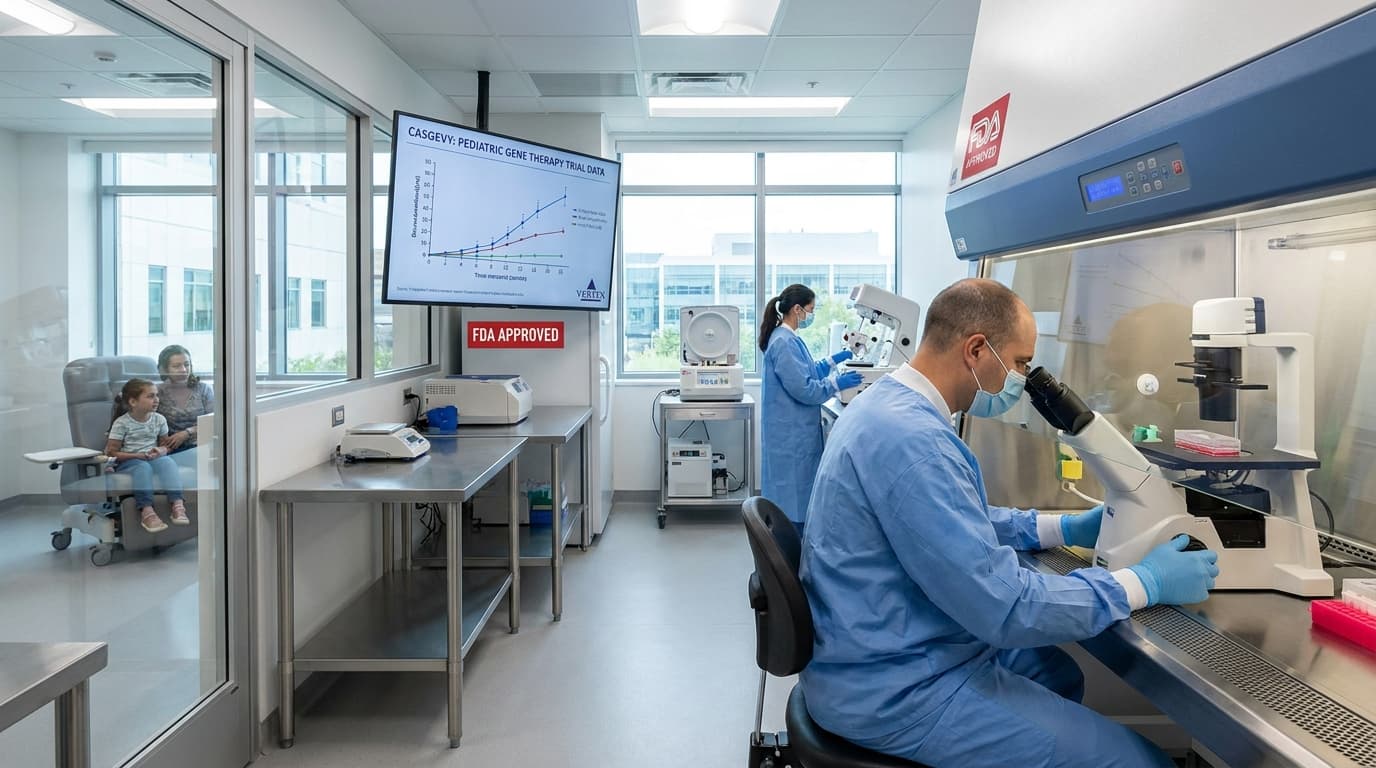
Vertex’s Casgevy First Gene Therapy Approval for Young Children with Rare Blood Disorders

For the first time, children under 12 with rare inherited blood disorders will have access to a gene therapy: Vertex’s Casgevy. The FDA’s recent approval under the agency’s National Priority Voucher program reflects both continued scientific progress and the careful approach regulators take to pediatric innovation.
Introduction
In a landmark decision, the U.S. Food and Drug Administration (FDA) has expanded approval for Vertex Pharmaceuticals’ Casgevy to include young children under 12 diagnosed with rare inherited blood disorders. Previously accessible only to patients aged 12 and older, Casgevy is now poised to reshape standards of care for pediatric patients with conditions such as sickle cell disease and beta-thalassemia. This significant regulatory milestone was achieved under the Commissioner’s National Priority Voucher program, highlighting both the urgency and the challenge of bringing advanced gene therapies to broader populations, including highly vulnerable children.
This article provides a deep dive into what this approval means for families, clinicians, biotech innovators, and the broader healthcare system, while also exploring the scientific, ethical, and regulatory considerations surrounding this cutting-edge treatment. By examining the pathways, implications, and future outlook for pediatric gene therapy, we aim to underline the magnitude of this achievement and what it signals for the industry as a whole.
The Science Behind Casgevy
Casgevy is a gene therapy designed to address certain inherited blood disorders at their source—by correcting or compensating for the specific genetic abnormalities that cause diseases like sickle cell anemia and beta-thalassemia. Unlike traditional treatments, which may require lifelong medication and frequent medical interventions, gene therapy aspires to offer a one-time, potentially curative option by editing, inserting, or replacing malfunctioning genes within the patient’s own cells.
Casgevy’s scientific foundation involves:
- Harvesting patients’ hematopoietic stem cells (cells capable of producing all blood cell types).
- Utilizing gene editing or corrective technologies to modify these cells so they can function properly.
- Re-infusing the engineered cells, which then repopulate the patient’s bone marrow with healthy, functional blood cells.
The data underpinning FDA approval for children demonstrates that Casgevy can lead to dramatic improvements in disease symptoms, raise hemoglobin levels, reduce or eliminate painful crises, and decrease dependence on blood transfusions—all with a safety profile appropriate for pediatric use.
The Context: Rare Blood Disorders in Children
Inherited blood disorders such as sickle cell disease and beta-thalassemia impose an immense burden on affected children and their families, from repeated hospitalizations and painful episodes to the need for ongoing transfusions, chelation therapy, or even stem cell transplantation. For decades, the mainstay of treatment has involved supportive care and, in some cases, allogeneic stem cell transplants from matched donors—a process associated with significant risks, limited donor availability, and mixed outcomes.
With the approval of Casgevy in younger children, the treatment landscape for these rare diseases takes a momentous step forward, offering new hope for a patient population that has long faced limited therapeutic options.
The FDA’s Regulatory Pathway
Casgevy’s expanded pediatric approval was granted under the FDA Commissioner’s National Priority Voucher program. This initiative was designed to accelerate the review and approval of therapies addressing urgent unmet medical needs, especially those affecting children or populations lacking other treatment avenues. The agency’s decision reflects a deliberate, rigorous review of clinical trial data—including safety, efficacy, and long-term risks—while also demonstrating regulatory flexibility when responding to compelling medical evidence.
Benefits and Barriers
Benefits
- Potential for Cure: Unlike traditional approaches, Casgevy offers the possibility of a one-time intervention with durable benefits, potentially freeing patients from chronic disease management.
- Reduction in Healthcare Burden: Successful gene therapy can decrease hospital admissions, lessen complications, and improve quality of life for patients and families.
- Broadened Access: With this new approval, much younger children can now receive advanced therapy, particularly significant for diseases that manifest early or aggressively.
Barriers and Challenges
- Complex Delivery: Gene therapy remains procedurally complex, requiring specialized facilities and expertise to harvest, edit, and reinfuse patient cells.
- Cost and Reimbursement: Advanced therapies like Casgevy come with high upfront costs, raising persistent challenges for equitable access and reimbursement by public and private insurers.
- Long-Term Unknowns: As with most novel treatments, the long-term safety and efficacy of pediatric gene therapy will require ongoing surveillance and further study.
Ethical Considerations in Pediatric Gene Therapy
Regulatory authorities and ethics committees balance the potential benefits of cutting-edge interventions for children against unique risks and uncertainties. For gene therapy, critical considerations include the irreversibility of genetic alterations, the need for parental consent, the ability of young patients to assent, and the requirement for robust long-term follow-up to detect late-emerging effects.
The approval of Casgevy for young children exemplifies the FDA’s commitment to safeguarding these interests while responding to urgent, unmet medical needs.
Broader Implications for Biotech and Healthcare
Vertex’s accomplishment in securing FDA clearance for Casgevy in pediatric blood disorders could ripple across several fronts:
- Scientific Momentum: The success of Casgevy signals the maturation of gene therapy platforms, potentially encouraging further innovation for other pediatric and rare conditions.
- Regulatory Precedents: The Commissioner’s National Priority Voucher program may serve as a template for future reviews where timeliness is paramount, inviting new forms of public-private collaboration.
- Stakeholder Collaboration: Bringing advanced therapies to children requires coordination—from research and clinical trial design, to manufacturing, payer engagement, and patient advocacy.
What’s Next?
With pediatric approval in hand, much work remains before Casgevy’s promise reaches all eligible patients. Implementation hinges on building the necessary infrastructure for gene therapy administration, ensuring payer buy-in, educating clinicians and families, and vigilantly monitoring patient outcomes.
In the coming years, the expanded application of gene and cell therapies is likely to teach regulators, scientists, and the medical community valuable lessons. Areas of focus will include:
- Long-Term Follow Up: Tracking pediatric patients for years to understand benefits, durability, and rare side effects.
- Cost-Benefit Analyses: Refining value-based pricing models and understanding broader impacts on healthcare expenditure.
- Addressing Health Equity: Closing gaps in access for underrepresented or less-resourced populations.
Conclusion
Vertex’s Casgevy stands at the forefront of a new era in pediatric medicine. By providing the first approved gene therapy for young children with rare blood disorders, the FDA has underscored its willingness to embrace innovation, promote health equity, and uphold rigorous safety standards. As this therapy becomes more widely available, its impact on patients, families, and the broader biotech landscape will continue to unfold—shaping the next generation of science-driven care.
Join the BioIntel newsletter
Get curated biotech intelligence across AI, industry, innovation, investment, medtech, and policy delivered to your inbox.