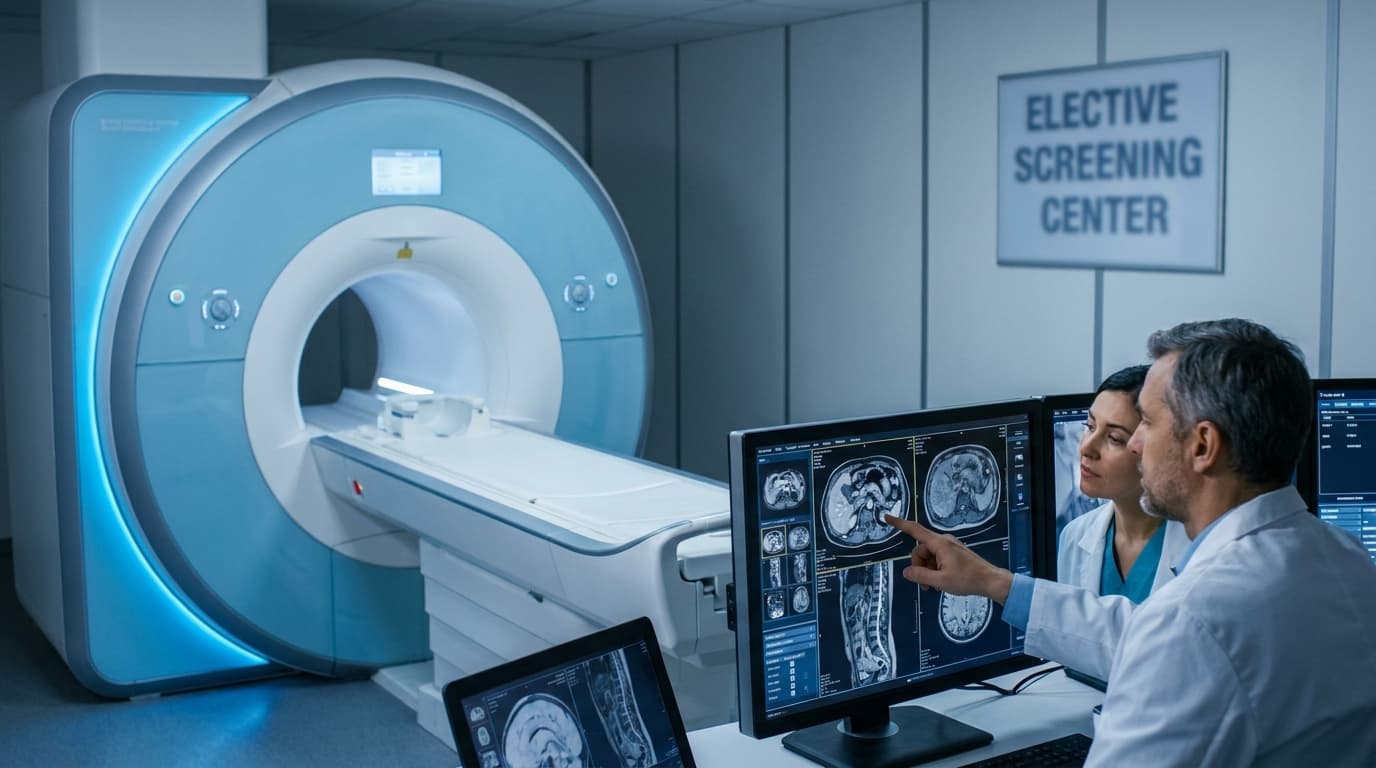
Whole-Body MRI Companies Face Scrutiny Over Inflated Medical Claims

A major debate has emerged around the value and safety of elective whole-body MRI services promoted to healthy adults. Two leading radiologists, writing in a JAMA editorial, have taken aim at the marketing claims of several companies, suggesting that such scans could trigger more medical harm than benefit. The industry’s three largest firms have pushed back on those criticisms, defending the utility of their offerings.
Introduction
In the rapidly evolving landscape of medical imaging technology, whole-body MRI scans have become a new frontier marketed primarily to healthy individuals seeking peace of mind through comprehensive health ‘screening packages.’ These elective scans, advertised as cutting-edge tools for the early detection of asymptomatic disease, have prompted both considerable consumer interest and strong debate within the medical community.
A recent editorial published in the esteemed Journal of the American Medical Association (JAMA) by two experienced radiologists has brought new urgency to this debate. The authors argue that commercial whole-body MRI companies are overstating the life-saving potential of these scans and are not sufficiently transparent about the risks, downsides, and lack of proven benefit for asymptomatic patients. In response, the three largest U.S. companies specializing in whole-body MRI — all of which have invested heavily in branding, premium service experiences, and digital marketing — vigorously deny any wrongdoing, insisting their services fill a gap in preventive medicine.
This analysis aims to rigorously examine the controversy, address the clinical evidence (or lack thereof), scrutinize the industry’s claims, and reflect on the broader implications for consumers, providers, and policymakers.
Background: The Rise of Elective Whole-Body MRI Scanning
In the past decade, medical imaging technologies have advanced rapidly. The MRI (magnetic resonance imaging) scan, once reserved for specific diagnostic questions in patients with symptoms, is now routinely offered as a comprehensive health screening to asymptomatic individuals, typically at a hefty out-of-pocket price. These scans promise to detect cancers, aneurysms, vascular disease, plaques, and other conditions before symptoms arise.
Companies tout early detection as life-saving, bolstered by patient testimonials and a strong social media presence. Slick online interfaces allow potential clients to book scans conveniently, often in boutique-like medical settings. For a cost sometimes exceeding several thousand dollars, the customer receives a detailed radiology report purporting to map their risk of numerous life-threatening diseases.
The JAMA Editorial: Key Arguments and Evidence
The JAMA editorial, written by two radiologists with significant clinical and research expertise, raises substantive concerns:
-
Inflated Claims of Benefit: The editorial argues that the companies suggest—implicitly or explicitly—that routine whole-body MRIs save lives through earlier diagnosis. However, there is minimal trial data supporting this claim for asymptomatic individuals. Unlike mammography or colonoscopy, whole-body MRI lacks solid population-level evidence demonstrating it improves outcomes.
-
Unnecessary Procedures and Harm: The authors note that whole-body MRIs are prone to finding numerous ‘incidentalomas’ — benign findings that appear abnormal but do not pose any threat. Such findings often lead to further medical testing, invasive biopsies, and even unnecessary surgeries. Not only does this cascade drive up cost, it can cause direct physical harm and significant psychological stress.
-
Downstream Healthcare Utilization: The editorial highlights that follow-up investigations prompted by ambiguous MRI findings can strain healthcare systems, prompt anxiety, and expose patients to the risks of additional tests — sometimes involving exposure to radiation or invasive protocols.
-
Opaque Marketing Practices: The JAMA piece criticizes the marketing strategies used by these companies, suggesting that advertisements can mislead by mixing legitimate scientific language with anecdotal patient stories, often presenting the technology as unequivocally beneficial.
Industry Response: Defense and Dissent
Unsurprisingly, the largest providers of elective whole-body MRI scans have issued detailed rebuttals:
-
Consumer Empowerment: Companies argue that their services empower health-conscious consumers, providing a sense of control and personalized health data, and that patients are able to make informed decisions about their care.
-
Targeted Communication: Industry representatives assert that marketing materials are vetted by clinicians and contain appropriate disclaimers about the current state of evidence.
-
Anecdotal Successes: Providers reference cases where incidental findings did prove to be early cancers, asserting that even isolated ‘saves’ justify widespread offering.
-
Limitations Acknowledged: Nevertheless, most companies concede that not every customer will benefit from the scan and acknowledge the potential for overdiagnosis — but they argue that risks are communicated and that ‘peace of mind’ can itself be a legitimate outcome.
The Clinical Evidence: What Do We Know?
The key question remains: do whole-body MRI scans for asymptomatic patients save lives, or are they more likely to harm than help? Comprehensive analysis of published studies sheds light on the current knowledge gaps and challenges:
-
Lack of Outcome Data: There are no large, randomized controlled trials showing a mortality benefit for whole-body MRI screening in healthy people. Most research has focused on the technology’s diagnostic accuracy, rather than on whether its use leads to better health or longer lives.
-
Incidental Findings Prevalence: Studies consistently demonstrate that the vast majority of ‘abnormal’ findings on comprehensive imaging are not cause for intervention. One meta-analysis found that more than a third of individuals screened with whole-body MRI had at least one incidental finding — most benign.
-
Follow-up Procedures: A significant proportion of individuals undergoing such scans face more tests, biopsies, and further imaging, with substantial cost and potential for harm.
-
Psychological Impact: Beyond potential physical harm, the psychological effect of being told about a possible abnormality can be profound, persisting even after follow-up rules out true disease.
-
Cost-effectiveness: Given the expense of a whole-body MRI, health insurers almost universally do not cover the cost for screening asymptomatic patients, reflecting skepticism about value for money and public health benefit.
Regulatory and Ethical Considerations
The commercial offering of whole-body MRI screening raises complex issues for both medical ethics and regulatory policy:
-
Consumer Protection vs. Autonomy: Where does the line lie between empowering consumers and protecting them from overpriced, possibly harmful medical services?
-
Informed Consent: Are clients truly informed about the risks, including overdiagnosis, overtreatment, and the lack of proven benefit, when consenting to these scans?
-
Advertising Standards: Should there be more robust regulation of how these services are advertised, particularly given the emotional vulnerability of people seeking reassurance?
-
Medical Professionalism: What responsibility do radiologists and other providers have to avoid participation in services that may not benefit—and could harm—patients?
Perspectives from Practicing Clinicians
Interviews and statements from frontline primary care physicians and clinical radiologists echo the concerns expressed in the JAMA editorial. Many report an uptick in patients presenting with detailed MRI findings that require explanation, stress management, and often additional testing — all of which have significant implications for individual care and broader system resource use.
Others argue that the rapidly shifting landscape of preventive health, patient autonomy, and technological innovation defies simple answers. As personalized medicine reaches new heights, the boundary between prudent early detection and medical overuse blurs further.
The Patient Experience: Hope, Anxiety, and Uncertainty
Patient testimonials often play a prominent role in the marketing narrative. Some describe profound gratitude after detection of a true medical problem at an early, treatable stage. Others recount spiraling anxiety and costly, unnecessary investigations triggered by ambiguous findings.
Anecdotes, while powerful, may not provide the rigorous evidence required to guide public health decisions. However, the emotional impact of both positive and negative experiences must be acknowledged as a driving force behind consumer demand for advanced diagnostic tests.
Policy, Payers, and the Future
Given the current evidence base, major public and commercial insurers have steered clear of reimbursing elective whole-body MRI for asymptomatic people. Most professional societies, including the American College of Radiology, caution against its routine use.
The policy environment may evolve if future trials demonstrate more concrete benefits, or if technological advancements can reduce false positives and ancillary harms. Until then, consumer advocacy groups are likely to demand that companies increase transparency and fully disclose limitations and risks in their advertising.
Conclusion: Navigating the Uncertainty
Whole-body MRI scanning as a premium elective service sits at a contentious intersection of technology, consumer autonomy, medical ethics, and market forces. The JAMA editorial catalyzes an important discussion on the boundaries of benefit, potential for harm, and the responsibilities of both providers and patients in navigating this rapidly developing field. While some consumers will continue to seek out this technology for peace of mind, others—and their physicians—must remain alert to the risks and limitations, advocating for evidence-based practice and transparent communication above all.
For the moment, the available evidence supports a cautious approach, with a clear-eyed recognition that more imaging does not always equate to better health—and, in many cases, may do more harm than good.
Source: MedCity News
Join the BioIntel newsletter
Get curated biotech intelligence across AI, industry, innovation, investment, medtech, and policy delivered to your inbox.