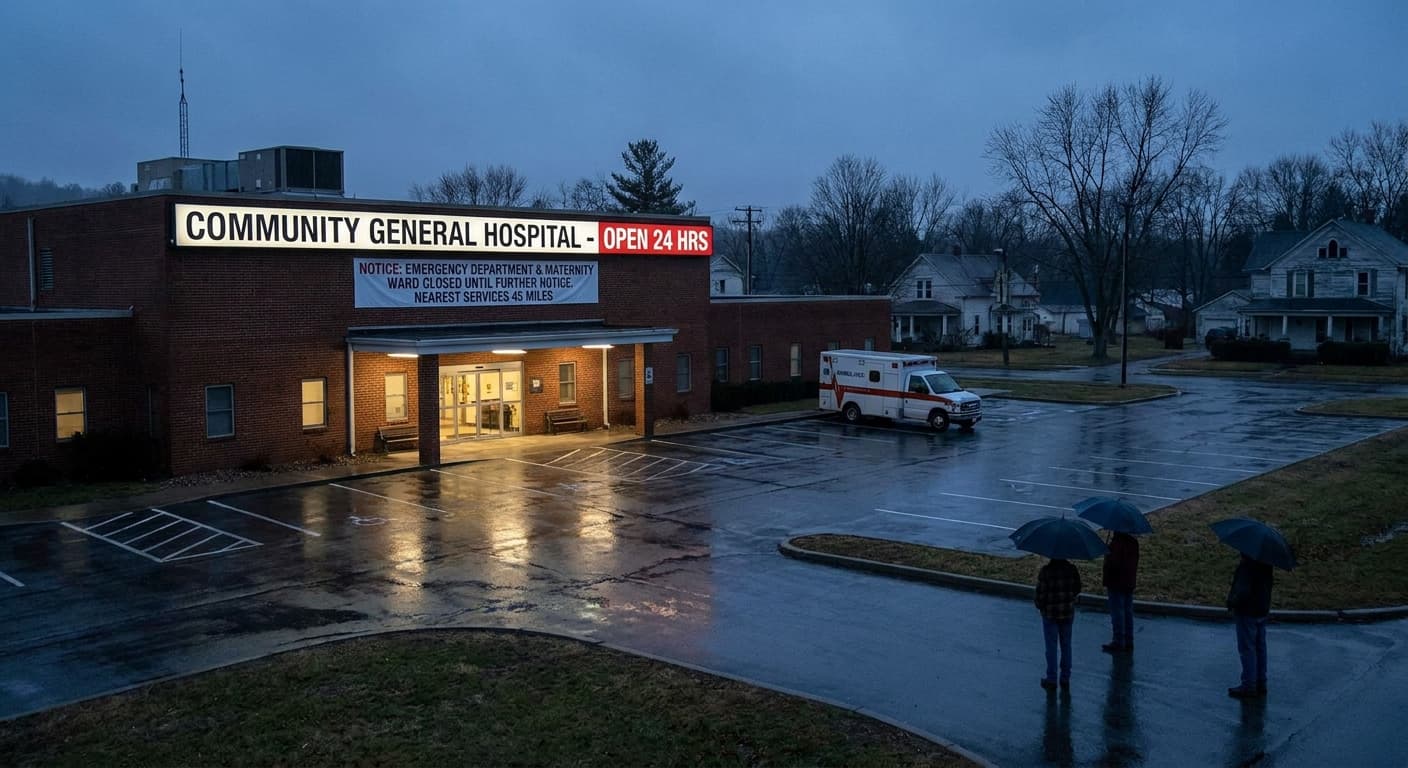
Why ‘Still Open’ Is the Wrong Way to Measure the Hospital Crisis

Across the United States, hundreds of hospitals appear open on paper, but a closer look reveals they have trimmed essential offerings such as emergency care, obstetrics, and psychiatric services. This phenomenon underscores the inadequacy of using closure numbers alone to assess the declining state of healthcare access, especially in rural and underserved areas.
Introduction
The national discourse around hospital viability frequently centers on the binary metric of closures—how many institutions have shuttered their doors for good. However, as healthcare practitioners, community leaders, and analysts increasingly emphasize, this narrow metric paints an incomplete picture of the true crisis facing America’s healthcare infrastructure. According to Duane Fitch of Plante Moran and other industry observers, hundreds of hospitals nationwide still operate but have steadily shed a slew of crucial services. The lived reality for many patients and families, especially in rural and suburban locales, is that their local hospital is only a hollow structure—'open' insofar as the lights are on, but lacking the lifeline services that once defined its purpose.
Defining the Hospital Crisis
When policymakers, journalists, and advocacy groups seek to understand or quantify the hospital crisis in America, the most accessible statistic is the count of closures. Yet this raw tally only tells 'part of the story.' In practice, communities endure profound losses when their hospitals gradually drop offerings such as emergency care, obstetrics (including labor and delivery), and psychiatric treatment. For instance, when a rural hospital eliminates its Emergency Department (ED) due to staffing woes or cost-cutting measures, the nearest working ED might be hours away by car—effectively rendering critical care inaccessible regardless of the building’s operational status.
Service Reduction: The Hidden Wave
Emergency Care
Many rural and small-town hospitals first reduce evening or overnight shifts in their EDs, citing unsustainable costs or chronic staffing shortages. The impact is stark: emergencies, by definition, do not confine themselves to business hours. A patient suffering a stroke, heart attack, traumatic injury, or other time-sensitive condition could face increased mortality risk or long-term disability from delays in care. Moreover, local ambulance services are forced to re-route, leading to longer response times and growing operational strain on regional healthcare networks.
Obstetrics
Obstetric units have become increasingly rare in smaller hospitals as insurers, payers, and healthcare systems focus on maximizing efficiency and return-on-investment. Hospital administrators often argue that declining birth rates and reimbursement rates make it untenable to maintain labor and delivery wards in certain facilities. For many expectant families, this means driving hours to reach a hospital that can support a safe delivery—an undue burden that frequently falls heaviest on low-income or rural populations.
Psychiatric and Behavioral Health
Psychiatric care availability reflects a similar pattern. Community hospitals once offered inpatient psychiatry, crisis intervention, and outpatient services. Steadily, these programs have faced the chopping block as mental health funding lags and reimbursement pathways remain complex or insufficient. The result is an ongoing crisis in mental health access, with patients sometimes waiting weeks or months for psychiatric beds, or traveling significant distances for help.
Implications for Healthcare Access Measurement
Using only hard closure numbers means policymakers and the public miss a growing undercurrent: hospitals that present as operational but are increasingly limited in what care they can actually provide. This lens, Fitch and his colleagues argue, is fundamentally misaligned with patient experience. If emergency, birthing, and psychiatric care are no longer available locally, is the community truly served?
Transportation Barriers
The elimination of services at local hospitals disproportionately affects those with limited transportation access, including seniors, individuals with disabilities, and economically disadvantaged residents. An 'open' hospital without essential services often forces patients to rely on costly medical transport, friends or family networks, or public transportation routes that may not even exist in rural areas.
Exacerbating Health Inequities
Populations already experiencing disparities—due to geography, race, income, or insurance status—bear the brunt of these quiet contractions. The closure of specialty services can quickly become a catalyst for negative health outcomes downstream, including increased maternal morbidity, mental health crises, and delayed interventions for acute conditions. For some conditions, the mere absence of local care translates to higher mortality rates for the region.
Why Service Reduction Happens
The factors driving hospitals to reduce offerings are varied and interlocking:
- Financial Pressure: Declining reimbursement rates, especially from government payers, squeeze hospital budgets. Small-volume service lines like obstetrics often lose money but are deeply valued by communities.
- Workforce Shortages: The ongoing shortage of physicians, nurses, and mental health professionals makes it increasingly hard to staff specialized units, especially in less populous counties or highly competitive metro markets.
- Regulatory and Compliance Burdens: Compliance costs and administrative overhead have risen, leading some hospitals to shutter entire service lines deemed high-risk or costly to maintain.
- Changing Population Needs: Shifts in demographics, such as younger families moving out of rural areas or older populations aging in place, can affect service demand in ways that challenge sustainable operations for certain hospital departments.
Community Impact: Voices from the Ground
To understand the patient experience, it helps to listen to local leaders, providers, and residents. For example, rural counties across the Midwest and South report growing unease as local maternity wards shut down, resulting in phenomena like 'maternity deserts.' Emergency medical providers voice mounting pressure from extended ambulance drives. Local officials describe the domino effects: business owners contemplating staff relocation, young families reconsidering their community roots, and even potential impacts to insurance rates and property values.
Policy and Advocacy Responses
Some states and hospital groups have launched initiatives to stabilize rural hospitals, including special funding streams, regulatory waivers, or regional care coordination models. Telemedicine has also been lifted as a partial solution—yet the limitations are profound for physical interventions such as labor and trauma care. Policymakers are beginning to heed calls for new metrics that reflect the completeness of care, not just the binary open/closed tally.
Redefining Metrics: What Should Change?
Experts advocate for a more holistic inventory that counts access to core services as a foundational healthcare index. Instead of simply reporting 'X hospitals closed last year,' public health authorities could track the proportion of counties or regions with 24/7 emergency coverage, local labor and delivery, and ready access to inpatient psychiatric beds. This layered data would provide a more realistic framework for directing resources and quantifying need.
Conclusion: Toward a Fuller Understanding
The tradition of counting closures as the principal indicator of hospital health is increasingly misaligned with ground reality. From the outside, a community may appear adequately served by a hospital that is technically open—yet inside its walls, key programs may have evaporated, leaving residents without vital components of care they once relied upon. Understanding the scope of the hospital crisis requires looking beyond closures, considering service reductions, and recalibrating how 'access' is measured.
Policymakers, payers, and the medical community must engage in a candid reckoning with these dynamics to develop more effective interventions and funding strategies. Only by moving beyond surface-level metrics can health systems hope to deliver the robust, equitable, and accessible care that communities across the nation deserve.
This article was synthesized using information originating from MedCity News. For additional details, refer to the original reporting at MedCity News.
Join the BioIntel newsletter
Get curated biotech intelligence across AI, industry, innovation, investment, medtech, and policy delivered to your inbox.