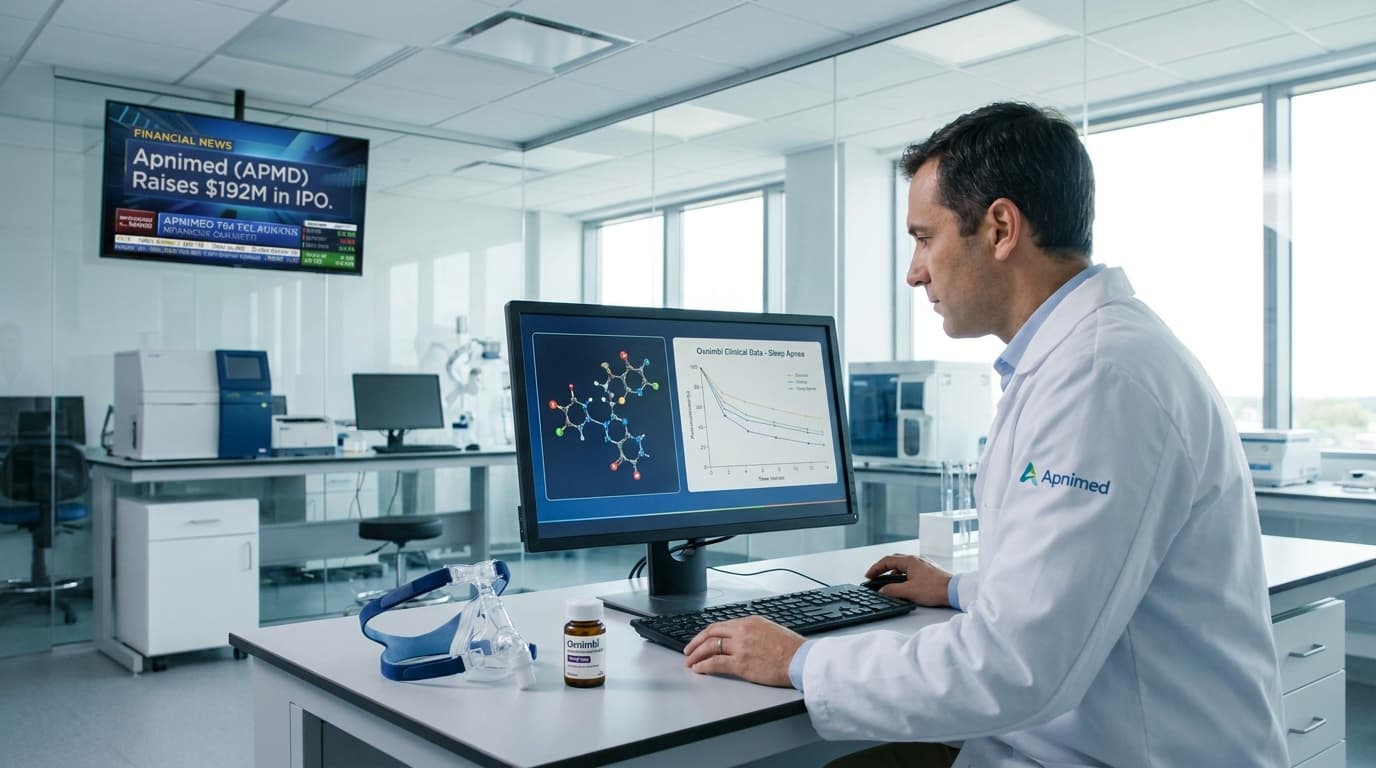
Apnimed’s $192M IPO: Aiming for the First Oral Drug for Sleep Apnea

With funds secured from its IPO, Apnimed sets its sights on regulatory submission and commercial launch of its once-nightly pill, Oxnimbi, for obstructive sleep apnea. This pivotal moment could reshape treatment paradigms for a condition affecting millions, as Oxnimbi approaches a key February 2027 FDA decision.
Introduction
Apnimed has made headlines with the announcement of its $192 million initial public offering (IPO), a financial event that sets the stage for a potentially historic advancement in the treatment of obstructive sleep apnea (OSA). The company plans to use these proceeds to support the regulatory review and commercial launch of Oxnimbi, a once-nightly oral drug under U.S. Food and Drug Administration (FDA) review. If approved, Oxnimbi would be the first oral medication on the market for OSA—a prevalent disorder with significant unmet need and few effective options beyond device-based or surgical interventions.
This article will review the background of Apnimed’s IPO, the science and clinical trajectory of Oxnimbi, the market significance for patients and providers, and the broader implications for innovation in sleep disorders. The focus will be on regulatory strategy, late-stage development hurdles, and the multi-billion-dollar business opportunity at hand. Throughout, we will consider the challenges of bringing first-in-class therapies to a notoriously complex market.
The IPO: Fueling the Push for Innovation
Apnimed’s $192 million IPO is more than a financial milestone; it is a strategic lever to enable product development, regulatory activities, and potential commercialization. IPOs for biotech companies in the sleep space have historically faced volatility, given scientific, clinical, and reimbursement hurdles. Yet the size of this capital raise reflects both investor confidence and the scale of the sleep apnea market opportunity.
Oxnimbi is currently under FDA review with a decision target date in February 2027—meaning the next 18 months will be crucial for the company, clinicians, and the millions of OSA patients awaiting new options. Funds from the IPO will support applications, data collection, pre-launch marketing, and potential scaling for a commercial rollout should the FDA grant the green light.
Oxnimbi: Science, Development, and Regulatory Status
The Condition: Obstructive Sleep Apnea
Obstructive sleep apnea is characterized by repeated episodes of airway collapse during sleep, causing oxygen desaturation, sleep fragmentation, and daytime fatigue—impacting quality of life and raising risks of cardiovascular and metabolic disease. Traditional treatments include continuous positive airway pressure (CPAP) and various surgical interventions, but adherence rates remain low due to discomfort, complexity, or side effects.
The Drug: Oxnimbi
Oxnimbi, Apnimed’s lead candidate, is a once-nightly oral therapy—if approved, it would offer a new approach for OSA management. The drug is a fixed-dose combination of atomoxetine (a norepinephrine reuptake inhibitor) and aroxybutynin (an antimuscarinic agent), designed to reduce airway collapse by modulating relevant neural pathways. Clinical studies thus far have evaluated efficacy, safety, and tolerability, in preparation for regulatory submission.
Clinical and Regulatory Milestones
A favorable FDA review will hinge on pivotal trial data showing statistically significant benefits in key endpoints, such as reduction in apnea-hypopnea index (AHI), improved daytime functioning, and acceptable safety. The February 2027 PDUFA (Prescription Drug User Fee Act) date sets a clear timeline for regulatory scrutiny and, if positive, commercial preparation.
Market Impact and Unmet Needs
Current Therapies: Gaps in Treatment
The most widely prescribed treatment—CPAP—faces significant limitations due to device discomfort, cumbersome usage, and inconsistent patient adherence. Surgery remains an option but is invasive and often limited by eligibility and efficacy constraints. Pharmacological approaches to OSA have seen little progress, with no oral therapies approved in the U.S. as of 2026.
Oxnimbi’s Promise: What’s Different?
An oral medication could dramatically improve adherence and access for millions who struggle or refuse to use device therapies. For patients, a nightly pill could replace complex regimens and offer flexibility without sacrificing efficacy. For payers, an effective drug alternative could translate into lower downstream costs associated with untreated OSA, such as hospitalizations, cardiovascular events, and lost productivity.
Commercial Opportunity
OSA is estimated to affect over 20 million U.S. adults, with a global market that expands further. A disease-modifying oral treatment has the potential to reshape the therapeutic landscape, disrupt competitors, and trigger additional R&D investments in sleep medicine.
Challenges Ahead
FDA Review: Scientific and Regulatory Risks
Drug reviews in sleep medicine have historically proved difficult, as placebo effects, measurement variability, and competing comorbidities can all challenge clinical interpretation. The FDA will likely closely scrutinize Oxnimbi’s risk-benefit ratio, long-term response durability, and any signals of adverse effects given preclinical and real-world safety concerns inherent in the class.
Payer and Provider Adoption
Should the drug secure approval, real-world adoption may hinge on reimbursement, guideline inclusion, and clinician education. Payers may closely assess cost-effectiveness, comparative utility, and any requirements for prior authorization or step therapy. Providers will also need to see robust evidence not just of efficacy, but of meaningful improvement in patient-centered outcomes.
Competition and Market Dynamics
The introduction of a first-in-class drug often invites competition—both from new entrants and established device-based platforms. Apnimed’s success could catalyze follow-on development and raise the stakes for innovation in OSA therapeutics, necessitating ongoing vigilance and R&D investment.
Stakeholder Perspectives
Patients and Advocacy Groups
OSA advocacy organizations have long campaigned for new therapies that do not carry the burden of chronic device use. News of Oxnimbi’s progress and Apnimed’s IPO is likely to generate cautious optimism among patient communities, though some will await details on efficacy, accessibility, and safety as results accumulate.
Clinicians and Sleep Medicine Experts
Sleep specialists, while hopeful about expanding available options, will depend on comprehensive data—particularly head-to-head trials versus device or procedural benchmarks, and long-term outcomes tracking. Educational campaigns post-approval would be vital for integrating the new therapy into practice.
Industry and Investors
Venture capital and industry stakeholders have shown a willingness to back innovators addressing high-unmet-need conditions such as OSA. The size and speed of Apnimed’s IPO offer a barometer for confidence in the commercialization prospects and potential for returns.
What’s Next: Timeline and Hurdles
The most immediate next steps involve ongoing FDA review, fulfillment of any additional data requests, and preparation for commercial launch should approval materialize. Beyond the FDA’s decision, Apnimed will need to establish manufacturing, pricing, and distribution plans and ensure that both providers and patients are ready to engage with the new offering.
Conclusion
Apnimed’s $192 million IPO marks a pivotal inflection point in the race for innovation in sleep medicine, with Oxnimbi poised as the possible first oral therapy for obstructive sleep apnea pending regulatory review. The outcome of this process will reshape clinical practice, patient care, and commercial strategy in a major therapeutic area with few effective current alternatives. BioIntel will be following the trajectory of Oxnimbi and Apnimed’s journey as their impact—and the broader implications for drug development in sleep disorders—unfold over the coming years.
Source: MedCity News
Join the BioIntel newsletter
Get curated biotech intelligence across AI, industry, innovation, investment, medtech, and policy delivered to your inbox.