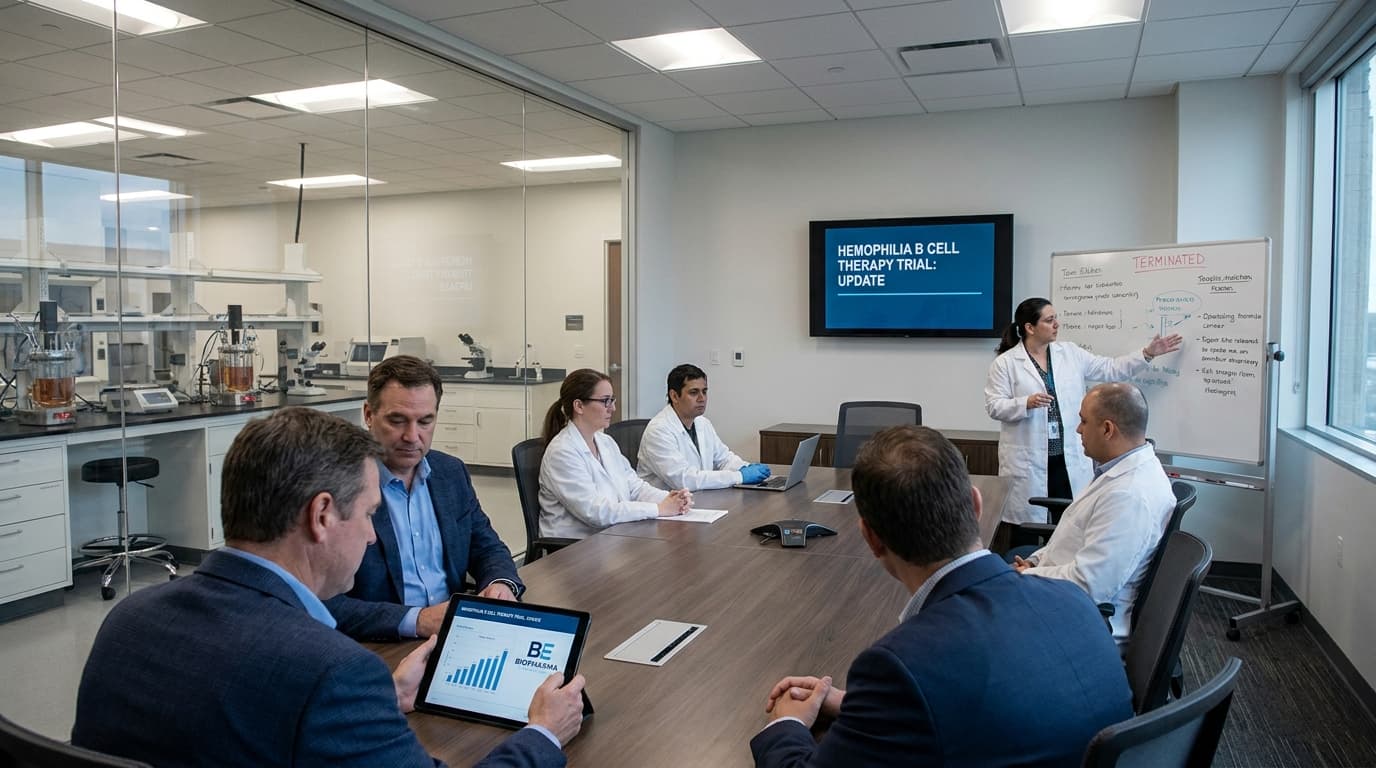
Be Biopharma Terminates Hemophilia B Cell Therapy Trial: Implications for the Hemophilia Drug Development Landscape

The termination of Be Biopharma’s hemophilia B cell therapy trial underscores the persistent scientific and commercial challenges in advancing novel therapies for hemophilia. This development adds to a growing list of recent withdrawals in the field and raises broader questions for biotech companies and investors navigating unmet needs and competitive dynamics in rare disease drug development.
Introduction
The field of hemophilia research and drug development witnessed a significant development as Be Biopharma, a biotech focusing on innovative cellular therapies, announced the discontinuation of its lead clinical trial targeting hemophilia B. This decision marks yet another major setback in the ongoing quest to provide more effective and accessible treatments for patients suffering from this rare, genetically inherited bleeding disorder. In recent years, other notable industry players such as Pfizer and BioMarin have also faced challenges, including removing their respective hemophilia therapies from the market, reinforcing the idea that progress in this therapeutic area is anything but straightforward.
Understanding Hemophilia B and the Therapeutic Challenge
Hemophilia B is a rare, inherited bleeding disorder caused by a deficiency in clotting factor IX. Traditional management has relied on factor replacement therapies, typically requiring frequent intravenous infusions to maintain hemostasis and reduce bleeding risk. The unmet need for less burdensome and more durable treatment has spurred significant investment in gene and cell therapy approaches, with hopes of moving beyond mere symptom control towards a functional cure or, at the very least, long-lasting remission opportunities for patients.
Despite these ambitions, the clinical and commercial realities have proven formidable. The complex biology of hemophilia B, patient heterogeneity, immune response to novel modalities, high development costs, and complex regulatory requirements all conspire to slow progress. As such, any cessation of a lead clinical program, as in the case with Be Biopharma, becomes a notable inflection point for both the affected company and the broader field.
The Be Biopharma Trial: What Went Wrong?
Be Biopharma, which had positioned its lead program as a potentially transformative therapy for hemophilia B, now joins the ranks of companies forced to rethink their strategy following disappointing trial results or other insurmountable barriers. While the specific reasons for terminating the trial have not been detailed in public disclosures, precedent from other recent hemophilia therapy withdrawals suggests several possible contributing factors: limited efficacy in target populations, unexpected safety signals, unmanageable manufacturing or supply chain hurdles, or insufficient patient uptake during early commercialization phases.
Industry observers recall similar instances with Pfizer and BioMarin, which each withdrew hemophilia therapies after failing to secure the traction necessary for sustainable commercial viability. Such setbacks highlight the minimum threshold of clinical benefit and quality-of-life improvement therapies must provide to gain wide provider and patient adoption, particularly in a space where expectations are high and previous generations of products have set a benchmark for both safety and effectiveness.
Impact on Patients
For individuals living with hemophilia B, news of therapy withdrawals can be deeply unsettling, representing both an end to short-term hope and a reminder of the persistent complexity of the disorder. Patients who might have been enrolled in or anticipating access to innovative regimens must now reorient towards existing therapies, most of which are marked by lifelong administration requirements, risk of developing factor inhibitors, and day-to-day burdens associated with disease management.
The news also prompts concern among patient advocacy groups, who play a pivotal role in engaging with pharma companies and policymakers to foster the advancement, evaluation, and equitable distribution of novel therapies. The closure of promising clinical programs often stokes fresh discussions about how best to incentivize progress in orphan diseases, where smaller populations translate to limited market opportunities and elevated financial risks.
Lessons from Industry Setbacks
Each high-profile clinical failure or program discontinuation adds nuanced lessons for the next cohort of innovators. The hemophilia B field has been characterized by high hopes in gene and cell therapy, yet the real-world experiences underscore that translating molecular breakthroughs into market-ready, robustly effective therapies is fraught with uncertainty.
These setbacks, especially when recurring among multiple large and well-capitalized companies, may encourage greater transparency about trial endpoints and success criteria, more extensive early-phase studies prior to large-scale investment, and adaptive trial designs that better account for likelihood of clinical and patient adoption hurdles. Moreover, partners and investors may become more attuned to balancing scientific promise against operational and market realities—a recalibration that, while difficult, could ultimately spur the deployment of more robust risk assessment and mitigation strategies throughout development pipelines.
Broader Implications for the Biotech Sector
The recurring withdrawal of hemophilia therapies by advanced biotechs and large pharma alike has larger implications on how capital is allocated within rare disease drug development. Investors—ranging from venture capital to larger pharmaceutical conglomerates—take note of leadership program terminations as signals to reassess investment risk profiles. This recalibration may mean more emphasis on programs demonstrating a clear path to both technical viability and commercial sustainability, particularly when the therapeutic targets are as well understood and previously addressed as hemophilia B.
For smaller biotech companies, there is a need to iterate quickly and learn from peers’ setbacks, using insights from failed or terminated programs to inform preclinical experimentation, trial design, regulatory strategy, and partnerships. Companies also must plan for greater engagement with payer groups, who increasingly influence the success or failure of new expensive treatments, particularly for chronic and debilitating diseases with an array of available (if imperfect) alternatives.
Looking Ahead: The Road to Future Therapies
While the discontinuation of Be Biopharma’s hemophilia B cell therapy trial is unquestionably a setback, it does not signal the end of innovation for hemophilia patients. Rather, it may well become a catalyst for a more measured, collaborative, and transparent approach to therapy development. Researchers and companies alike are challenged to deepen their engagement with end-users—patients, families, and care teams—as well as regulators, to ensure that the next attempts at transformative therapy are both scientifically rigorous and commercially sustainable.
Clinical trial failures, though discouraging, are often the prelude to the next wave of breakthroughs. They force the reassessment of assumptions, promote humility, and encourage innovation through adversity. As such, stakeholders across biotech, healthcare economics, and patient advocacy will watch closely to see how both Be Biopharma and its competitors recalibrate their portfolios and strategies in pursuit of better outcomes for those living with hemophilia.
Conclusion
The cancellation of Be Biopharma's hemophilia B cell therapy trial stands as a stark reminder of the sustained challenges and setbacks that permeate rare disease drug development, even for cutting-edge therapies with considerable promise. As the sector absorbs yet another signal that scientific, clinical, and commercial realities are deeply intertwined and often resistant to optimism alone, it is clear that stakeholders at every level—from company management through to patient advocacy—must continue adapting, learning, and collaborating to move the field forward.
Join the BioIntel newsletter
Get curated biotech intelligence across AI, industry, innovation, investment, medtech, and policy delivered to your inbox.