Biotech’s China Dilemma: National Security or Economic Opportunity?

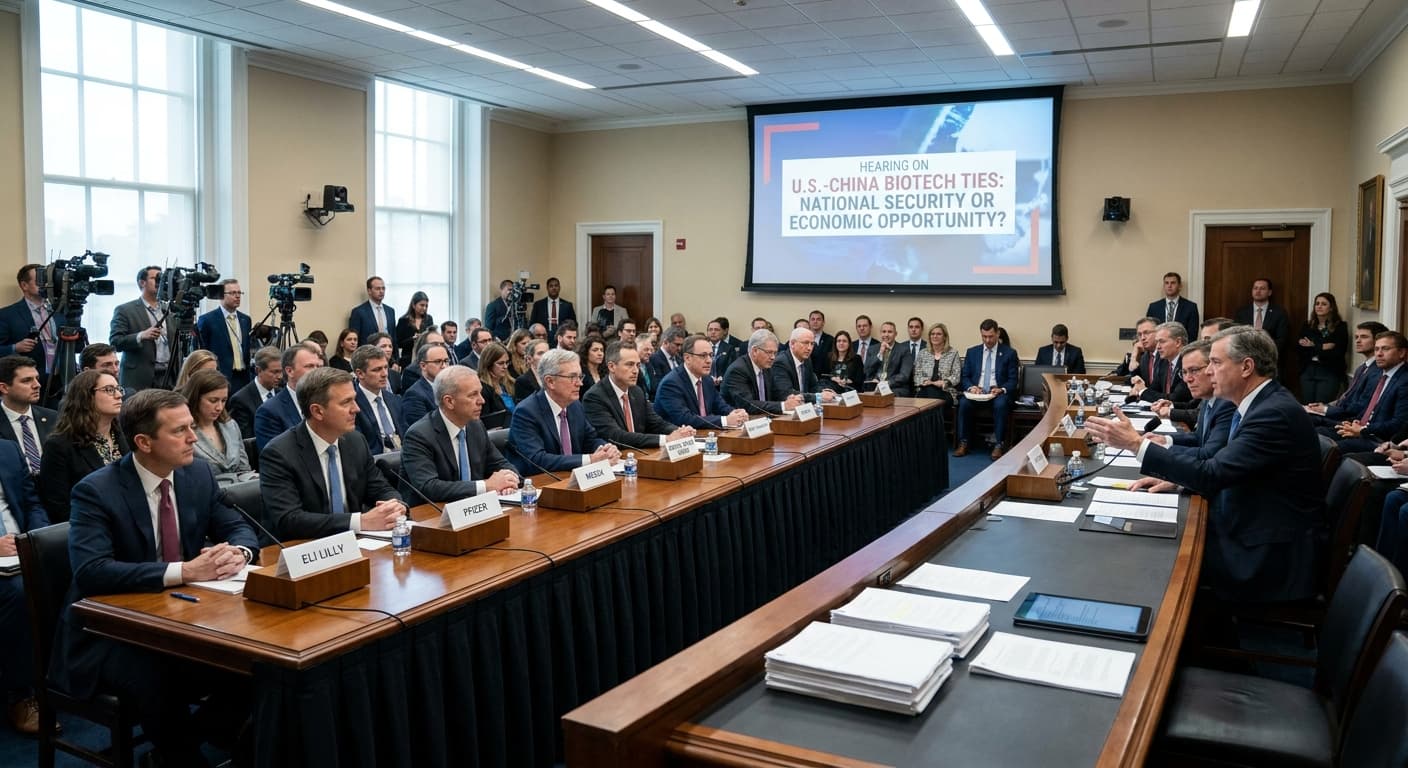
Recent Congressional scrutiny on Eli Lilly, Pfizer, Merck, BMS, and AbbVie’s clinical research in China highlights an unresolved rift between U.S. government officials and the biopharmaceutical industry. This divide centers on whether China’s biotech expansion threatens national security or offers vital economic value, as transpacific collaborations shape the future of global drug development.
The relationship between the United States and China has become one of the defining issues in global life sciences and drug development. Over the past decade, China’s rapid rise as a biotech superpower has both fascinated industry watchers and alarmed policymakers. This week, Congressional leaders again put a spotlight on the issue by sending letters to the CEOs of major U.S.-based pharmaceutical firms—Eli Lilly, Pfizer, Merck, Bristol Myers Squibb (BMS), and AbbVie—challenging their ongoing participation in clinical trials conducted in China.
Their concerns, outlined in formal communications, are emblematic of an intensifying debate: Is China’s growing biotech might primarily a matter of national security, or does it present an economic opportunity that the U.S. biopharma sector cannot afford to ignore? The answer, it seems, is anything but straightforward, and it exposes deep divergences between government priorities and industry perspectives.
What’s Fueling the Dispute Over U.S.-China Biotech Ties?
Congressional skepticism reflects a broader apprehension that sensitive data, technological know-how, and proprietary science may be at risk when U.S. companies conduct R&D in a geopolitical rival’s territory. This anxiety is not limited to biopharmaceuticals, of course, but extends to fields from quantum computing to semiconductors. But in the life sciences, the stakes are particularly high—given the global urgency to bring new drugs and vaccines to market, and the critical role multinational clinical development plays in that process.
For industry, the calculus can look quite different. China, with its vast population and unique disease burden, represents both a lucrative market for novel therapies and a critical site for faster and more diverse patient recruitment in late-stage clinical trials. Moreover, advancements in China’s regulatory environment and the scientific quality of its medical infrastructure have increased the nation’s attractiveness for sponsors seeking streamlined development timelines and broader data sets.
Yet, these opportunities exist in tension with government warnings and the specter of sanctions or new restrictions—especially in light of precedents set in the technology and cybersecurity sectors.
The Congressional Letters: What Are Lawmakers Worried About?
The letters sent this week to the CEOs of Eli Lilly, Pfizer, Merck, BMS, and AbbVie reportedly drew attention to several key concerns:
- Data Security: Are patient records and trial data at risk of compromise or state-directed misuse?
- Intellectual Property: Could proprietary drug formulas or platform technologies be reverse-engineered or expropriated by Chinese firms?
- Regulatory Influence and Ethics: Does the Chinese government’s role in medical oversight and clinical site management present barriers to trial transparency or independent review?
- National Security: Are there secondary uses for advanced biologics, gene therapies, or digital health technologies that extend beyond civilian medical care?
These questions reveal a deeper skepticism about the openness of China’s system and the risks to the U.S. innovation ecosystem. Some policymakers fear that collaboration, even in the pursuit of public health breakthroughs, may strengthen a strategic competitor while putting U.S. interests at risk.
The Industry’s Rebuttal: The Case for Engagement
For major pharma companies, the logic of cross-border clinical R&D is compelling. With 1.4 billion potential patients, China represents a key pillar of future market growth, particularly as its middle class expands and demand for advanced therapies rises. Furthermore, large-scale, multi-site clinical studies in China can facilitate:
- Accelerated Patient Enrollment: High patient numbers enable rapid accrual of trial volunteers, shaving months or years off drug development timelines.
- Diverse Data Sets: Patient populations often reflect global genetic, demographic, and environmental variation, enriching study data and enhancing real-world relevance.
- Regulatory Momentum: Chinese authorities have taken substantive steps to harmonize trial requirements with international (e.g., ICH) standards, potentially opening doors for parallel submissions and regulatory synergy.
From an industry standpoint, severing or unduly constraining these ties could both slow down global R&D and undermine U.S. competitiveness. There is a persistent view among many executives and scientists that collaboration, governed by strong compliance and safeguards, yields more benefit than harm.
Where Do the Risks and Opportunities Truly Lie?
The crux of the current debate may be less about whether collaboration is inherently risky, and more about how to balance openness with security. Issues at play include:
- Safeguarding IP and Critical Data: How robust are protocols for data segregation, encryption, and oversight of clinical site operations? Given recent reports of cyber intrusions in health care, the importance of airtight systems is rising.
- Delineating Sensitive Technologies: There may be specific domains—such as advanced cell therapies, synthetic biology, or AI-enabled drug design—where greater caution is warranted.
- Reciprocity and Trust: Are U.S. sponsors afforded the same levels of access, regulatory flexibility, and commercial opportunity in China as Chinese firms receive in the U.S. and Europe? Absent mutuality, perceived risks rise.
- Ethical and Scientific Oversight: Transparent peer review, independent monitoring, and access to full trial protocols are essential for maintaining standards.
The Future: Policy Uncertainty and Strategic Adaptation
As U.S.-China relations continue to experience periodic turbulence, biopharma firms must remain agile. Regulatory proposals or Congressional action could reshape the landscape at short notice, potentially requiring:
- Restructuring Global Clinical Networks: Companies might need to adapt trial designs, diversify site geographies, or establish new compliance teams to monitor cross-border risk.
- Enhanced Transparency: Public disclosures, voluntary ethics commitments, and third-party audits may become necessary to reassure both regulators and shareholders.
- Advocacy and Dialogue: Ongoing conversation between industry, lawmakers, and the public is vital to avoiding unintended consequences, such as undermining scientific advancement in the name of security.
Conclusion: A Balancing Act with High Stakes
The future of U.S. biopharma’s engagement with China remains deeply uncertain, as economic rationales collide with evolving national security imperatives. Both sides of the debate recognize the importance of advancing science, preserving patient safety, and maintaining global leadership in drug innovation. The challenge is how to achieve these aims while protecting proprietary knowledge and trust.
Industry watchers, regulators, and patients alike will be closely monitoring how this standoff unfolds in the coming months and years. As U.S. companies weigh compliance with political expectations against the demands of science and the global drug market, the outcome will shape not just the future of biopharma, but possibly the next chapter of international scientific cooperation itself.
Source: BioSpace
Join the BioIntel newsletter
Get curated biotech intelligence across AI, industry, innovation, investment, medtech, and policy delivered to your inbox.