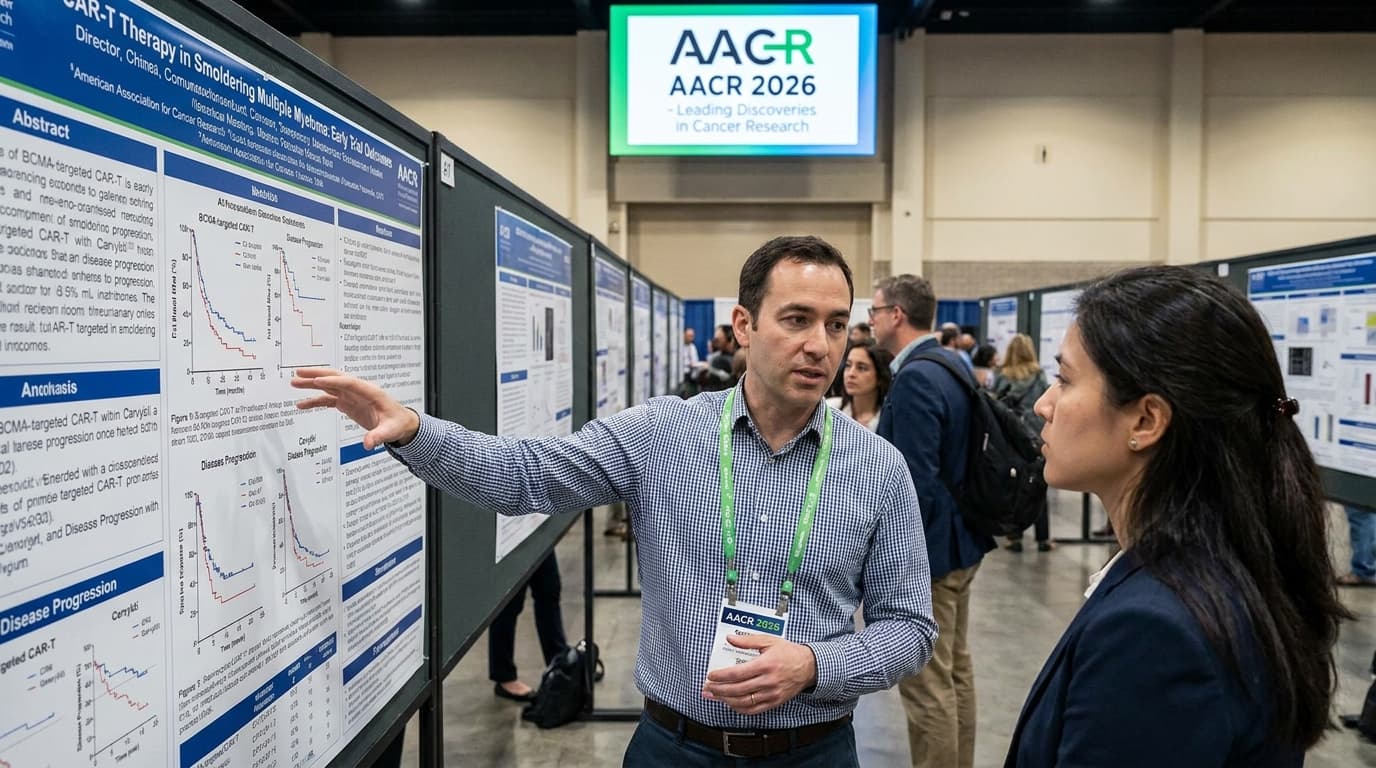
Exploring Bold Advances in CAR-T Therapy: AACR 2026 Highlights on Smoldering Multiple Myeloma

The American Association of Cancer Researchers' 2026 meeting showcased pioneering research in CAR-T immunotherapy. This includes bold approaches to targeting smoldering multiple myeloma, with trial data offering new hope for high-risk patients by potentially preventing the onset of active disease. The session also touched upon Merck’s strategic oncology initiatives and highlighted rural health disparities.
The field of cancer immunotherapy continues to evolve rapidly, and at the AACR 2026 conference, several groundbreaking developments in chimeric antigen receptor T-cell (CAR-T) therapy were at the forefront. CAR-T therapy, a technique that engineers a patient's own T-cells to attack cancer cells, has already transformed the treatment landscape for certain hematologic malignancies. However, recent studies presented at the conference pushed boundaries by applying this technology to earlier stages of disease and exploring its broader implications.
One of the most provocative applications discussed was the use of CAR-T therapy in smoldering multiple myeloma, a pre-malignant condition that often precedes full-blown multiple myeloma but has historically lacked effective early intervention strategies. The research, highlighted by STAT+, unveiled early trial results where CAR-T treatment demonstrated the potential to prevent disease progression in high-risk patients. These findings suggest that immunotherapy could shift from reactive to proactive use in managing hematologic cancers, offering a transition from symptom management to disease interception.
The presented CAR-T trial results, particularly involving the BCMA-targeted CAR-T known as Carvykti, showed promise in both safety and efficacy profiles. Preventing smoldering multiple myeloma from evolving into symptomatic disease could revolutionize treatment paradigms, improving patient outcomes and reducing the burden of intensive therapies administered at later stages.
Additionally, the AACR meeting served as a platform for discussing broader oncology issues, including Merck’s strategic positioning within cancer therapeutics and the challenge of delivering cancer care in rural settings. The intersection of advanced therapy development with health equity and access concerns underscored the complexity of translating scientific innovation into population-wide benefits.
These revelations at AACR 2026 mark a critical juncture in immuno-oncology, where CAR-T therapy not only continues to mature as a potent treatment modality but also expands into novel clinical indications. Future research and long-term studies will be pivotal in confirming these early encouraging results and in refining patient selection criteria to maximize therapeutic benefit while minimizing risks.
In summary, AACR 2026 highlighted the transformative potential of CAR-T therapies, particularly through their novel application in smoldering multiple myeloma. This shift towards earlier intervention expresses a bold vision of cancer care that diagnostic vigilance combined with immunotherapy could substantially alter disease trajectories and improve survival rates. As CAR-T technologies advance, ongoing innovation and clinical validation remain essential for these groundbreaking treatments to achieve their full impact across diverse patient populations.
Join the BioIntel newsletter
Get curated biotech intelligence across AI, industry, innovation, investment, medtech, and policy delivered to your inbox.