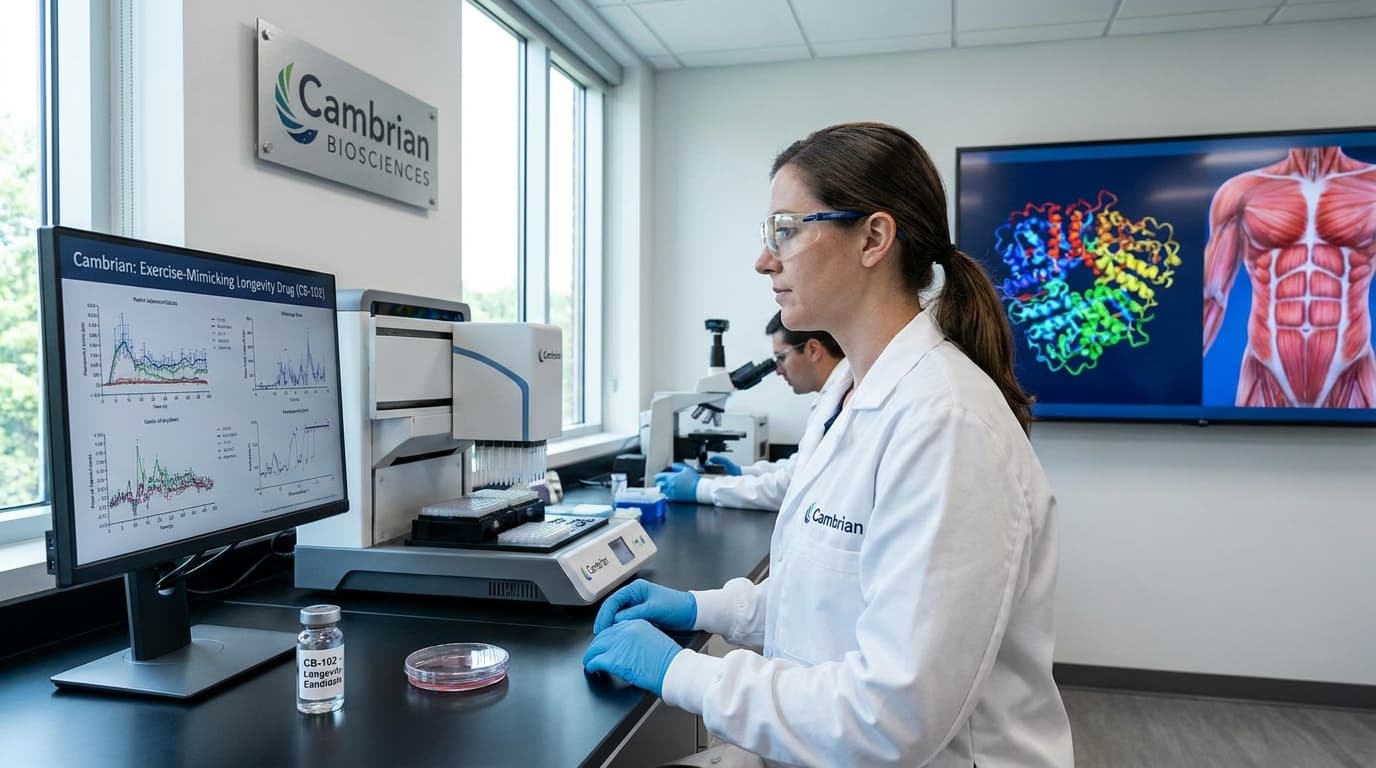
Cambrian’s Exercise-Mimicking Longevity Drug: A New Era for Biotech and Healthy Aging?

Biotech start-up Cambrian’s latest development—a drug that reportedly mimics the effects of physical exercise—raises major questions about the future of aging, disease prevention, and the intersection of biotechnology with lifestyle interventions. Early reports prompt both excitement and skepticism within the medical and scientific communities.
In the fast-evolving biotech space, innovation is often measured by a company’s ability to address some of society’s most persistent health challenges. One such challenge is aging, along with the chronic diseases and health risks that accompany it. Cambrian, a company now gaining industry attention, has developed an experimental longevity drug that seeks to bring the promise of healthier aging closer by mimicking the effects of exercise at the molecular level. This development signals not just a technical milestone but a gateway into a new era of biomedicine—one where lifestyle interventions like exercise could be pharmacologically simulated for aging populations and those with mobility challenges.
The Science Behind Cambrian’s Approach
Physical activity is widely acknowledged as one of the strongest predictors of healthy aging and reduced risk for multiple diseases, including cardiovascular disease, diabetes, neurodegeneration, and various cancers. However, for many individuals—whether due to frailty, disability, or underlying illness—regular exercise is difficult or impossible. Cambrian’s experimental longevity drug aims to address this gap by engaging the metabolic and cellular pathways that exercise naturally activates, thereby generating similar physiological benefits in people unable to undertake adequate physical activity.
Although the details remain proprietary, early descriptions suggest this drug targets key molecular mechanisms involved in energy utilization, cellular repair, and stress resilience. Mimicking exercise at a biochemical level might have downstream effects on muscle health, immune modulation, and even cognitive function, according to preclinical predictions. If these findings translate to humans, it could potentially revolutionize preventive medicine for aging populations.
Significance for Healthy Aging
From a public health perspective, the possibilities are enormous. The global demographic tilt toward older populations is accelerating, and with it, the burden of age-associated morbidity and multimorbidity (the co-occurrence of two or more chronic diseases). Traditional public health advice has always emphasized lifestyle: exercise, balanced nutrition, and disease screening. Cambrian’s project, if successful, could supplement these strategies with effective pharmaceutical interventions, offering hope to millions who face limitations in physical mobility or live with chronic illness.
But the longevity field remains fraught with complexity. Aging is not a single disease but a cumulative process involving genomic instability, cellular senescence, altered intercellular communication, and more. Thus, a drug that can target one major pathway—such as those activated by exercise—might modulate, but not completely halt, these multifactorial processes. Cambrian’s work, therefore, presents a meaningful but partial answer to the question of how much we can manipulate the biology of aging through science.
Market Potential and Industry Interest
Healthy aging is now one of the hottest topics in both biotech venture capital and public health discourse. Companies that develop therapies to slow or reverse aspects of the aging process are attracting significant investment, reflecting both commercial optimism and societal demand. Cambrian’s exercise-mimicking drug positions the company on the intersection of two booming sectors: longevity biotech and metabolic health.
Should clinical trials bear out Cambrian’s claims, the commercial opportunity will likely be vast. Potential applications include older adults, people with severe mobility limitations, patients recovering from surgery, and even astronauts (who face muscle atrophy in microgravity). Yet, the entry of a new class of longevity drug into the market would also raise regulatory and practical questions: How will these therapies be assessed for safety and long-term efficacy? Will insurance companies cover them? How might patient eligibility be determined and monitored?
Skepticism and Scientific Debate
Despite the excitement, scientific skepticism persists. Critics note that the health benefits of exercise entail more than biochemistry—they include mechanical stimulus to joints and bones, psychosocial effects, and cardiovascular adaptation that may not be wholly replicable by a pill. There is also the concern that mimicking exercise could encourage sedentary behavior in those capable of physical activity, potentially undermining overall health by neglecting the holistic benefits of movement.
Furthermore, new drugs that target metabolic pathways occasionally raise red flags about off-target effects or unforeseen long-term consequences. For longevity drugs, which might have to be taken over years or decades, the risk of side effects demands particularly rigorous oversight. The scientific community, therefore, awaits peer-reviewed clinical studies with well-defined endpoints to validate Cambrian’s early-stage claims.
Implications for Broader Healthcare
If successful, such exercise-mimetic therapies could redefine prevention and care for an aging world. Primary healthcare might integrate these drugs as adjuncts or alternatives when conventional interventions are insufficient. Specialists in geriatrics, rehabilitation, and chronic disease management may find new tools for improving quality of life in vulnerable populations.
On the policy front, regulators will likely face the challenge of ensuring robust evidence for claims of efficacy and safety, while payers (including national health systems and private insurers) assess the value these therapies add to existing preventive and treatment regimens. Debates around access, pricing, and health equity may intensify, as has occurred with previous breakthrough therapies in other disease areas.
The Road Ahead
The story of Cambrian’s experimental longevity drug is emblematic of where biotech disruption is headed: targeting the biological underpinnings of health itself. As the company, and others in the field, proceed to later-stage validation, all eyes will be on the interface between scientific rigor, regulatory oversight, and real-world need.
Evidence will be key—not only from molecular or animal studies but from large, diverse, and well-designed human trials. If Cambrian and its peers deliver, the vision of pharmacologically mimicking exercise and thus expanding healthy lifespan could truly herald a new era—and fundamentally reshape the boundary between medicine and lifestyle.
Source: STAT News
Join the BioIntel newsletter
Get curated biotech intelligence across AI, industry, innovation, investment, medtech, and policy delivered to your inbox.