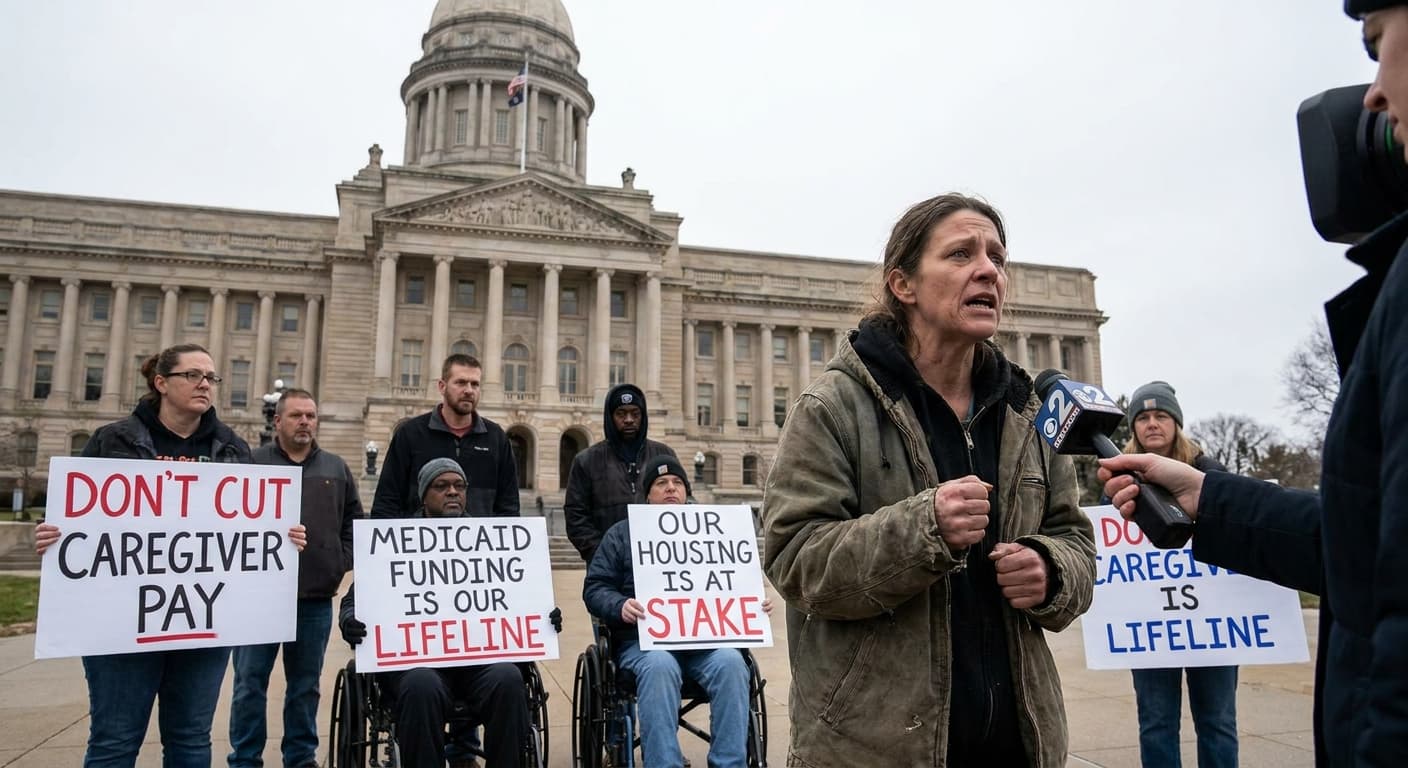
Caregivers Brace for Pay Cuts and Potential Homelessness: How Medicaid Funding Pressures Ripple Through Family Care

The intersection of state budgetary decisions and caregiver livelihoods is reaching a critical point. With several states weighing deep wage cuts for family caregivers employed via Medicaid, ripple effects threaten not only economic security, but also care continuity for people with disabilities. Stakeholders grapple with how policy, economics, and compassion entwine in the U.S. caregiving landscape.
The New Crisis in Family Caregiving: Funding Cuts, Pay Reductions, and Rising Instability
On July 13, 2026, several states are reportedly considering substantial wage reductions for family caregivers, particularly those who provide at-home support to people with disabilities via state Medicaid programs. According to reporting from STAT News, this policy consideration has already triggered significant anxiety among caregivers, many of whom are now bracing for severe financial consequences—including, in extreme cases, potential homelessness.
The Crucial Role of Family Caregivers in Medicaid Ecosystems
Family caregivers are a backbone of the Medicaid long-term support and services (LTSS) framework. Often, these individuals provide essential in-home care, which would otherwise require much more expensive institutional services. State Medicaid programs frequently allow people with disabilities to hire and compensate family members to perform these roles, reflecting both economic pragmatism and a growing understanding of patient-centered care preferences.
For caregivers, these wages are not just supplementary—they can be the sole source of family income. The stability of Medicaid funding is thus directly tied to the economic and social well-being of thousands of families who provide this care.
Why States Are Considering Wage Cuts
The trend toward considering cuts to caregiver compensation typically aligns with state budget cycles, federal policy signals, and the evolving cost of healthcare generally. State governments face escalating pressures to balance budgets while meeting complex healthcare obligations. As Medicaid remains among the largest budget items in most U.S. states, it is inevitably targeted during fiscal tightening, amid forecasts of federal funding shortfalls or systemic cost overruns.
Some states, seeking to contain costs as demand for home- and community-based services grows, evaluate reductions in reimbursement rates, or impose stricter eligibility tests for family caregiver programs. The rationale from a policy perspective is often to avoid unsustainable expenditure growth and ensure the long-term solvency of state Medicaid programs. However, these decisions bear significant human costs.
Real-World Stakes: Financial Ruin and Housing Instability
For many family caregivers, a wage cut is not a minor inconvenience but a direct route to precariousness. Already, median pay for such roles often falls below a living wage, especially as housing, transportation, and health insurance costs climb. With little margin for error, even a modest reduction in caregiver compensation can lead to dire financial consequences.
STAT News’ coverage highlights the looming risk of homelessness for families who cannot make up the lost income elsewhere. Many caregivers have already sacrificed employment in traditional labor markets to provide full-time support to loved ones. Options to supplement income are extremely limited amid rigid care schedules and high-intensity demands.
Also at stake is the stability of care for people with disabilities. When family caregivers face eviction or homelessness, care continuity is jeopardized—potentially leading to costly hospitalization or institutionalization, or the breakdown of critically important support networks.
The Policy Debate: Saving Medicaid vs. Supporting Families
The question for policymakers is how to sustain Medicaid for the long term without undermining the very people who make home- and community-based care viable. On one side, fiscal conservatives point to the necessity of cost control and program sustainability. On the other, advocates for people with disabilities and their caregivers warn that cost-cutting without compensatory social support is likely to backfire, forcing vulnerable populations into more expensive, less humane residential settings or simply leaving them without essential daily support.
There are alternatives to outright wage reductions. Some states are exploring value-based payment models, increased federal matching for targeted populations, or direct grants for care support. Others suggest more robust wraparound services for affected families, including expanded access to housing assistance, mental health services, and skills retraining for displaced caregivers.
Broader Implications for Healthcare and Society
The looming pay cuts highlight the larger challenge of how the U.S. manages its growing long-term care needs, especially as the population ages and more individuals require ongoing support. Relying on family caregivers absorbs pressure from the institutional care system, but without adequate compensation or safety nets, this model may prove unsustainable.
This situation also raises equity concerns. Family caregivers are disproportionately women, people of color, and immigrants—groups that already face economic and social disadvantages. Pay reductions could exacerbate longstanding inequities in access to stable employment, home ownership, and health. The intersection of Medicaid policy, disability rights, housing security, and the social determinants of health has rarely been clearer or more urgent.
The Human Face of Policy Decisions
While policies are often debated in abstract terms and budgetary line items, the day-to-day reality for caregivers is deeply personal and frequently precarious. The threat of homelessness adds a grim layer to the already taxing physical and emotional demands of full-time caregiving. These stakes underscore the importance of centering lived experience in the policymaking process.
The Road Ahead: Policy, Advocacy, and Systemic Change
A final determination by state governments will likely depend on a confluence of grassroots advocacy, empirical budget analysis, and high-level political compromise. Caregivers and disability rights groups are expected to amplify their voices—via testimonies, public campaigns, and legislative lobbying—calling for more compassionate, evidence-informed Medicaid policies.
For now, the prospect of pay cuts and the shadow of financial ruin for family caregivers reflect larger questions about the U.S. commitment to supporting its most vulnerable citizens in an era of budgetary constraint and shifting care paradigms.
Join the BioIntel newsletter
Get curated biotech intelligence across AI, industry, innovation, investment, medtech, and policy delivered to your inbox.