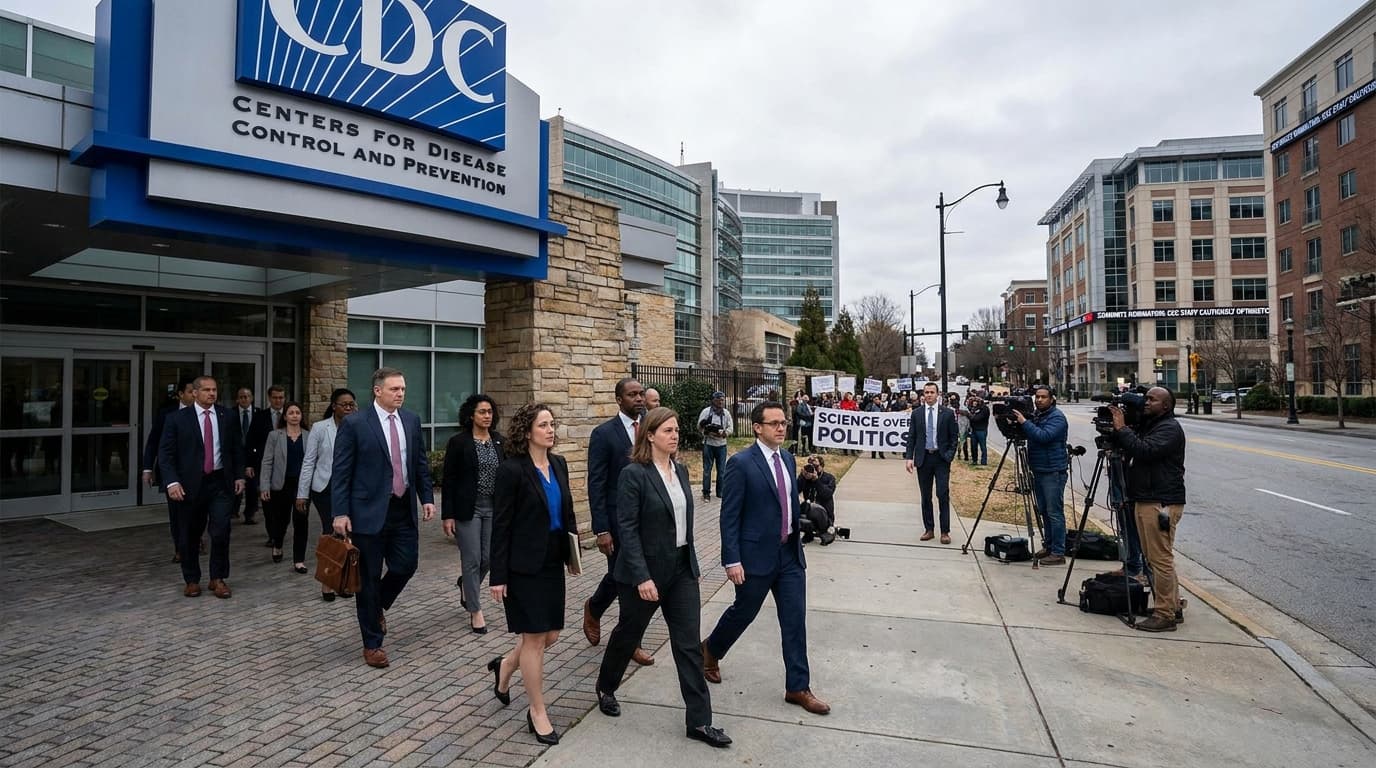
Cautious Optimism Surrounds Erica Schwartz’s Nomination as CDC Director Amid RFK Jr.'s Influential Role

Erica Schwartz, former deputy surgeon general and military physician, is positioned to inherit leadership of the CDC. The nomination has sparked a complex response within the agency characterized by cautious hopefulness, tempered by the political influence of Health Secretary RFK Jr. This development marks a critical juncture for an agency wrestling with internal and external challenges.
The recent nomination of Erica Schwartz to helm the Centers for Disease Control and Prevention (CDC) has drawn a mix of guarded optimism and prudent scrutiny among CDC staff and broader public health observers. Schwartz, who brings a rich background as a physician with extensive government service, including time as a deputy surgeon general and U.S. military physician, is poised to take leadership in a period marked by considerable political and operational turbulence.
Among staff within the CDC, the general sentiment as of mid-April 2026 can best be described as “guarded but hopeful,” reflecting an understanding that while Schwartz’s expertise and experience are assets, the agency’s political environment remains fraught. This environment is largely shaped by the influential presence of Health Secretary Robert F. Kennedy Jr., whose role has sparked questions about the direction and independence of the CDC under the current administration.
Kennedy’s strong political stances and public critiques of the pharmaceutical industry have raised concerns about potential impacts on public health policy and CDC’s scientific integrity. His influence on appointments, including Schwartz’s nomination, underscores ongoing tensions between scientific leadership and political dynamics within the federal public health apparatus.
The CDC has undergone a rapid succession of leadership changes over the past year, which has contributed to uncertainty and operational strain. Schwartz’s nomination aims to provide steady guidance and restore stability within the agency's leadership ranks. Her government service record and military experience are expected to resonate well with lawmakers seeking a leader who can navigate both science and policy effectively.
Nonetheless, the agency staff remain cautious, reflecting on how leadership decisions and political influence will shape CDC’s capacity to address critical health threats, including infectious diseases, chronic illness management, and public health emergencies.
Erica Schwartz’s potential tenure as CDC director comes at a pivotal time when public health demands are evolving rapidly, and public trust in health institutions faces ongoing challenges. The intersection of science, politics, and public communication is increasingly prominent, requiring a leader capable of bridging these domains carefully.
This development also coincides with broader questions about agency independence, regulatory flexibility, and transparency in federal health governance. The nomination represents not just a personnel shift but a symbolic moment reflecting the administration’s approach to public health leadership and policy priorities.
The CDC’s future under Schwartz will likely be characterized by efforts to balance rigorous scientific methods with responsiveness to political pressures and stakeholder expectations. Close attention will be paid to how she addresses emerging health issues, manages internal morale, and navigates the complex political landscape shaped by figures such as RFK Jr.
Overall, the cautious optimism from CDC staff underscores a hopeful yet realistic expectation that this new chapter in leadership might stabilize and advance the agency's mission amid ongoing challenges. The coming months will be critical in observing how these dynamics unfold and influence public health strategies and outcomes in the United States.
Source: STAT News
Join the BioIntel newsletter
Get curated biotech intelligence across AI, industry, innovation, investment, medtech, and policy delivered to your inbox.