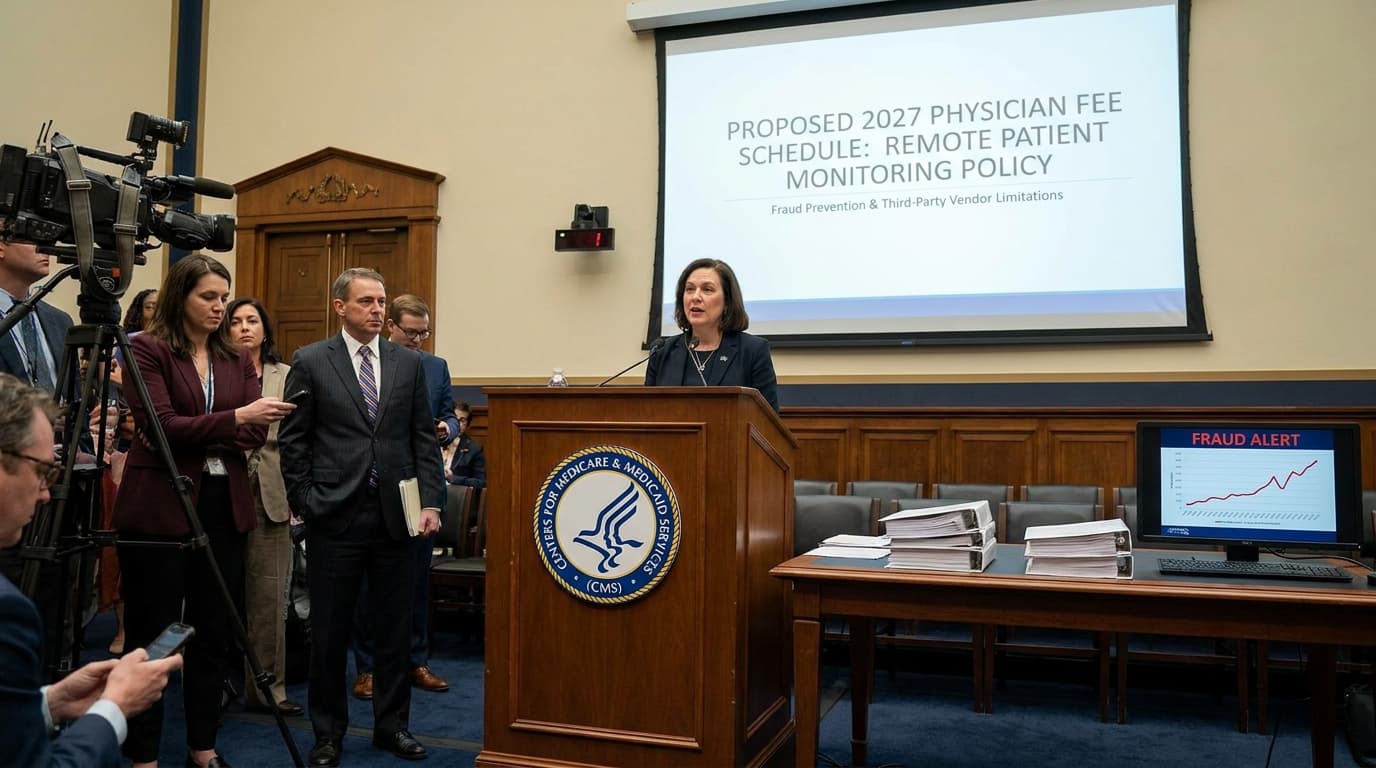
CMS Seeks to Bar Third-Party Remote Patient Monitoring Over Fraud Concerns: The Implications for Providers and Patients

With the 2027 Physician Fee Schedule, the Centers for Medicare and Medicaid Services (CMS) proposes major restrictions on remote patient monitoring (RPM) in response to reports of widespread abuse. This analysis dives into the motivations, possible ripple effects, and the broader context surrounding CMS’s controversial move, as well as its impact on digital health innovation, patient engagement, and chronic disease care.
CMS Proposes Ban on Third-Party Remote Patient Monitoring: Understanding the Ramifications
Introduction
On July 16, 2026, the Centers for Medicare and Medicaid Services (CMS) ignited new debate in the digital health and medical technology sectors by proposing—within its 2027 Physician Fee Schedule—a ban on Medicare payments for remote patient monitoring (RPM) services delivered by third-party vendors. This sweeping move follows a series of reports from the Office of Inspector General (OIG) highlighting widespread fraud and questionable billing practices associated with these services. As virtual care becomes a critical element in modern healthcare, this proposed rule underscores the tension between innovation, access, and the imperative of safeguarding public funds.
Understanding Remote Patient Monitoring (RPM)
Remote patient monitoring, or RPM, refers to technologies that collect patient health data—such as blood pressure, glucose, or cardiac metrics—outside traditional clinical settings. These data are then transmitted to care teams for review, often prompting earlier intervention and better chronic disease management. Medicare began covering RPM services more broadly in recent years, with telehealth advances and the COVID-19 pandemic accelerating their adoption.
Initially seen as a breakthrough for chronic disease care and rural health access, RPM now faces scrutiny over logistics, quality controls, and rapidly scaling business models. As providers and startups alike have entered the field, the complexity of payment pathways—especially the increasing reliance on third-party vendors—has grown accordingly.
The Proposed Ban: What the 2027 CMS Rule Would Change
With the draft 2027 schedule, CMS proposes an aggressive step: bar Medicare payments for RPM services provided by outside vendors, meaning entities not directly associated with patient-facing clinics or providers. Instead, only direct provider-run RPM will remain eligible for reimbursement. The proposal is a response to several OIG investigations that found pervasive fraudulent billing patterns, including:
- Submission of claims for patients who were not actively engaged or receiving valid monitoring.
- Inflated billing for services not rendered.
- Lax oversight, where providers signed off on vast numbers of patients monitored remotely with little real oversight or engagement.
CMS's position is that removing the financial viability of outsourced RPM will significantly curb fraud opportunities, returning oversight and accountability to the physician-patient relationship.
Stakeholder Perspectives: The Case for and Against the Ban
Proponents
Those supporting the ban—including some policy analysts and patient safety advocates—argue that third-party RPM companies have at times treated Medicare as a high-margin, low-supervision revenue stream. By consolidating responsibility within provider organizations, CMS aims to restore the original intent of RPM: to help providers extend continuous care, not outsource engagement to faceless technology vendors with little clinical accountability.
Careful observers also point to the rapid proliferation of RPM companies, some of whom rely on aggressive patient acquisition and retention tactics, providing minimal clinical intervention while collecting fees. The OIG’s findings—while not universal—nonetheless support concerns that aspects of the RPM model have evolved faster than appropriate regulatory controls.
Critics
On the other hand, many digital health companies, chronic disease advocacy groups, and even some physician organizations warn that the rule could backfire, ultimately harming patient access, especially for the populations that stand to benefit most from remote monitoring.
-
Access and Equity: Many rural and underserved clinics rely on third-party partnerships due to limited resources and staffing—if these contracts become ineligible for Medicare reimbursement, patients in these regions may see a reduction in available RPM programs.
-
Innovation and Scalability: Startups and established vendors alike have driven significant advances in device integration, data systems, and patient engagement. Critics argue that shutting them out may stifle innovation and reduce the diversity of RPM solutions in the market.
-
Provider Burden: Smaller medical practices could be ill-equipped to directly manage the technical, logistical, and data-handling aspects of RPM, making it more difficult to offer such services at all if third-party help is restricted.
Fraud in Remote Monitoring: Context and Impact
Medicare fraud has long been a major concern for policymakers aiming to preserve the financial sustainability of the program. The OIG’s recent investigations found that RPM, especially when coordinated by outside vendors, introduced new vectors for improper billing:
- “Phantom” patients billed for monitoring never performed.
- Minimal or automated (as opposed to truly clinical) engagement substituted for ongoing provider-patient dialogue.
- Bundled billing for device rental, education, and monitoring on top of regular evaluation and management codes.
These findings prompted CMS’s more aggressive regulatory response, reflecting frustration with what some have described as a digital “gold rush” taking precedence over care quality.
Implications for Payers, Providers, and Patients
-
For Payers: The CMS proposal is part of a broader trend toward tightening telehealth payment and reducing fraud in digital care models. It underscores the imperative for robust, auditable standards in virtual medicine.
-
For Providers: Clinics, health systems, and physician groups must reconsider their remote monitoring strategies—moving away from turn-key vendor solutions to in-house programs. This transition may involve significant investments in IT, staff training, and protocol development.
-
For Patients: The most significant risk is reduced access to RPM in vulnerable communities, particularly where provider capacity is stretched. However, tighter controls could, in theory, improve quality by ensuring continuous engagement from clinicians who know the patient’s history and needs.
Industry Responses and Next Steps
The digital health sector has responded swiftly, with many industry groups urging CMS to reconsider the breadth of the ban or develop alternative fraud prevention approaches that don’t risk cutting off legitimate, effective care. Some suggest credentialing, stricter vetting, or tighter monitoring of RPM vendors rather than a blanket ban. Public comments and lobbying efforts are already underway.
The next steps will involve:
- Open comment periods and possible amendments to CMS’s draft rule.
- Potential legislative intervention if Congress perceives patient access to be at risk.
- Increased pressure on both vendors and providers to demonstrate the value, safety, and integrity of remote monitoring programs.
Conclusion: What’s at Stake
The CMS proposal to restrict third-party RPM reimbursement represents a crucial testing ground for the future of technology-enabled care under Medicare. The outcome will influence not only the structure of digital health startups and providers but the willingness of public payers to embrace innovation amidst concerns over oversight and cost.
Ultimately, the success or drawbacks of these regulatory changes will come down to how well agencies, providers, and technology companies can balance innovation, access, and accountability. The dialogue over this rule is likely to shape the RPM market—and patient experiences—for years to come.
Source: Why CMS Is Trying to Ban Third-Party Remote Patient Monitoring
Join the BioIntel newsletter
Get curated biotech intelligence across AI, industry, innovation, investment, medtech, and policy delivered to your inbox.