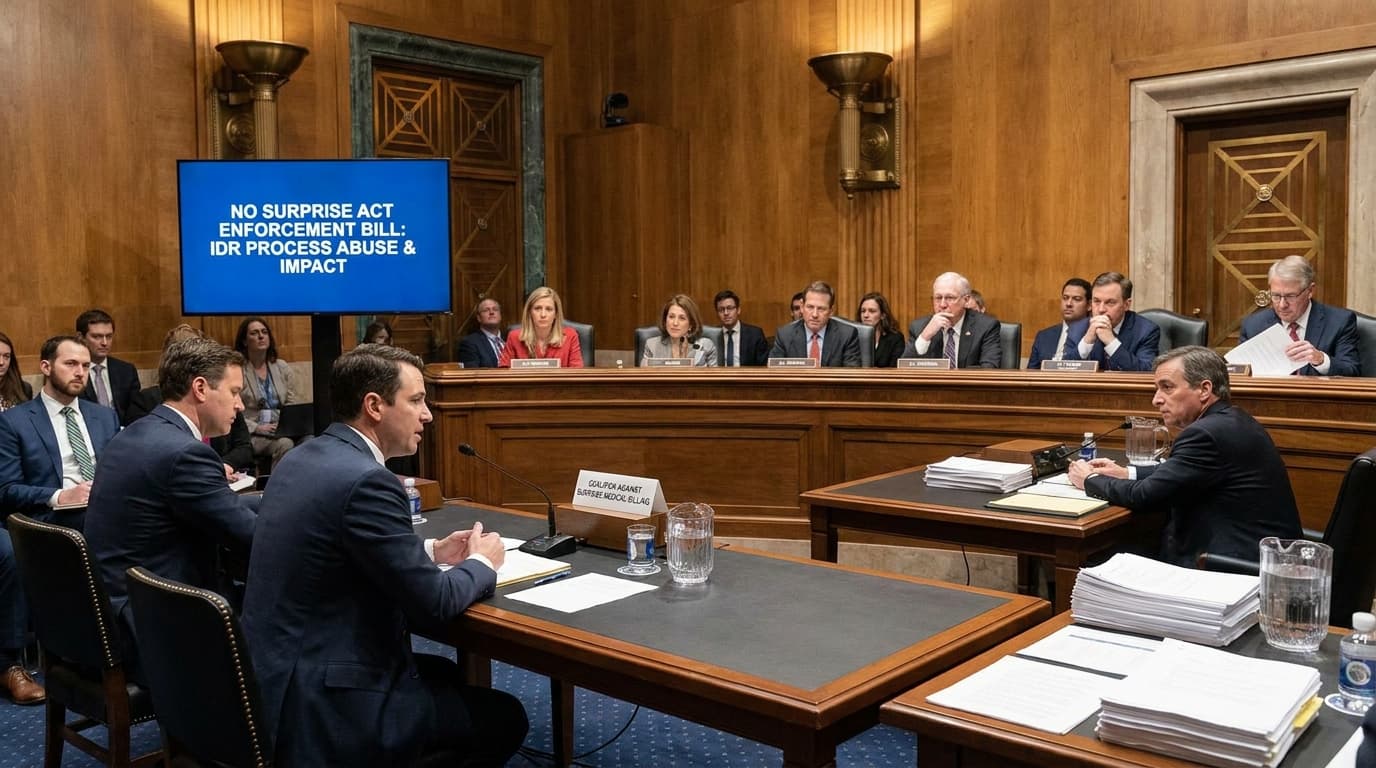
Coalition Pushes Back on Proposed No Surprises Act Enforcement: Is IDR Abuse Getting Worse?

The Coalition Against Surprise Medical Billing has launched a campaign against new legislative efforts to enforce the No Surprises Act. Critics contend the enforcement bill could exacerbate existing problems with the IDR system, while policymakers argue for stronger patient protections.
Introduction
Efforts to regulate surprise medical bills in the United States have been ongoing for years, culminating in the passage of the No Surprises Act—a law designed to protect patients from unanticipated out-of-network charges after receiving care. However, ongoing attempts to strengthen enforcement have sparked pushback from broad coalitions comprised of providers, payers, and patient advocates. Most recently, the Coalition Against Surprise Medical Billing has launched an assertive campaign opposing a new No Surprises Act Enforcement Act, warning lawmakers that the legislation could inadvertently intensify existing problems with abuse in the independent dispute resolution (IDR) process.
This in-depth report investigates the core issues at stake. What is the purpose of the proposed No Surprises Act Enforcement Bill? Why are so many healthcare stakeholders lining up in opposition? How does the current IDR mechanism function—and why is it proving so contentious? We examine the perspectives, analyze the regulatory landscape, and assess the implications for patients, payers, providers, and policymakers as this debate continues to unfold.
Background: The No Surprises Act and Its Enforcement Dilemmas
The No Surprises Act was enacted to shield patients from the financial shock of ‘surprise’ bills—unexpected charges from out-of-network providers, often incurred during emergencies or when patients have no reasonable opportunity to choose their doctors. The law established new parameters for billing, payment disputes, and transparency. However, as with most sweeping healthcare policies, the implementation phase proved complicated.
Policymakers worried that voluntary compliance would not be sufficient, so they proposed the No Surprises Act Enforcement Act, a bill which aims to strictly enforce adherence to the Act’s provisions. This would expand federal and/or state powers to punish violations and potentially introduce new administrative penalties, investigative authorities, or compliance mandates on health plans and providers.
The Independent Dispute Resolution (IDR) Process: Promise and Problems
One of the central pillars of the No Surprises Act is the creation of an independent dispute resolution process between payers and providers when agreement cannot be reached on out-of-network payments. The intent was to provide an impartial forum for resolving disagreements fairly, but critics argue that the IDR process has rapidly become prone to gaming, delays, increased administrative costs, and legal maneuvering.
How the IDR Process Works:
- After a surprise bill is issued, payers and providers have limited time to negotiate a payment.
- If negotiations fail, either party can initiate IDR.
- An independent arbiter reviews offers from both sides and selects one, often referencing median in-network rates as a benchmark.
Major Concerns:
- Some providers are accused of flooding the system with IDR requests, seeking favorable arbitration even when patient impact is minimal.
- Payers report that the process has become a costly administrative burden, and in some cases, IDR determinations are inconsistent or heavily favor one side.
- Arbitrators face a backlog, with months-long delays, overwhelming the dispute system and threatening its integrity.
The Coalition’s Arguments Against the Enforcement Bill
The Coalition Against Surprise Medical Billing represents a spectrum of healthcare organizations, employers, and patient advocacy groups. Their opposition to the new enforcement bill focuses on the following key points:
- Process Abuse: The coalition claims that increased enforcement, paired with a flawed and congested IDR system, will only incentivize more aggressive legal maneuvering and excessive IDR filings, rather than resolving the root causes of surprise billing.
- Administrative Overhead: Amplified enforcement may translate into higher administrative burdens, not just for payers and providers but also for the agencies tasked with policing compliance.
- Unintended Consequences: The coalition warns that stricter penalties could inadvertently punish compliant organizations, slow patient access to care, or increase healthcare costs without effectively reducing surprise billing incidents.
- Need for Reform: Instead of simply tightening enforcement, the coalition advocates for targeted reforms addressing loopholes, streamlining the IDR process, and promoting sustainable solutions for both payers and providers.
Policymaker and Regulator Perspectives
Government officials supporting the bill assert that robust enforcement is essential to deter bad actors and ensure that the original intent of the No Surprises Act is respected. Patient protection, they argue, must come before industry convenience. Some regulators believe that only meaningful penalties will prevent ongoing violations and encourage system-wide accountability.
On the other hand, some lawmakers express concern about the bill’s design and timing in light of current IDR bottlenecks. They call for balanced reforms that uphold patient rights without inadvertently worsening administrative snarls or bypassing due process.
Stakeholder Impacts: A Closer Look
For Patients
The risk of receiving a surprise bill is a major driver of financial instability and reduced trust in the healthcare system. Although the No Surprises Act has created new protections, persistent loopholes and unresolved disputes can leave patients vulnerable. The outcome of current legislative debates will directly affect the breadth, consistency, and enforceability of these safeguards.
For Providers
Providers (individual clinicians, hospitals, and physician groups) worry about payment fairness, administrative complexity, and the risk of punitive measures for compliance failures—even when acting in good faith. Some see the bill as an overreaction to isolated abuses, rather than a solution tailored to the practical challenges of patient care.
For Payers
Health plans and insurers are acutely concerned about the potential for administrative burden and cost escalation if stricter enforcement drives more disputes into the flawed IDR system. Consistency and clarity in regulatory oversight remain top industry priorities.
For Regulators
Federal and state regulators tasked with enforcing the No Surprises Act face limited resources and must balance the dual imperatives of patient protection and system sustainability. The upshot of the coalition’s campaign is increased scrutiny of not just the law’s intent, but the real-world impact of its implementation.
The Road Ahead: Reform, Repeal, or Realignment?
As Congress and regulatory agencies weigh action, the central challenge remains—how to protect patients while ensuring that the system designed to resolve disputes is efficient, fair, and sustainable. Possible reforms might include:
- Clarifying the thresholds for IDR eligibility or limiting repeated/low-value claims.
- Streamlining dispute resolution timelines and minimizing legal gamesmanship.
- Enhancing oversight and reporting requirements so enforcement focuses on chronically noncompliant actors, not isolated or inadvertent errors.
- Providing technical assistance to payers and providers navigating new compliance mandates.
The debate over the No Surprises Act Enforcement Bill illustrates the complexity of modern healthcare policy. Each element of the law—patient protection, payment fairness, dispute adjudication, and oversight—triggers ripple effects throughout the healthcare system. As such, coalitions, lawmakers, and regulators alike continue to search for middle ground in promoting both compliance and innovation.
Conclusion
The Coalition Against Surprise Medical Billing’s campaign to block the No Surprises Act Enforcement Bill has brought renewed attention to the growing pains of America’s evolving healthcare regulatory landscape. At the heart of this debate is the intention to safeguard patients from financial hardship—but also to ensure that regulatory solutions do not create more problems than they solve. As the IDR process faces increasing scrutiny and legislative proposals stack up, all eyes will be on how Congress and enforcement agencies chart a path toward sustainable, scalable, and patient-centric reform.
For further details and ongoing coverage, see the original MedCity News report.
Join the BioIntel newsletter
Get curated biotech intelligence across AI, industry, innovation, investment, medtech, and policy delivered to your inbox.