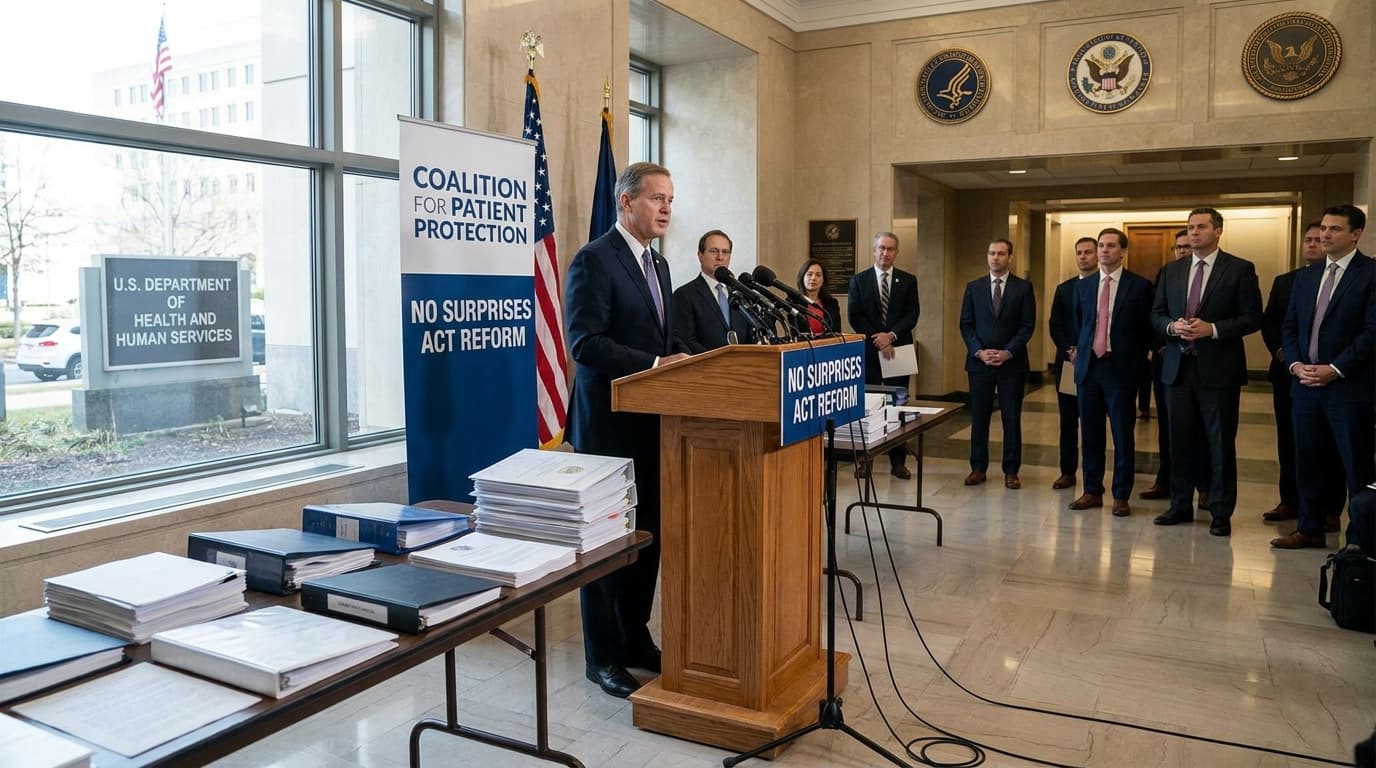
Coalition Urges Trump Administration to Enhance No Surprises Act Dispute Resolution Process

The No Surprises Act was created to protect consumers from unexpected medical billing disputes. However, recent concerns about abuses in the independent dispute resolution (IDR) process have prompted calls for regulatory reforms. This blog explores the coalition's concerns and the implications for payer-provider dynamics.
The No Surprises Act, enacted to shield patients from unexpected medical bills and to streamline payment disputes between payers and providers, has been a significant legislative effort aimed at improving transparency and fairness in healthcare billing. Despite its good intentions, the independent dispute resolution (IDR) process designed to settle payer-provider disagreements has come under scrutiny for alleged abuses that undermine its effectiveness.
Recently, a coalition of 48 employer and consumer groups collectively voiced concerns to the Trump administration, urging for critical improvements to the IDR process. These stakeholders argue that the existing framework may not adequately prevent manipulative tactics that exploit procedural loopholes, ultimately impacting costs and patient financial liability.
This coalition's appeal highlights several key points that merit attention. First, they stress the need for clearer rules and enforcement mechanisms to prevent gaming the system, which can lead to inflated charges and protracted disputes. Secondly, transparency in the decision-making process of arbitrators is deemed essential, with calls for greater accountability to ensure fair outcomes grounded in objective data.
For employers and consumers alike, the current challenges pose risks of increased premiums and unexpected expenses, detracting from the fundamental goal of protecting patients from financial harm. The coalition's intervention signifies the broader push towards refining healthcare legislation to balance the interests of payers, providers, and beneficiaries while fostering a more sustainable and equitable payment environment.
Understanding the complexities of the No Surprises Act's IDR process involves examining how disputes escalate and are resolved under existing regulations. The process was intended as an efficient alternative to litigation, using third-party arbiters to settle disagreements over billing amounts. However, concerns have risen regarding the criteria arbiters use and the potential for costs to shift back onto patients in certain scenarios.
The coalition’s letter serves as an impetus for policymakers to consider mechanisms such as standardized pricing benchmarks, enhanced data sharing between parties, and improved safeguards against frivolous claims. Progressive reforms could restore confidence in the IDR procedure and ensure it fulfills its original purpose—to alleviate surprise medical costs without unduly burdening any party.
Moreover, this issue speaks to a larger trend in healthcare policy emphasizing the importance of integrating stakeholder feedback into reform processes. Employer groups and consumer advocates bring practical insights into how legislation plays out in real-world settings, underscoring the need for adaptable and responsive policy frameworks.
In conclusion, addressing the concerns raised by this broad coalition is essential to strengthening the No Surprises Act’s impact. By improving the dispute resolution process, the healthcare system can move closer to achieving transparency, fairness, and financial protection for patients amid complex payer-provider relationships.
Source: MedCity News
Join the BioIntel newsletter
Get curated biotech intelligence across AI, industry, innovation, investment, medtech, and policy delivered to your inbox.